HAVANA — Gasoline at $38 a gallon sold from cramped apartments. Diesel hawked on Instagram by a celebrity model to a reggaeton soundtrack. Six decades after Fidel Castro’s revolution, capitalist cracks appeared in Cuba’s communist energy sector.
Under Washington’s oil embargo against Cuba, an exception that allows U.S. firms to export fuel to private Cuban businesses kickstarted a black market and pried the lid off an energy sector tightly controlled by the state.
Oil shipments from Cuba’s traditional suppliers, Venezuela and Mexico, ended abruptly after the U.S. ousted Venezuelan President Nicolas Maduro in January. U.S. Coast Guard cutters patrol the waters off Cuba, while sanctions and threats dissuaded tankers from setting sail.
The embargo hobbled essential state-run services like the healthcare system, public transport and schools. But under the Commerce Department exception, a trickle of gasoline and diesel reaches private restaurants, retailers and taxis, the first significant landings of U.S. fuel on the Caribbean island since Castro nationalized refineries after the 1959 revolution.
People are also reading…
Reuters could not determine which U.S. companies ship fuel to Cuba, but there is no sign major oil traders are involved.

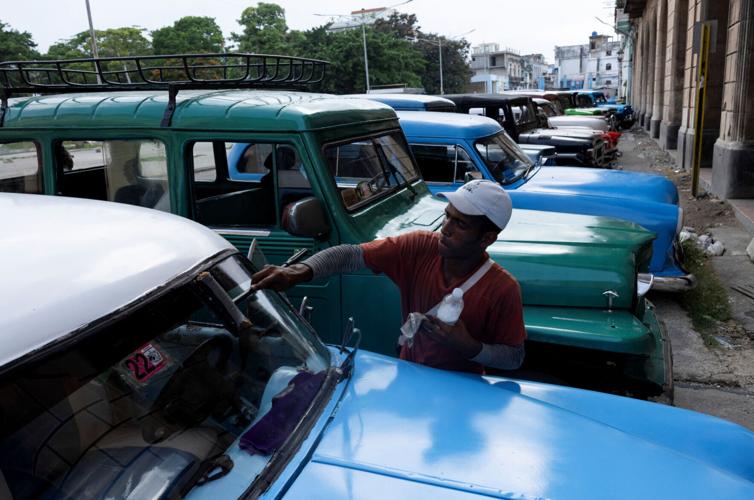
A man cleans windshields of vintage cars used as taxis July 21in Havana, Cuba.
Some is resold on the black market, allowing those who can afford it to keep gas in their tank and in home generators, blunting the effects of rolling blackouts, a collapse in public transport and, by powering home pumps, the country’s faltering water distribution system.
While providing some relief, the new system sharpens wealth disparities. On a July afternoon in Havana, Amarilis Sanchez, 53, waited for hours at a bus stop. She’d come to celebrate her daughter’s birthday but had little faith that the bus to return home, which normally costs 2 pesos, would ever arrive.
Across the street, dozens of taxi drivers leaned against antique cars. Ismael Coutiño, one driver, said he could take Sanchez, but the trip would cost 1,000 pesos, he explained — 500 times as much as the bus, because of the black market price of gasoline and diesel that many Cuban vehicles run on.
For Sanchez, who does not have a paid job, that was far out of reach. She said her plan was to sit there until it grew dark and, if the bus never arrived, sleep at her daughter’s house and wait for the bus again the next day.

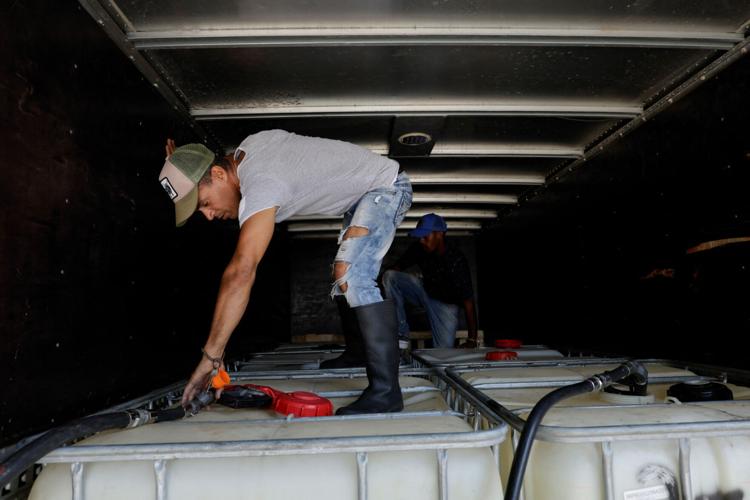
Men fill plastic tanks with gasoline July 22 in Havana, Cuba.
Backroom deals and social media ads
While only enough to fulfill the country’s energy needs for about nine days, the 900,000 barrels of U.S. fuel imported from February to May opened the door to big changes, Reuters reporters found during visits to black market distribution sites and legal wholesalers, and in conversations with business owners, economists, diplomats and sanctions experts.
When the national grid collapsed shortly before 11 p.m. one recent Sunday, Havana was plunged into darkness, but a few restaurants and shops were lit up thanks to generators running on imported fuel.
On another day, at a convenience store in central Havana stocked with soda, beer and crackers, customers shot pool on a table in the entryway. In the large backroom, the shopkeeper stores another product: a dozen 20-liter tanks of gasoline, which she retails at $19 a gallon.
In a nearby tenement building, a man who advertises gasoline on Facebook hoards it in his small apartment despite the risks of fire, explosions and toxic fumes. WhatsApp groups dedicated to illegal fuel sales proliferated.
Black-market prices peaked at $38 a gallon this spring before easing as the volume of imports grew.
Seeking to avoid paralysis from the oil blockade, the government authorized private businesses to import fuel for their own use for the first time in February.
In June, Cuban lawmakers approved economic reforms that would open up the energy sector to private and foreign investors. By late July, almost 200 Cuban businesses received permission to carry out wholesale fuel distribution to other private companies.
In a viral social media advertisement for one such company, a model known as the ex-girlfriend of a famous Cuban reggaeton artist struts through a warehouse filled with industrial bulk containers of diesel as Daddy Yankee’s hit song “Gasolina” plays in the background.
A spokesperson for the company behind the ad, A Granel, said it only sells to other registered private businesses. It charges $2.50 a liter for a 940-liter tank.

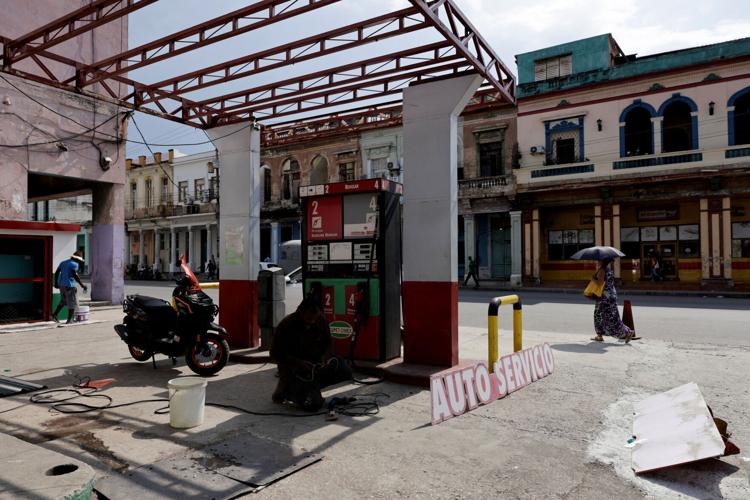
A man repairs equipment on July 21 at a former state-run gas station in Havana, Cuba.
Cuba’s gas stations up for grabs?
More significantly, Cuba approved the first foreign investment venture dedicated to importing and selling fuel on the island, Prime Minister Manuel Marrero Cruz said in July. He did not identify the company.
Cuban law restricts companies from reselling imported fuel without explicit authorization. Despite the reforms, which indicate private businesses soon may be able to run some of the state's distinctive red and green Cupet gas stations, Cuba so far has not approved retail sales.
Some state-operated gas stations now store U.S. fuel that they can disburse only to vehicles registered to specific private businesses, said Oniel Diaz, founder of Havana-based consulting company Auge.
Cuban authorities did not respond to requests for comment. On July 29, President Miguel Diaz-Canel denounced what he called Washington’s “genocidal siege” of the island. Economic reforms were not undertaken to please the United States, he said, vowing no “massive privatization of national assets.”
In response to Reuters questions, State Department Spokesperson Tommy Pigott said Washington recognized "the significant humanitarian needs" of Cubans, while accusing Cuban officials of incompetence and diverting resources, without providing evidence.
He said private businesses, nongovernmental organizations and diplomatic missions import fuel, mostly from the U.S., but did not answer questions about the effects of U.S. policy on Cuba's black market and high prices.

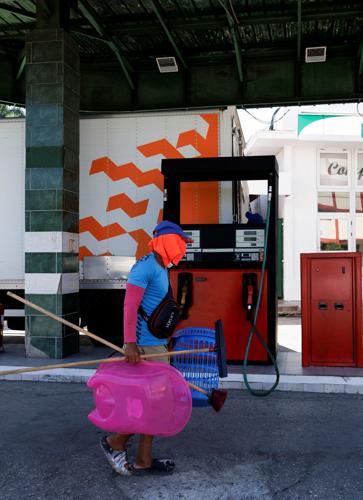
A street vendor carries goods for sale July 22 while walking past a gas station in Havana, Cuba.
With the average government salary only about $10 a month (effectively 6,700 pesos), imported fuel is out of reach for the vast majority of the island’s 9 million residents.
Fuel sold openly on the black market is in violation of Cuban law and poses a compliance risk under U.S. export rules, which stipulate the fuel must be for private-sector use and can’t end up in the hands of the Cuban government.
“It looks very good on paper, but there’s no monitoring of whether people follow through” with the restrictions, said Jorge Piñon, a former oil executive and Cuban energy expert who works at the University of Texas at Austin.
Reuters was unable to determine how much U.S. fuel reaches the black market, nor did the news agency find evidence that it ended up in the hands of Cuban officials or sanctioned government entities.
Other countries, including Mexico and Panama, also exported small quantities to Cuba’s private sector in recent months, Diaz said.

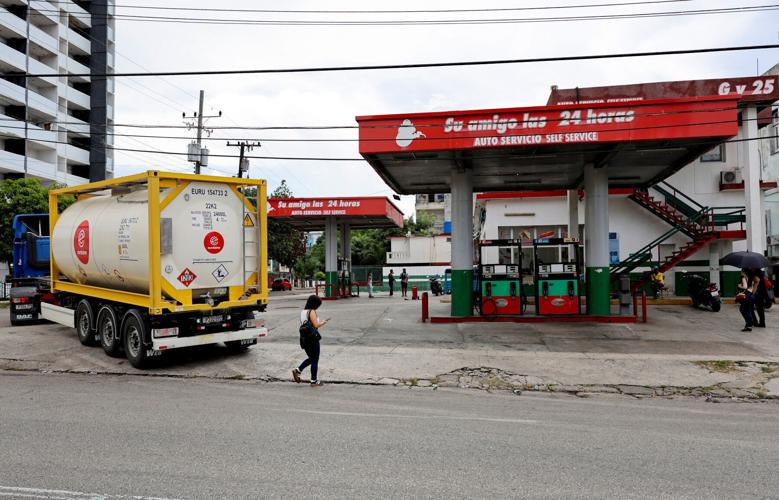
A truck carrying an ISO tank used to safely move liquids is parked Aug. 6 at a former state-run gas station in Havana as Cuba cautiously opens its energy sector to private investment.
State controls ports and gas stations
Currently, U.S. fuel destined for private buyers must pass through the state-owned port and storage tanks, controlled by U.S.-sanctioned entities.
Private Cuban companies sign service agreements with these entities for the use of state infrastructure, with a payment of about 11 cents per liter, according to Diaz. Reuters found no evidence that fuel is diverted during this process.
Still, large U.S. businesses are wary of getting involved in shipping fuel to Cuba given the complexity of the sanctions, said Jeremy Paner, a former U.S. Treasury Department investigator who now advises companies.
Cuba says it will continue to ease restrictions and facilitate private investment, but it’s unclear how far the reforms will go.
For Mayra Espina, a Cuban sociologist who specializes in poverty, the small supplies of expensive U.S. fuel don’t begin to make up for the volumes kept away from Cuba by Trump’s embargo.
“It’s at least allowed the country to avoid complete paralysis,” she said. But for the vast majority of Cubans who rely on public services “it is increasing and further entrenching inequalities."