A former nursing assistant is serving life in prison for killing seven elderly veterans in West Virginia. A registered nurse is accused of killing four patients and trying to kill 18 others at Pennsylvania nursing homes, and another RN has been charged with murdering two patients at a North Carolina hospital.
The alleged murder weapon in all three cases: lethal doses of insulin.
In those states and in Canada, Germany and England, police have accused nurses and nursing assistants of killing patients with excessive doses of insulin. It was also one of the drugs that nurse Charles Cullen injected into IV saline bags to kill at least 29 patients in New Jersey and Pennsylvania over 16 years, according to news reports.
People are also reading…
“You are the monster that no one sees coming,’’ U.S. District Court Judge Thomas Kleeh told Reta Mays when he sentenced her to seven life sentences in 2021.
Mays was convicted of murdering World II, Korea and Vietnam veterans ranging in age from 81 to 96 at the Louis A. Johnson VA Medical Center in Clarksburg, West Virginia.
On Nov. 2, Pennsylvania Attorney General Michelle Henry announced new charges against RN Heather Pressdee, 41, saying 17 patients died in Pressdee’s care when she gave them excessive doses of insulin. The victims ranged in age from 43 to 104, Henry said.
“It is hard to comprehend how a nurse, trusted to care for her patients, could choose to deliberately and systematically harm them,” Henry said.
The spate of cases raises questions of how insulin is regulated, stored and administered in hospitals and nursing homes and how those with evil intent have skirted the safeguards that experts recommend to reduce insulin medication errors. The Institute for Safe Medication Practices’ guidelines for insulin use say that hospitals have “overlooked and inadequately addressed” the risks of insulin.
Tony L. O’Dell, a Charleston, West Virginia lawyer who represented the families of ten of Mays’ victims, said insulin is not as tightly controlled as narcotics in many hospitals. That might be because narcotics have a street value, and federal and state controls have been tightened amid a national opioid addiction epidemic, O’Dell said.

Tony L. O’Dell, the West Virginia lawyer who represented Norma Shaw and nine other families of Reta Mays’ victims
“Insulin isn’t addictive or recreationally abused, but it is dangerous,” he said.
North Carolina RN Johnathan Howard Hayes, 47, is accused of bypassing one of the recommended safeguards – a dual-verification medication process – when, Winston-Salem police, say he allegedly killed two hospital patients with large doses of insulin last year.
His hospital, the Atrium Health Wake Forest Baptist Medical Center in Winston-Salem, requires two nurses to sign off on medication doses, but police say he skirted that requirement by claiming that the doses had been verified as “Given by Other.” That designation is supposed to be rarely used and only when a drug had been administered in a different part of a hospital, such as the emergency department, police said. They say that Hayes used the designation 88 of the 130 times it was used at the hospital.
Police also say Hayes was “the top insulin dispenser, facility-wide, by seven times the average of the facility.”
The federal government and many states have regulations on how medication should be handled in hospitals and nursing homes, but often stop short of dictating that the facilities track the top administrators of drugs.
The U.S. Centers for Medicare & Medicaid Services (CMS), which lists insulin as a “time-critical” medication, has extensive regulations about how it should be administered and monitored in hospitals. It requires tracking the name of the patient, the date and time of the dosage, the size of the dosage, the type of insulin and the signature of the person who administered the drug, a CMS spokesperson said. But CMS says there are no federal laws or regulations that require hospitals to use bar codes, an automated medication dispensing system or other technology for insulin.
If a violation is found, a hospital must file a correction plan, and if the hospital has serious patient safety concerns or doesn’t implement its plan, it can be terminated from the Medicare and Medicaid programs, the spokesperson said. That can be costly for hospitals.
In North Carolina, hospitals are inspected every three years and concerns about how medication is stored or dispensed can be referred to the North Carolina Board of Pharmacy, health officials in that state said. Mark O’Neill, a spokesman for the Pennsylvania Department of Health, said it has regulations that govern how medications should be stored and administered at both hospitals and nursing homes. State laws allow his department to impose financial sanctions on facilities that violate the regulations, he said.
The non-profit medication safety institute is one of several organizations, including pharmacist groups, the U.S. Food and Drug Administration (FDA) and the American Diabetes Association, that recommend stringent insulin safeguards in hospitals.
The safeguards include the dual-verification process, locking up insulin, not storing it in patient areas and having bar codes on insulin pens that nurses must scan before administering the drug. Many hospitals also use automated systems that link each drug to specific nurses for specific patients.
In the West Virginia VA case, an Inspector General report found that as a nursing assistant, Mays, who is now 48, was not supposed to have access to the medication room or carts where she got the fatal doses of insulin. The lapses upset Norma Shaw of Wallace, West Virginia, whose husband of 58 years, George Nelson Shaw Sr., was killed by Mays in 2018. When his body was exhumed and autopsied, four injection sites were found and tests confirmed that he died of insulin doses, court records show.
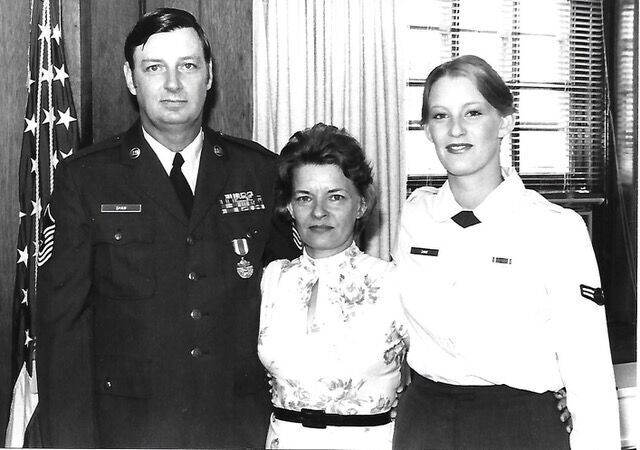
George Nelson Shaw Sr., his wife, Norma Shaw, and their daughter Linda in 1982 at his retirement from the U.S. Air Force after 28 years. Linda followed her dad into the Air Force.
“There has to be stricter controls,’’ Shaw, 83, said. “There needs to be security cameras. Insulin needs to be locked up. There needs to be more than one person administering these medications.”
She said her husband, 81, was not diabetic and was hospitalized for dehydration and mild dementia.
“There was no reason for him to die,’’ she said.
Catching errors, not killers
Some health organizations declined to comment on the accused murders since the safeguards are designed to reduce medication errors and not to catch a determined killer. But police and court records describe how the workers exploited weaknesses at their facilities.
A North Carolina district attorney called Hayes, 47, a “rogue nurse” in October when announcing the murder charges against him.
In a search warrant affidavit, Winston-Salem police described his use of the “Given by Other” designation, but they did not draw a conclusion that his use of the designation should have been caught sooner. Hayes said he wasn’t aware of the dual-verification policy, and that the “Given by Other” designation was commonly used by all nurses, especially during the COVID-19 pandemic, the warrant said.
In May, Henry, Pennsylvania’s attorney general, announced homicide charges against Pressdee, for allegedly giving two patients fatal doses of insulin at the nursing home where she worked.
On Nov. 2, Henry said Pressdee has now been charged with two more counts of first-degree murder, 17 more counts of attempted murder and 19 counts of neglect of a care-dependent person. While working at five nursing homes in Pennsylvania, Pressdee typically administered insulin during overnight shifts when staffing was low and the emergencies would not prompt immediate hospitalization, Henry said. Some of the patients had diabetes and required insulin while some did not. Henry called the allegations disturbing.
Pressdee, the former acting director of nursing at Quality Life Services in Chicora, Pennsylvania, was the only nurse with keys to the medication cart on her shift at the nursing home when, according to a criminal complaint, she injected insulin in three patients who didn’t need it. One, aged 73, survived; the other two, 55 and 83, died.
“Instead of caring for them, she intentionally and maliciously injected them with insulin to kill them,” Henry said.
Pressdee was arraigned on the new charges Nov. 2 and remains in prison without bail.
Dangers of insulin
Insulin is a life-saving drug for people with diabetes, but it can also cause dangerously low or high blood sugar.
Insulin is prevalent in U.S. hospitals because diabetes is becoming common in America. In 2022, 37.3 million Americans – or 11.3% of the population – had diabetes, according to the CDC. Researchers studying the challenges of insulin use in hospitals say about 25% of hospitalized patients have a confirmed diagnosis of diabetes at admission, and 12% of patients have unrecognized diabetes or hospital-related hyperglycemia, or high blood sugar.
Diabetes is a complex condition to manage as providers must balance and time a patient’s insulin doses around their carbohydrate intake and monitor their blood sugar levels. There are also different types of insulin, including slow-acting and longer-acting forms of the drug, and it comes in vials or pens or is inserted in a pump.
Years of studies have found that errors with insulin abound in hospitals. A 1998 study found that insulin was associated with 11% of all harmful medication errors in hospitals. Later U.S. and British studies found that insulin errors account for more errors in hospitals than any other drug.
Insulin errors remain “one of the most frequent and often significant medication safety issues faced by practitioners today,” according to the safe medication institute. Since insulin is a “high-alert” drug, those errors can be devastating for patients, RN Susan Paparella, the institute’s vice president for services, said.
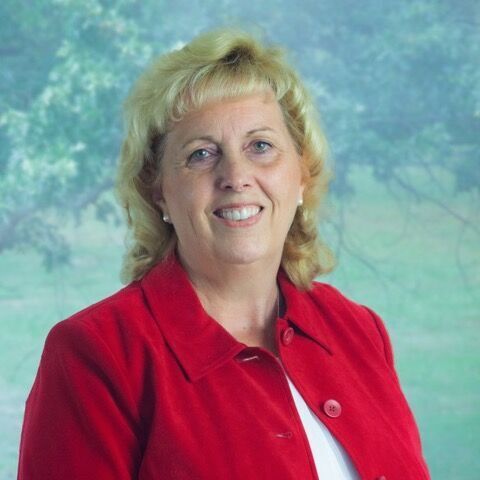
Registered nurse Susan Paparella, the vice president for services at The Institute for Safe Medication Practices
Still Paparella cautioned against making comparisons between hospitals because of the widely different ways they report errors.
“Unfortunately, there is no national, centralized error reporting program or database,’’ Paparella said. “Some states have mandated error reporting programs, but…reporting is so variable, it is near impossible to definitely determine the number of insulin-related errors in U.S. hospitals each year.”
The American Society of Health-System Pharmacists in 2013 called for tighter restrictions on insulin storage in hospitals, better training of nurses and better monitoring of hypoglycemia, low blood sugar, and hyperglycemia.
Missed chances to catch a killer
VA Inspector General Michael Missal issued a scathing report on the day of Mays’ sentencing in in 2021, saying that a “series of missed opportunities” allowed her to keep killing as long as she did.
“While responsibility for these heinous criminal acts lies with Reta Mays, an extensive healthcare inspection by our office found that the facility had serious and pervasive clinical and administrative failures that contributed to them going undetected,” Missal said.
Mays in 2020 told investigators that she deliberately injected the patients because they “were suffering and she wanted them to die gently,” the inspector general report said. She added that she had a lot of stress and chaos in her life and these actions gave her a sense of control, the report said.
Inspectors found that security was lax in Ward 3A, where Mays worked.
“Some medication carts were unlocked and unattended,” the report said. “Given the unexplained hypoglycemic events, open access to insulin stored in the medication room and medication carts was concerning.”
The report also said:
· The hospital pharmacy was not tracking its stock of insulin or D50, a medication that was being heavily used to reverse the unexplained cases of low blood sugar.
· The cases were never reported to the patient safety manager, and employees were never trained on what incidents should be reported.
· Doctors failed to consider that nefarious actions might be behind the deaths.
· There were nine spikes in the patient mortality rate from 2015 to 2018 when Mays was working at the VA hospital, but no review of them was conducted.
Norma Shaw said her husband was never the same after he suffered hypoglycemia on March 26, 2018. He died 15 days later.
“He couldn’t talk. He would get agitated,’’ she said. “It just hurt to see him like that.”

George Nelson Shaw Sr. is congratulated in 1982 at his retirement from the U.S. Air Force after 28 years.

George Nelson Shaw Sr. and his wife, Normal Shaw, in an undated photo during their retirement years. George loved to bowl and spend time with his large family in West Virginia.
George Shaw, an Air Force veteran of 28 years, loved to bowl and spend time with his large family.
“I still haven’t been able to forgive her for what she took away from me and my family,” Norma Shaw said.
O’Dell, her lawyer, said the federal government reached several million dollars’ worth of settlements with 15 families in cases involving Mays. Prosecutors only brought charges in eight cases.
O’Dell said hospitals need to enforce their protocols and use automated dispensing systems to reduce errors and stop predators. He said the lapses at the VA made it easy for Mays to kill.
“You know, if she doesn’t have access [to the insulin], maybe this never starts,’’ he said.
VA officials replaced the medical center’s director in 2020 and pledged to make many changes after the deaths, but a spokesman did not respond to a request for an update on the reforms.
“I gave it to her”
The police warrant in the case of Hayes, the Winston-Salem RN, details how he allegedly caused the deaths of two patients and nearly killed a third.
In January 2022, Gwen Crawford, 60, died three days after going to intensive care for hypoglycemia, according to the affidavit. Hayes was seen on camera leaving a secure medication room with a vial of insulin that contained 300 doses, the warrant said. Police say doctors determined that Crawford was given more than 100 doses of insulin when 12 units is typically the maximum dose.
Hayes told police that Crawford was “very sick and ‘needed to go.’’’ He later clarified that “needed to go” meant that she needed to be transferred to intensive care, the warrant said.
The same month, Vicky Lingerfelt, 61, a non-diabetic, suffered a hypoglycemic episode and died. An endocrinologist attributed her death to more than 100 units of insulin, the warrant said. Hayes was recorded accessing Lingerfelt’s medical record and was seen on video removing a full vial of insulin from the medication room, the warrant said.
He first denied administering the fatal doses of insulin, but later said, “I guess I gave it to her, that would make sense,” the warrant said. When police said they needed to know the truth, he said, “I gave it to her,’’ the warrant said.
A third patient, Pamela Little, 63, survived a hypoglycemia episode in December 2021 and told police she was scared of a male nurse because he was sneaky, the warrant said. Her description generally fit that of Hayes, the warrant said.
In response to the alleged murders, the North Carolina Department of Health and Human Services surveyed the hospital in November 2022 for CMS. CMS did not impose any sanctions related to the insulin injections, Bailey Pennington Allison, a spokeswoman for the health department, said.
An Atrium Health spokesman declined to comment, but Denise Potter, the vice president for marketing, communications and media, said in October 2022 that as soon as the hospital learned of Hayes’ actions, he was fired. She added that the hospital apologized to the patients’ families and contacted the police.
“We conducted an in-depth analysis to ensure that we have done everything possible so an event like this can never happen again,’’ she said.
“Better off dead”
Pressdee, the Pennsylvania nurse accused in connection with the 22 cases, was hired as assistant director of nursing at Quality Life Services in Chicora, Pennsylvania in 2022 despite being disciplined for abusive behavior at other facilities in the state, according to the criminal complaint against her. She was acting director of nursing at the nursing home before her firing in November 2022.
The relative of a patient who died complained to the attorney general that Pressdee was improperly giving insulin to patients, the complaint said. The patient, a 55-year-old man who was not diabetic, was twice hospitalized with “critically low” blood sugar, the complaint said.
A doctor concluded his hypoglycemia was caused by doses of insulin, the complaint said. The man’s suitemate, an 83-year-old man who was diabetic, but who did not require insulin, was hospitalized for hypoglycemia within a half hour of the first patient, the complaint said. He died about a month later.
A nurse practitioner was suspicious and spoke with Pressdee about the patients. The complaint says that Pressdee told her that the first patient would be “better off dead.”
Investigators said a third patient, a 73-year-old man who was not diabetic, had hypoglycemia two hours after Pressdee’s shift ended in August 2022, the complaint said. He recovered.
On May 24, Pressdee admitted that she gave the first two patients insulin because she felt bad for their quality of life and she had hoped that they would just slip into a coma and pass away, the complaint said.
She said she took doses of 60 or 100 units of insulin from the cart and injected it in the patients’ shoulder or stomach, the complaint said.
Kelley Denny, a spokeswoman for Quality Life Services, said the company is unable to respond to questions about Pressdee while the attorney general’s investigation is continuing.
O’Neill, the Pennsylvania health department spokesman, there were no findings of violations as part of investigations done by his agency in response to the allegations against Pressdee.
Henry, the attorney general, said Nov. 2 that Pressdee was charged with first-degree murder in the cases where physical evidence supported the cause of death. She was charged with attempted murder in cases where the victims survived excessive doses of insulin or where the cause of death could not be determined. She called Pressdee’s actions “the callous abuse of incredibly vulnerable patients by a professional nurse.”