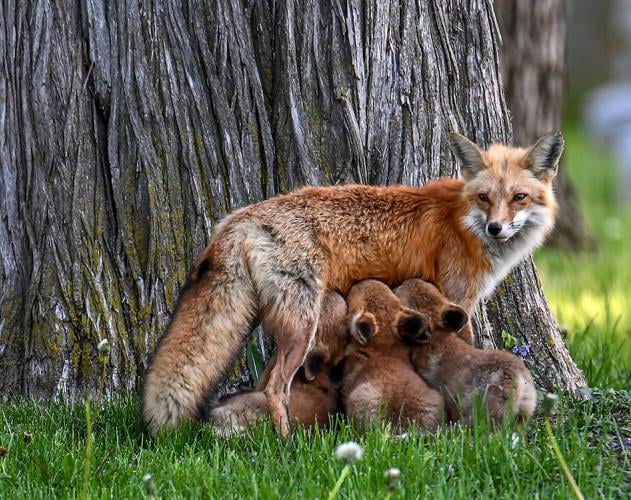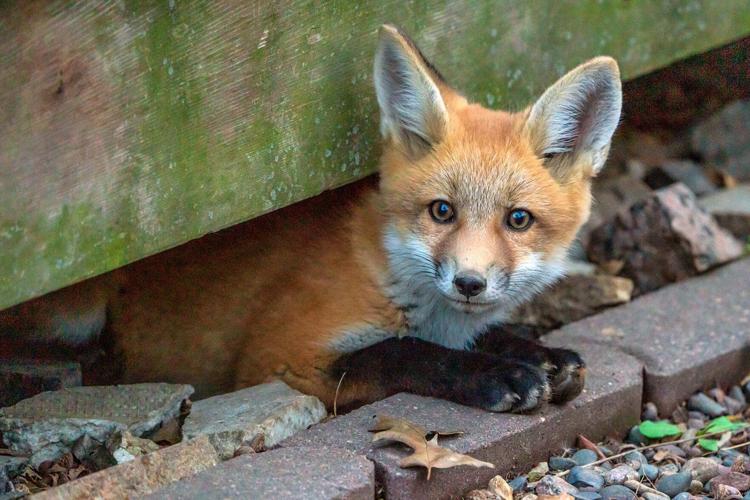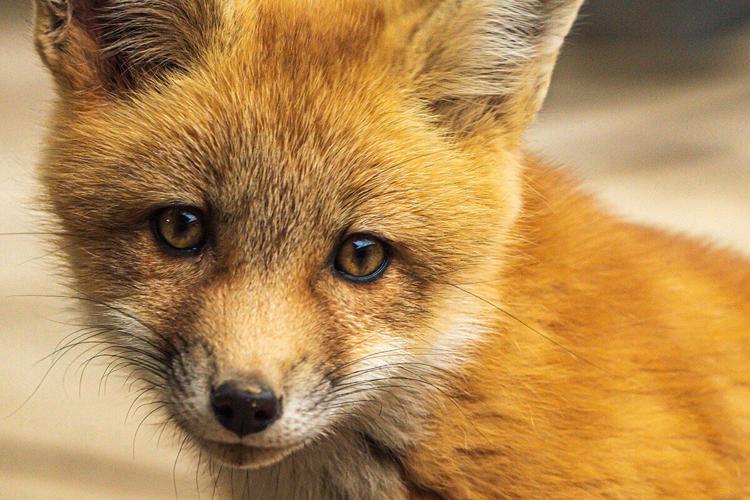
Little nose prints cover the sliding doors that lead to Klara and Jim Schuman's backyard, but they aren’t from the couple’s cat or their late dogs. The imprints come from a few foxes who decided the Schumans’ backyard was the perfect place to raise their kits — all seven of them.
While it’s the most foxes Klara and Jim have had, it’s not the first time wildlife has invaded their backyard.

A mother fox and her kits are seen around the home of Klara and Jim Schuman near 48th and Vine streets in Lincoln. “This neighborhood has always for years had foxes, raccoons, possums, groundhogs and even turkeys,” Jim said.
In 2021, a female fox first appeared in the Schumans’ backyard with a kit. The backyard quickly became home as a den was formed in a groundhog hole. While Klara and Jim didn’t see the mother much, they did notice part of her back left foot was missing, possibly from an animal trap.
Klara and Jim tried to give the foxes as much space as they could and watched the little family from cameras around their house.
“We have security cameras on the outside which have actually become wildlife cameras for all these wild lives,” Klara said.
People are also reading…
After watching the duo for nearly six weeks, the foxes disappeared when the kit was big enough to jump the fence.
Then, around the middle of March while on vacation, Klara and Jim once again noticed a couple of adult foxes venturing into the backyard on their security cameras. Klara was sure it was the same fox.

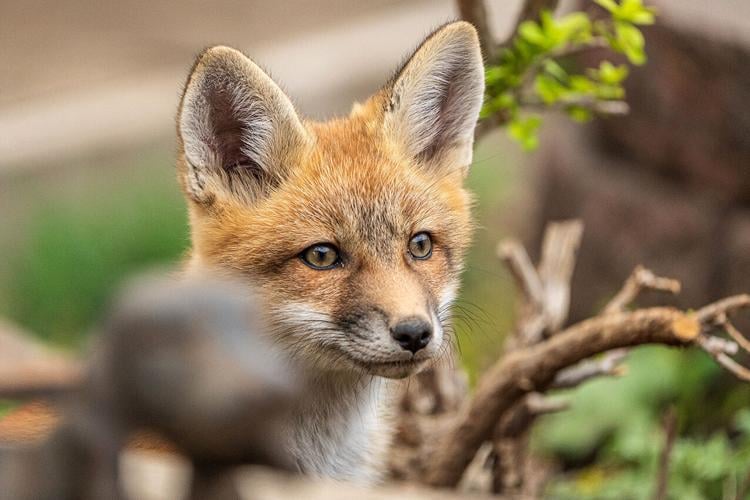
A young fox is seen near the home of Klara and Jim Schuman in Lincoln.
When they returned home, they found the limping female and a male fox that had created a den in the same spot. Jim said he had even spent the past three years filling the hole with dirt, only to watch it continue to be dug out by animals.
Jim said when he and his wife initially looked out the window to watch the family, the adult foxes would bark and the kits would quickly scatter. After a while, they didn’t seem as bothered by the window watchers.
“She must have decided we weren’t a threat and so we could stand there and watch it all day,” Jim said.

A fox is seen around the home of Klara and Jim Schuman near 48th and Vine streets in Lincoln.
After nearly a month, two more kits appeared along with another adult. The Schumans still aren’t sure as to why their backyard has become the chosen place for the fox families, but they've crafted up a few theories, including their home being near a bike path where wildlife roams.
“This neighborhood has always for years had foxes, raccoons, possums, groundhogs and even turkeys,” Jim said.
Klara suspects the construction at Wyuka Funeral Home and Cemetery might play a factor, especially considering the torn-up lake.
“They’ve got the cemetery and a lot of construction. And then they built a whole bunch of apartments,” Klara said. “I truly believe that all their homes and their dens ... that they’ve been chased out of there.”

A fox is seen around the home of Klara and Jim Schuman near 48th and Vine streets in Lincoln.
The Schumans have never fed the foxes and don’t encourage them to stay. However, they also said they aren’t discouraging them to stay for the time being. The wooden fences surrounding the backyard provide a safe place for the kits to grow.
Klara said none of the neighbors seemed too bothered by the furballs running around. However, Klara said some people have reached out and told them to trap the family, call animal control or reach out to Nebraska Game & Parks. Since the foxes aren’t sick or damaging anything, Klara and Jim don’t plan to disturb them.
“That wouldn’t be fair to nature,” Klara said.
Jim is hoping the family will naturally move on soon as the kits become more independent.
“We’ve just kind of let them go and do what they want,” Jim said.
In the past week, Jim and Klara have started entering their backyard again and sitting on the deck to encourage the foxes to leave.
Prior to the fox family arrival, Jim said they didn’t know much about the wild animals. While they still aren’t fox experts, they have loved learning by watching their backyard residents.
Lately, some of these viewings include the kits practicing how to hunt and kill by grabbing one another by the fur.
“They train on each other,” Jim said. “You’ll see them sneaking and crawling along and kind of sneaking up and then they’ll pounce on one of the other kits and they’ll grab it right by the neck.”
Other lessons are taught by the adult foxes, including teaching the kits how to bury their food. A few weeks ago, Jim watched the mother give a vole to the kits before taking it away, burying it and repeating. Sometimes, the father takes a kit out at night to learn how to hunt.
When the male fox isn’t teaching, Jim said, he will watch as the seven kits chase each other, tackle and eat.
“They’re just watching everything and if there is anything they perceive as a danger, they bark and the kits disappear,” Jim said.

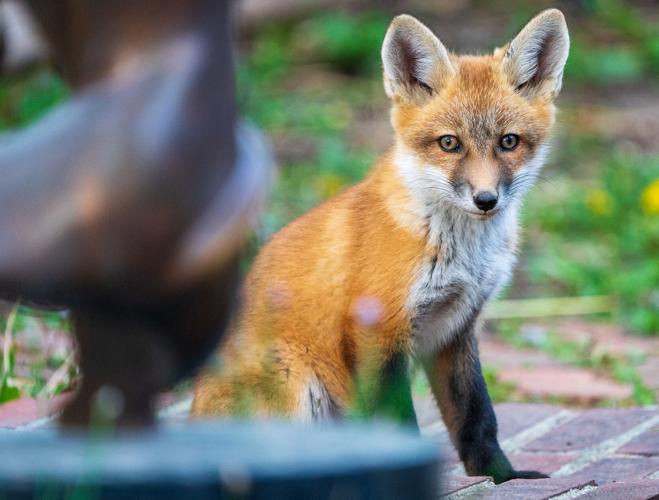
A young fox is seen around the home of Klara and Jim Schuman near 48th and Vine streets.
It’s hard to predict when the foxes will be out and playing, causing few friends and family members of the couple to catch sight of them. However, Klara has continued to share numerous photos and videos of the kits playing and learning on her Facebook page.
“There’s so many people that are following their growth, their learning and to see a mom and dad take care of them,” Klara said.
As for Klara and Jim, they’re enjoying the time they have left with their furry grandfoxes.
“This is a once in a lifetime thing to be able to see a family like this,” Klara said.
Nebraska wildlife takes center stage in amazing photographs
Bighorn sheep

A pair of rams at Fort Robinson State Park in Sioux County during breeding season. Males seeking dominance.
Elk

Bull elk on Fort Niobrara National Wildlife Refuge.
Great blue heron

Great Blue Heron (Ardea herodias) perched on a dead log on the bank of the Missouri River in Dixon/Cedar county.
Tom turkeys

Tom turkeys in Sarpy County, near Louisville.
Canada geese

Canada geese loaf in an icy pond at Pioneers Park.
White-tailed buck

Why does this deer have antlers? A free webinar series from the state Game and Parks Commission will answer that question Sept. 3.
Bald Eagle

A bald eagle at the spillway on Lake Ogallala below Kingsley Dam.
Bison

A bouquet of sunflowers adorns the horn of a bison that has just finished wallowing at the Niobrara Valley Preserve in Cherry County.
Pronghorn

Buck pronghorn gather in a pasture on the Oglala National Grassland west of Toadstool Park in Sioux County.
Sharp-tailed grouse

Sharp-tailed grouse stand out against the white backdrop of a late spring snowfall at Fort Robinson State Park in Dawes County.
Northern river otter

Northern River Otter (Lutra canadensis) in a small pond near Brea, Box Butte County.
Sandhill cranes

Sandhill cranes rest on the Platte River at Martin's Reach Wildlife Management Area in Hall County in 2017.
Mule deer

Mule deer stand in ponderosa pines near the Snake River in Cherry County.
Blue-winged teal

A drake blue-winged teal swims in the shallows of Cottonwood Lake State Recreation Area near Merriman.
American avocet

The American avocet can be found on lakes in western Nebraska during spring and early summer.
Bull elk

Bull elk in North Platte River valley forest near Lewellen, Garden County.
Snapping turtle

Snapping turtle.
Bluegill

A male bluegill stands guard on its nest in a southern Nebraska pond.
Bighorn sheep

Bighorn sheep near Chadron State Park, Nebraska National Forest.
Jackrabbit

A jackrabbit (Lepus) sits in the snow in Sioux County.
White-tailed deer

White-tailed deer browse on the shoreline at sunrise in Area 1 at Wagon Train State Recreation Area.
Bison

Bison are driven toward the sorting facility at Fort Robinson State Park.
American bullfrog

An American bullfrog (Lithobates catesbeianus), an amphibian, on a private pond in Sarpy County.
Goslings

Goslings at Louisville State Recreation Area.
Northern prairie lizard

Northern prairie lizard, Sceloporus undulatus, in a Sandhills blowout 2 miles west of Wood Lake in Cherry County.
Greater prairie chicken

A male greater prairie chicken puts on a courtship display northeast of Haigler in Dundy County.
Ring-neck pheasant rooster

A pen-raised ring-necked pheasant rooster in natural habitat in a controlled shooting area in Chase County.
Trumpeter swans

Two trumpeter swans (Cygnus buccinator) loaf on the icy waters of a marsh east of Whitman in Grant County.
Blanding's turtle

A Blanding's turtle (Emydoidea blandingii) on the Calamus River.
Elk

Elk roam the grasslands of Fort Niobrara National Wildlife Refuge in Cherry County.