In the first three months of 2026, U.S. Immigration and Customs Enforcement purchased nearly a dozen commercial warehouses as part of an effort to rapidly expand its detention space.
Now, following intense backlash from local communities, a series of lawsuits and a leadership shakeup at the Department of Homeland Security, the agency appears to be abandoning the initiative, a dramatic shift away from a plan that had already seen spending upward of $1 billion.

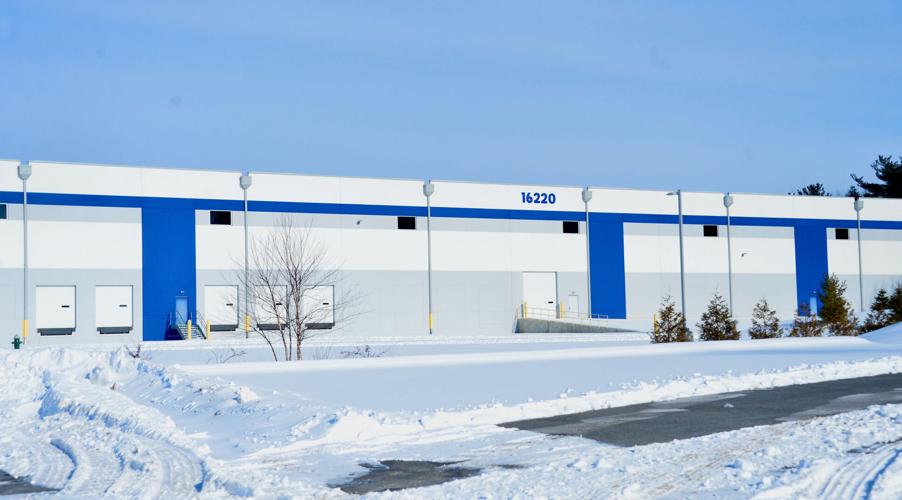
The U.S. Department of Homeland Security and U.S. Immigration and Customs Enforcement Agency bought this warehouse in January near Williamsport, Md.
Multiple federal, state and local officials announced in June that the projects would not move forward, citing conversations with immigration authorities. DHS also indicated in court records that it intends to sell a warehouse it purchased in Romulus, Michigan.
In a statement, DHS said it is “moving swiftly to utilize EXISTING detention space with our state and county partners” to support deportation efforts, rather than converting empty warehouses into detention sites.
People are also reading…
DHS has “remained singularly focused on removing the worst of the worst criminal illegal aliens from the United States and is always evaluating the best methods to do so,” the agency said, adding, “These heinous criminals, once arrested, should be removed at lightning speed, not housed on American soil at the taxpayer’s expense.”
In Social Circle, Georgia, where ICE purchased a more than 1-million-square-foot warehouse for $128 million, city officials said the federal government confirmed it is “no longer pursuing the project.”
"Based on the information provided to the City, it is our understanding that the property could be sold if there are no other federal agencies that express interest in the property,” the city said in a statement on June 18.
On June 22, U.S. Sen. John Fetterman said in a statement that ICE canceled plans to convert two Pennsylvania warehouses into immigrant detention centers. The commercial buildings were purchased by the government for a combined $206.9 million, property records show.
“I’m pleased to confirm ICE will not be moving forward with detention facilities in Tremont and Upper Bern townships," Fetterman, D-Pennsylvania, wrote in a statement. “I appreciate that Secretary Mullin recognized the negative impacts these facilities would have in Pennsylvania, including the direct threat to local economies and infrastructure, and cancelled these plans."
In a June 22 court filing related to a lawsuit against a proposed detention site in Romulus, Michigan, the government said it “no longer" intends to retrofit the warehouse and plans on selling it.
Plans for large-scale detention warehouses in Socorro, Texas, also were rolled back, said U.S. Rep. Veronica Escobar at a recent news conference. It was not clear how many people will be held at the site.
On June 18, New Jersey Gov. Mikie Sherrill and Attorney General Jennifer Davenport issued a joint statement citing a New York Times report that said ICE abandoned plans for a warehouse in Roxbury, along with six others.
“That is a big win for public safety, for the township of Roxbury, and for New Jersey," the statement said.

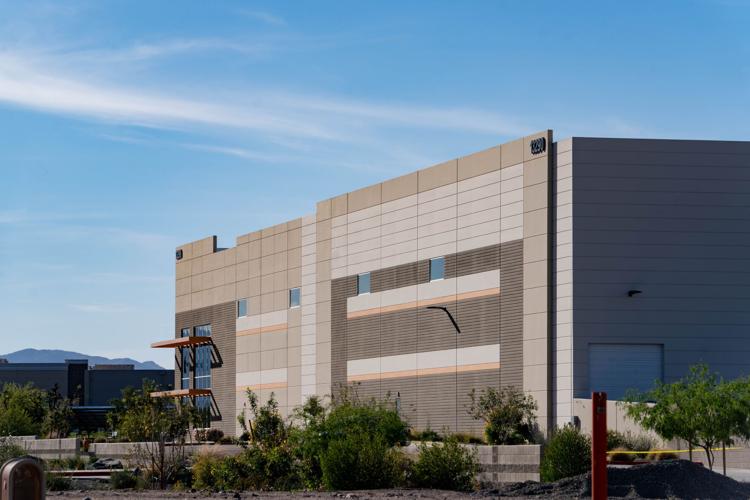
The exterior of a Surprise, Ariz., warehouse owned by DHS as high school students gathered nearby March 13 to denounce a plan to use the structure as an ICE processing facility.
But while some celebrated the canceled plans, others were left wondering whether the warehouses purchased in their neighborhoods would become detention sites. In Surprise, Arizona, city officials recently said a proposed ICE facility was still in the planning stage and that they had no new information to share about its status.
Neither ICE nor DHS responded to USA Today's questions about whether they intend to scrap plans for all 11 warehouses the government purchased this year.
The abrupt shift comes after Homeland Security Secretary Markwayne Mullin said he would review the initiatives championed by his predecessor, Kristi Noem, whom President Donald Trump ousted in March.
Mullin said he wants to keep ICE "out of the headlines" following months of backlash over the administration's aggressive approach to immigration enforcement. In May, DHS's Office of the Inspector General announced a review of the warehouse purchases to determine whether the plans met ICE's "operational need in a cost-effective manner."
According to internal documents, ICE initially planned to purchase 24 commercial warehouses across the country and retrofit them into detention centers, the largest of which would hold up to 10,000 detainees at a time.
But the initiative quickly faced intense pushback.

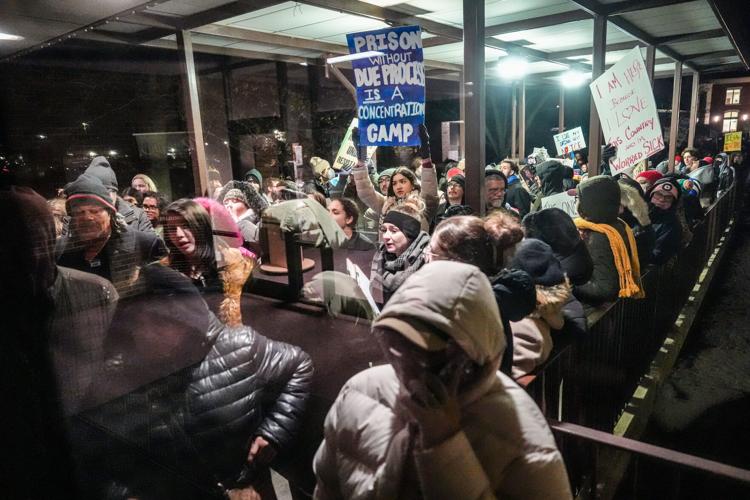
A large group of people are locked out of the city council meeting after protesting the proposed ICE warehouse detention center Feb. 23 outside of Romulus City Hall in Romulus, Mich.
Local communities, including Republican strongholds in Georgia and Mississippi, voiced opposition to the projects, staging protests outside the warehouses and derailing city council meetings.
Then multiple states filed lawsuits alleging the agency failed to conduct proper environmental reviews, which DHS denied. Federal judges in Maryland, New Jersey and Michigan blocked or paused construction of the detention sites. In response, the government agreed to conduct environmental reviews of its plans, according to court filings.
In at least 11 communities, including Oklahoma City and Kansas City, private developers backed out of sales following local protests.
Several Republican lawmakers whose districts were eyed as potential sites for the warehouses opposed the projects, often saying the warehouses should be used for commercial purposes, not immigration detention.
"While I support the enforcement of immigration law, I write to express my opposition to this acquisition and the proposed detention center," Republican U.S. Sen. Roger Wicker of Mississippi wrote in a letter to Noem in February, adding that such a facility would put "significant strain" on local resources.