WASHINGTON — Meta CEO Mark Zuckerberg says senior Biden administration officials pressured Facebook to “censor” some COVID-19 content during the pandemic and vowed that the social media giant would push back if it faced such demands again.
In a letter to Rep. Jim Jordan, the Republican chair of the House Judiciary Committee, Zuckerberg alleges that the officials, including those from the White House, “repeatedly pressured” Facebook for months to take down “certain COVID-19 content including humor and satire.”
The officials “expressed a lot of frustration” when the company didn’t agree, he said in the letter.
“I believe the government pressure was wrong and I regret that we were not more outspoken about it,” Zuckerberg wrote in the letter dated Aug. 26 and posted on social media.

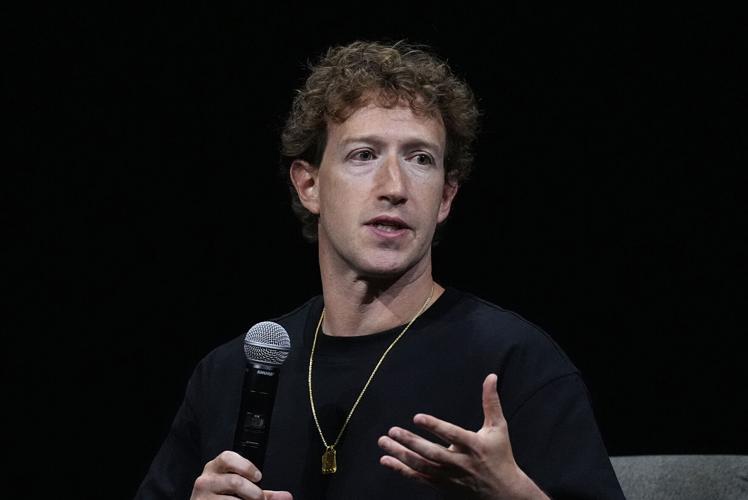
Mark Zuckerberg, chief executive officer of Meta, speaks July 29 at SIGGRAPH 2024, a conference on computer graphics and interactive techniques in the Colorado Convention Center in downtown Denver.
The letter is the latest repudiation by Zuckerberg of efforts to target misinformation around the coronavirus pandemic during and after the 2020 presidential election, particularly as allegations emerged that some posts were deleted or restricted wrongly.
People are also reading…
“I also think we made some choices that, with the benefit of hindsight and new information, we wouldn’t make today,” he said, without elaborating. “We’re ready to push back if something like this happens again.”
In response, the White House said in a statement that, “When confronted with a deadly pandemic, this Administration encouraged responsible actions to protect public health and safety. Our position has been clear and consistent: we believe tech companies and other private actors should take into account the effects their actions have on the American people, while making independent choices about the information they present.”

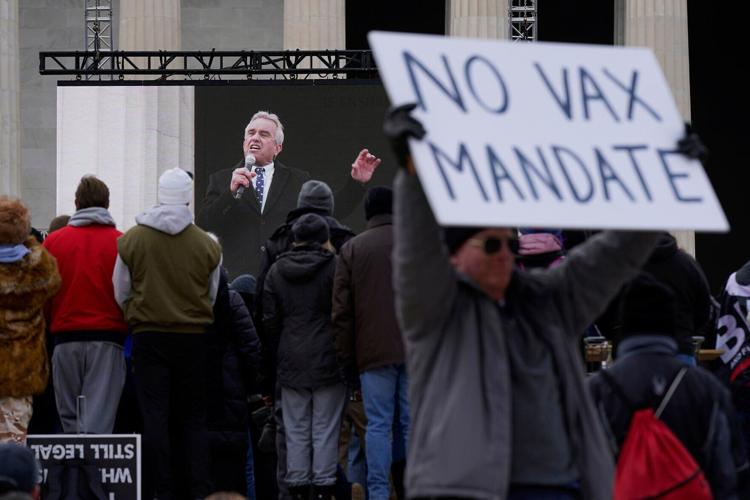
Robert F. Kennedy Jr. is broadcast on a large screen as he speaks Jan. 23, 2022, during an anti-vaccine rally in front of the Lincoln Memorial in Washington.
Experts warn this year’s U.S. election could be swamped by misinformation on social media with the proliferation of artificial intelligence and other tools to produce false news stories and content that could mislead voters.
Facebook in early 2021 appended what Zuckerberg called labels with “credible information” to posts about COVID-19 vaccines. That’s after it moved in April 2020 — just as the virus had led to global shutdowns and radical changes in everyday life — to warn users who shared misinformation about COVID-19.
Conservatives have long derided Facebook and other major tech companies as favoring liberal priorities and accused them of censorship.
Zuckerberg has tried to change the company’s perception on the right, going on podcaster Joe Rogan’s show in 2022 and complimenting Republican nominee Donald Trump’s response to an assassination attempt as “badass.” He sent Monday’s letter to the House Judiciary Committee, whose chairman, Jordan, is a longtime Trump ally.

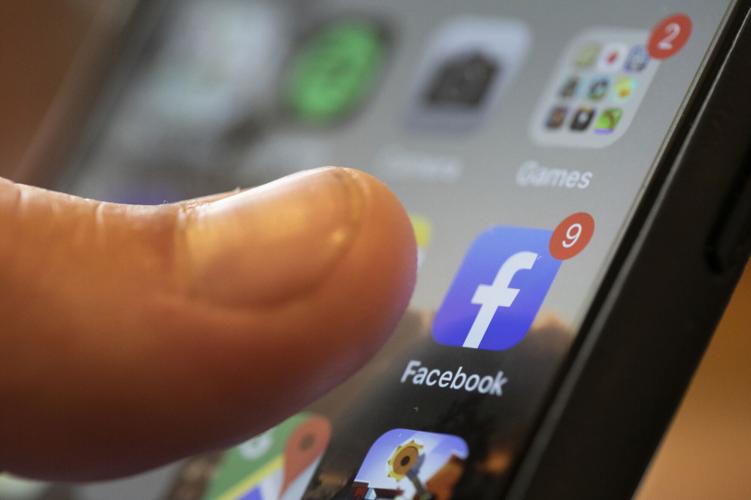
An iPhone displays the Facebook app Aug. 11, 2019, in New Orleans.
Zuckerberg also said he would no longer donate money to widen election access for voters through the Chan Zuckerberg Initiative, the company that runs the philanthropy for him and his wife, Priscilla Chan.
The couple previously donated $400 million to help local election offices prepare for voters in the 2020 presidential election, with funds used for protective equipment to prevent the spread of the coronavirus at polling sites, drive-thru voting locations and equipment to process mail ballots.
“I know that some people believe this work benefited one party over the other” despite analyses showing otherwise, he said. “My goal is to be neutral and not play a role one way or another — or to even appear to be playing a role. So I don’t plan on making a similar contribution this cycle.”
The superspreaders behind top COVID-19 conspiracy theories. And 6 takeaways.
Igor Nikulin

WHO IS HE? A four-time failed political candidate, Nikulin is prominently quoted in Russian state media and fringe publications in the west as a biologist and former weapons inspector in Iraq who served on a U.N. commission on biological and chemical weapons in the 1990s.
COVID CLAIM: Nikulin argues the U.S. created the virus and used it to attack China. He first voiced the belief in a Jan. 20, 2020, story by Zvezda, a state media outlet tied to the Russian military. He appeared on Russian state TV at least 18 times between Jan. 27, 2020, and late April of that year.
Once the virus reached the U.S., Nikulin changed his theory, saying "globalists" were using the virus to depopulate the earth.
Nikulin has expressed support for weaponizing misinformation to hurt the U.S. in the past. On his website, he suggests claiming the U.S. created HIV as a way to weaken America from within. Russian intelligence mounted a similar 1980s disinformation campaign dubbed "Operation INFEKTION."
"If you prove and declare... that the virus was bred in American laboratories, the American economy will collapse under the onslaught of billions of lawsuits by millions of AIDS carriers around the world," Nikulin wrote on his website.
EVIDENCE? Nikulin offered no evidence to support his assertions, and there are reasons to doubt his veracity.
Former U.N. weapons inspector Richard Butler, for whom Nikulin claims to have worked, said he had no memory of Nikulin, and that his story sounded "sloppily fabricated, and not credible."
No U.N. records could be found to confirm his employment.
In an exchange with the AP over Facebook, Nikulin insisted his claims and background are accurate, though he said some records from U.N. work were destroyed in an American bombing during the Iraq invasion.
When told that Butler didn't know him, Nikulin responded "This is his opinion."
Luc Montagnier
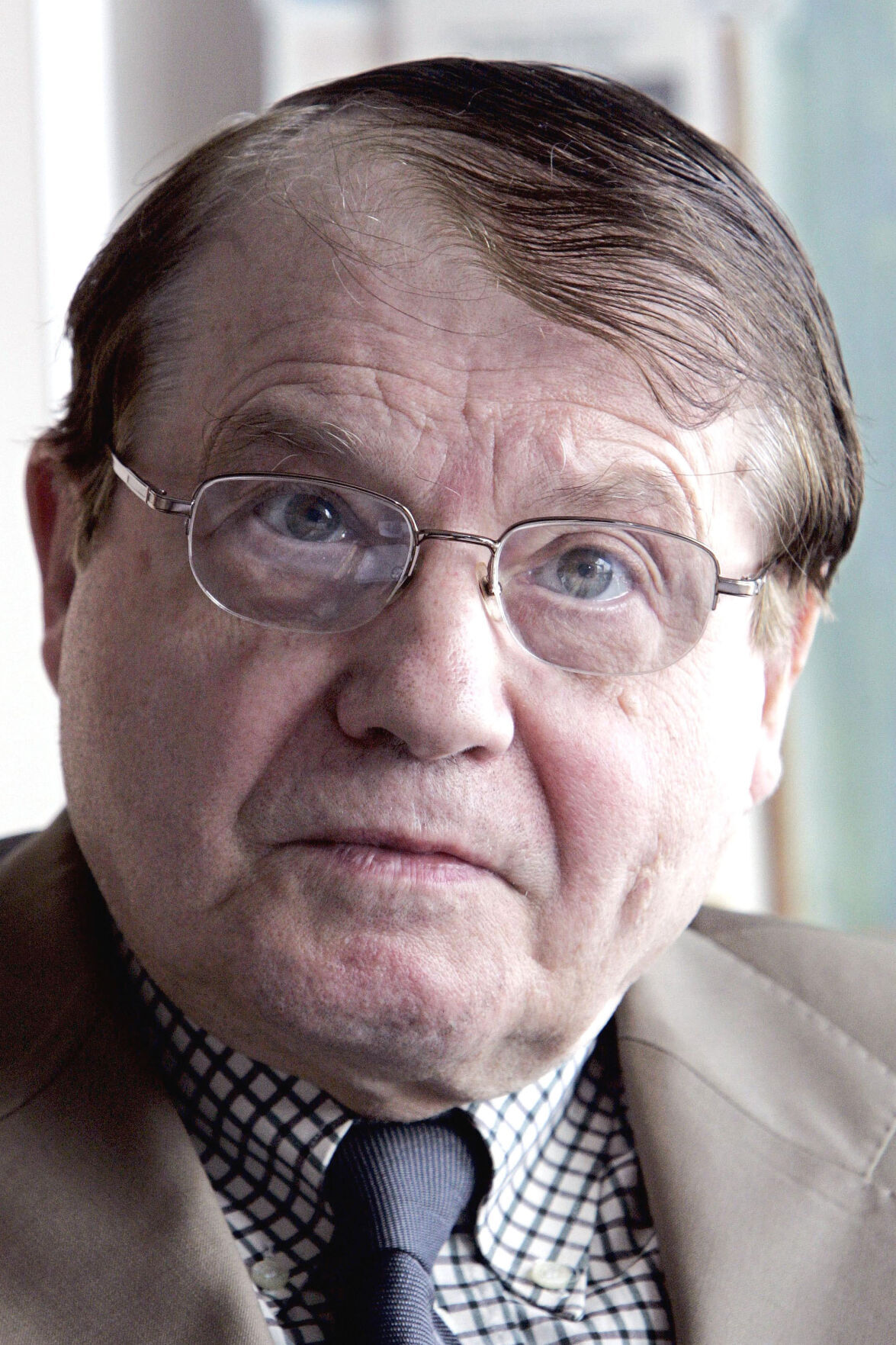
WHO HE IS: Montagnier is a world-renowned virologist who won the Nobel prize in 2008 for discovering HIV.
COVID CLAIM: During an April interview with the French news channel CNews, Montagnier claimed that the coronavirus did not originate in nature and was manipulated. Montagnier said that in the process of making the vaccine for AIDS, someone took the genetic material and added it to the coronavirus. Montagnier cites a retracted paper published in January from Indian scientists who had said they had found sequences of HIV in the coronavirus. AP made multiple unsuccessful attempts to contact Montagnier.
EVIDENCE: Experts who have looked at the genome sequence of the virus have said it has no HIV-1 sequences. In January, Indian scientists published a paper on bioRXIV, a repository for scientific papers that have not yet been peer-reviewed or published in a traditional scientific journal. The paper said that the scientists had found "uncanny similarity of unique inserts" in COVID-19 and HIV. Social media users picked up the paper as proof that the virus was engineered. As soon as it was published, the scientific community widely debunked the paper on social media. It was later withdrawn.
Supreme Leader Ali Khamenei and Hossein Salami

WHO THEY ARE: Khamenei is the second and current Supreme Leader of the Islamic Republic of Iran. He has the final say on all matters of state, including the economy, military and health divisions.
Since being elected to office in 1981, Khamenei has maintained his skeptical view of the U.S. as Iran's foremost enemy. The tensions between the two countries boiled over in 2018 when Trump pulled the U.S. out of the Iran nuclear deal and reimposed crippling sanctions. At the time, Khamenei remarked, "I said from the first day: Don't trust America."
Hossein Salami was appointed by Khamenei as commander of Iran's Revolutionary Guard in April 2019. He leads the country's paramilitary force that oversees Iran's ballistic missile program and responds to threats from both inside and outside the country.
COVID CLAIM: Salami declared on March 5, 2020, that Iran was engaged in a fight against a virus that might be the product of an American biological attack. On those grounds, Salami ordered a Ground Force Biological Defense Maneuver to test the country's ability to combat a biological attack. Beginning March 16, the Ground Force, in close collaboration with the Health Ministry, began holding nationwide biodefense drills.
Khamenei was among the first and most powerful world leaders to suggest the coronavirus could be a biological weapon created by the U.S. During his annual address on March 22 to millions of Iranians for the Persian New Year, Khamenei questioned why the U.S. would offer aid to countries like Iran if they themselves were suffering and accused of making the virus.
Khamenei went on to refuse U.S. assistance, saying "possibly (U.S.) medicine is a way to spread the virus more." Last month, he refused to accept coronavirus vaccines manufactured in Britain and the U.S., calling them "forbidden." The Iranian Mission to the United Nations in New York did not respond to multiple requests for comment.
EVIDENCE: There is no evidence that the U.S. created the virus or used it as a weapon to attack Iran.
6 takeaways from AP's investigation
***

1. Since 2016, Russia has been widely seen as the leading foreign actor spreading disinformation. With COVID-19, China took the lead, continuing to spread conspiracies about the origins of the virus long after Moscow stopped.
2. China has landed with a bang on Western social media. The number of Chinese diplomatic accounts on Twitter has more than tripled since mid-2019, while on Facebook they’ve more than doubled. Both platforms are banned in China. With COVID-19, these accounts helped set and amplify messaging across platforms, languages and geographies.
***

3. A series of 11 tweets by Chinese foreign ministry spokesman Zhao Lijian (pictured) in March, which broadcast speculation that the U.S. Army engineered COVID-19, was cited over 99,000 times, in at least 54 languages, by accounts with hundreds of millions of followers. Then Chinese state media picked up and syndicated his ideas.
4. China leaned on Russian disinformation strategy and infrastructure. Conspiracies were seeded and spread through established Kremlin proxies in the West. China, Russia and Iran also reinforced each other's messaging, cross-referencing reports and sources, deepening their echo chamber of authenticity.
***

5. During the first half of 2020, there were millions of coronavirus-related interactions on Twitter with 829 accounts linked to the Chinese, Russian and Iranian governments. Chinese state media and Foreign Ministry accounts were among the most retweeted.
6. China’s foreign ministry says it resolutely rejects disinformation, but will defend itself against the aggression of hostile forces seeking to politicize the epidemic. “All parties should firmly say ‘no’ to the dissemination of disinformation,” the ministry said in a statement to AP, but added, “In the face of trumped-up charges, it is justified and proper to bust lies and clarify rumors by setting out the facts.”
In this Sept. 1, 2020 file photo, a smartphone records Chinese Foreign Ministry spokeswoman Hua Chunying as she speaks during a daily briefing at the Ministry of Foreign Affairs in Beijing.