BEIRUT — Lebanon announced a partial ceasefire Monday between Hezbollah and Israel in what would amount to a limited de-escalation of a conflict that has killed thousands of people and inflamed the broader war with Iran.
According to Lebanon's embassy in Washington, the agreement, which would not end the conflict in that country, calls for Israel to refrain from strikes on Beirut and its suburbs controlled by Hezbollah, while the Iran-aligned group would halt its attacks on Israel.
Hostilities in southern Lebanon continued Monday evening.

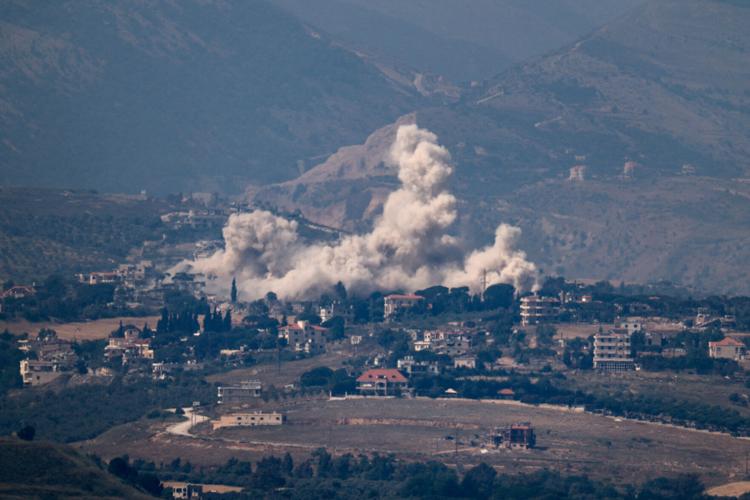
Smoke rises Monday in Lebanon after an air strike, as seen from the Israeli side of the Israel-Lebanon border.
U.S. President Donald Trump, who first announced the agreement, said Hezbollah, through intermediaries, pledged not to attack Israel. No U.S. president has ever spoken with Hezbollah, with or without intermediaries. The group is designated as a terrorist organization by the United States.
People are also reading…
Trump also said Israeli Prime Minister Benjamin Netanyahu agreed to pull back any troops preparing to attack Lebanon.
After Trump's announcement, Netanyahu said Israel would continue military operations in southern Lebanon, where ground forces are pushing toward the Zaharani River, their deepest incursion in Lebanon in 25 years.
Hezbollah lawmaker Hassan Fadlallah said the militia would support a full ceasefire across all Lebanon as a precursor to the withdrawal of Israeli troops. He did not say whether the group would stop its strikes on Israeli territory.

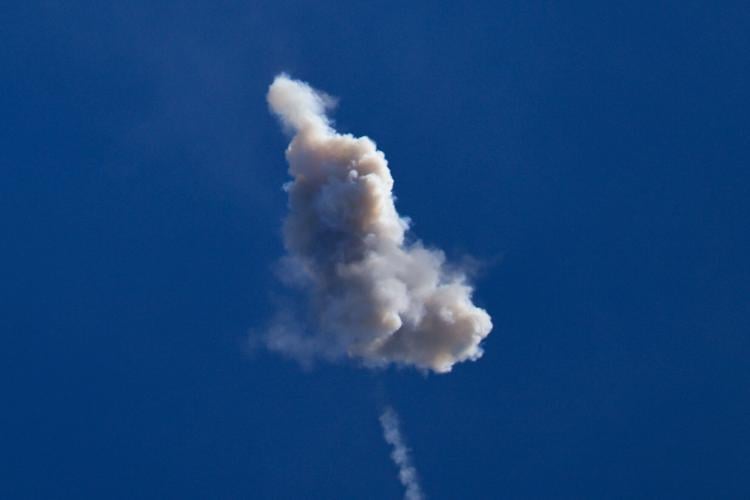
A projectile is intercepted Monday over Israel as seen from the Israeli side of the Israeli-Lebanese border.
Lebanon said it would seek to expand the ceasefire in talks with Israel in Washington on Wednesday.
That could clear the path for renewed efforts to end the three-month-old war between the United States and Iran, which has been stuck in limbo for weeks under a fragile ceasefire as negotiators are unable to agree on an initial framework for peace talks.
The Israel-Hezbollah war erupted on March 2 as an offshoot of the broader conflict and has been entangled with it ever since.
Iran insists on a halt to Israeli attacks in Lebanon as a condition of any deal to end the war, while the United States says the two conflicts are separate.

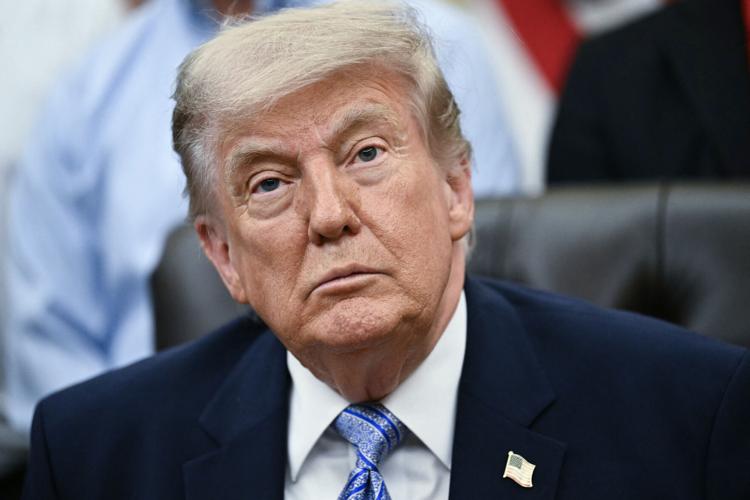
President Donald Trump speaks May 21 in the Oval Office of the White House in Washington.
Fragile ceasefire talks
Iranian state media said earlier Monday that Tehran halted indirect negotiations with the U.S. and might end a ceasefire that largely held since early April, citing the war in Lebanon.
There was no direct confirmation of the reports from Iranian officials, and Trump told an NBC reporter that he had not heard from Iran.
Since mid-March, Trump repeatedly claimed he is close to signing a peace deal but has yet to do so. Despite the ceasefire, Iran and the United States exchanged strikes several times over the past week.
Meanwhile, the head of Iran's Revolutionary Guards Quds Force, Esmaeil Qaani, threatened to expand its blockade of the Strait of Hormuz to the Bab El Mandeb Strait, another choke point at the mouth of the Red Sea.
Iran already bottled up maritime traffic in the Gulf that before the war provided one-fifth of the world's oil and liquefied natural gas, sending prices sharply higher.

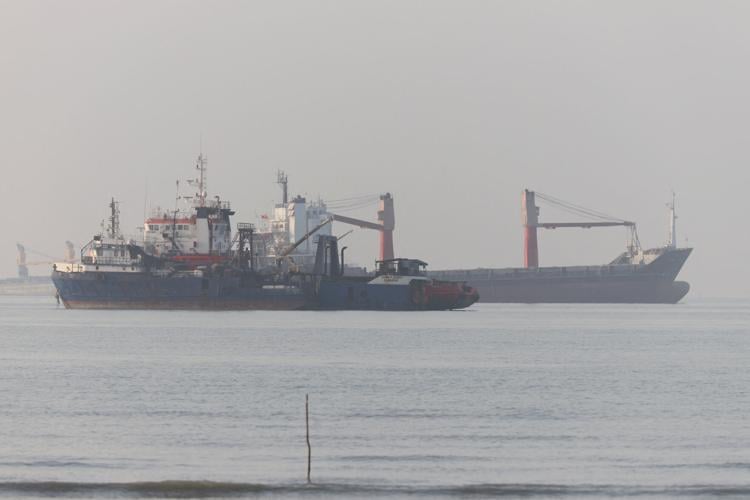
Vessels are seen Monday in the Strait of Hormuz near the beach of Bandar Abbas, Iran.
Gas prices
Trump is under pressure to reopen the Strait of Hormuz and get U.S. gasoline prices down before November congressional elections, as voters show increasing frustration over rising prices. At the same time, he faces a potential backlash from Iran hawks in his own party over any concessions to Tehran.
Oil prices rose 4% on Monday on the heightened tensions.
Trump says his main aim in the war is to prevent Iran from developing a nuclear weapon with its highly enriched uranium. Tehran denies planning to develop a nuclear arsenal.
The sides are also at odds on other issues, such as Tehran's demands for the lifting of sanctions and the release of tens of billions of dollars of Iranian oil revenue frozen in foreign banks.
Iran also wants the U.S. to lift a blockade of its ports, imposed after Tehran effectively blocked the Strait of Hormuz earlier in the war.

A member of a civilian response team looks at the sky Monday as he searches for a hostile drone in Metula, on the Israeli side of the Israel-Lebanon border.
Israeli attacks
Netanyahu's office accused Hezbollah of repeated violations of a ceasefire agreed in late April.
Trump earlier reiterated on social media that he believed Tehran wants to reach a deal. But hopes of a breakthrough were tempered by comments by Iranian officials criticizing the "constantly changing" U.S. negotiating stance.
Iranian Foreign Minister Abbas Araqchi also raised Lebanon, where another ceasefire is in place, as a stumbling block.
"Violation on one front is a violation of the ceasefire on all fronts. The U.S. and Israel are responsible for the consequences of any violation," he said on social media.
Responding to Israeli evacuation warnings to Beirut residents, the commander of Iran's Khatam al-Anbiya Central Command, Ali Abdollahi, said in a statement carried by state media that people living in northern Israel should "leave the area if they do not want to be harmed."
The war launched by the U.S. and Israel on Feb. 28 killed thousands of people so far, mainly in Iran and Lebanon.