WASHINGTON — A special counsel report released Thursday found evidence that President Joe Biden willfully retained and shared highly classified information when he was a private citizen, including about military and foreign policy in Afghanistan, but concluded that criminal charges were not warranted.
The report from special counsel Robert Hur resolves a criminal investigation that shadowed Biden's presidency for the past year. Its bitingly critical assessment of his handling of sensitive government records and unflattering characterizations of his memory will spark fresh questions about his age and competency.

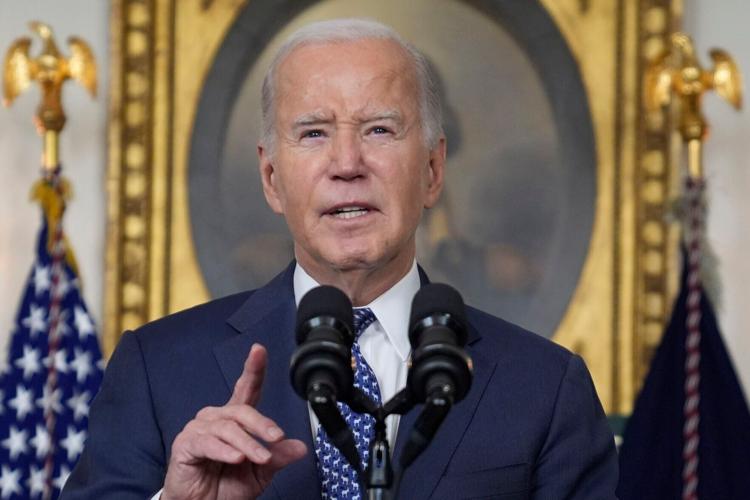
President Joe Biden speaks Thursday in the Diplomatic Reception Room of the White House in Washington.
The harsh findings also will almost certainly blunt his ability to forcefully condemn Donald Trump, Biden's likely opponent in November's presidential election, over a criminal indictment charging the former president with illegally hoarding classified records at his Mar-a-Lago estate in Florida.
People are also reading…
Despite abundant differences between the cases, Trump immediately seized on the special counsel report to portray himself as a victim of a "two-tiered system of justice."
Yet even as Hur found evidence that Biden willfully held onto highly classified information and shared it with a ghostwriter with whom he published memoirs in 2007 and 2017, the special counsel devoted much of his report to explaining why he did not believe the evidence met the standard for criminal charges. Those reasons included a high probability that the Justice Department would not be able to prove Biden's intent beyond a reasonable doubt, citing among other things an advanced age they said made him forgetful and the possibility of "innocent explanations" for the records that they could not refute.
"We have also considered that, at trial, Mr. Biden would likely present himself to a jury, as he did during our interview of him, as a sympathetic, well-meaning, elderly man with a poor memory," investigators wrote.

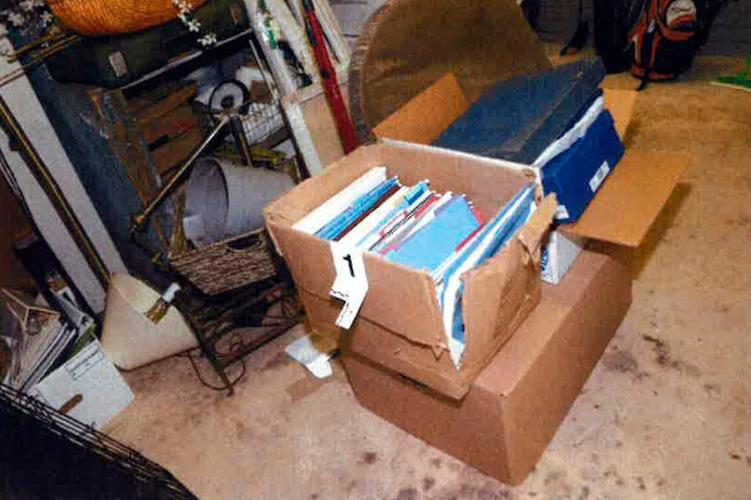
This image, contained in the report from special counsel Robert Hur, shows a damaged box where classified documents were found Dec. 21, 2022, in the garage of President Joe Biden in Wilmington, Del., during a search by the FBI.
In a statement, Biden he was "pleased" Hur "reached the conclusion I believed all along they would reach — that there would be no charges brought in this case and the matter is now closed."
However, in later remarks at the White House, Biden angrily lashed out at Hur for questioning his mental acuity, particularly his recollection of the timing of his late son Beau’s death from cancer.
Speaking to reporters, Biden asserted, "My memory is fine," and insisted he believes he remains the most qualified person to serve as president.
“I did not share classified information,” he insisted. "I did not share it with my ghostwriter.” He added he wasn't aware how boxes containing classified documents ended up in his garage.
Biden's lawyers blasted the report for what they said were inaccuracies and gratuitous swipes at the president.

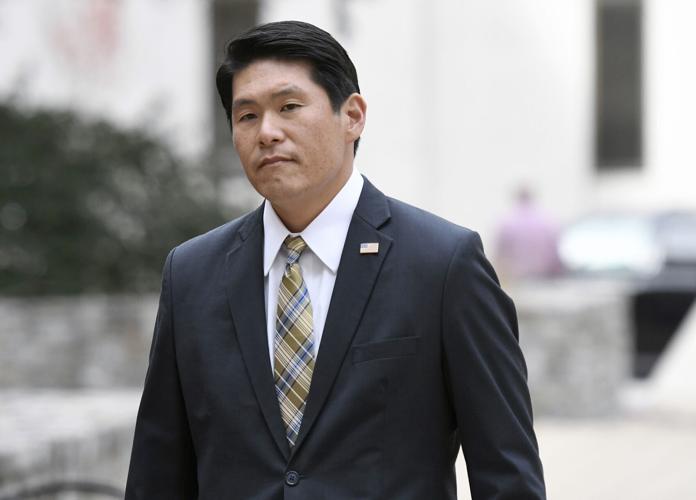
U.S. Attorney Robert Hur arrives Nov. 21, 2019, at U.S. District Court in Baltimore.
The investigation is separate from special counsel Jack Smith's inquiry into the handling of classified documents by Trump after his presidency. Smith's team charged Trump with illegally retaining top secret records and then obstructing government efforts to get them back. Trump has said he did nothing wrong.
Attorney General Merrick Garland appointed Hur, a former U.S. Attorney in the Trump administration, as special counsel in January 2023 following an initial discovery by Biden staff of classified records in Washington office space. Subsequent FBI property searches, voluntarily coordinated by Biden staff, turned up additional sensitive documents from his time as vice president and senator.
Hur's report said many of the documents recovered at the Penn Biden Center in Washington, in Biden's Delaware home and in his Senate papers at the University of Delaware were retained by "mistake."
Biden could not have been prosecuted as a sitting president, but Hur's report states that he would not recommend charges against Biden regardless.
But investigators found evidence of willful retention and disclosure of a subset of records found in Biden's Wilmington, Delaware house, including in a garage, office and basement den. The files pertain to a troop surge in Afghanistan during the Obama administration that Biden vigorously opposed. He kept records that documented his position, including a 2009 classified letter to Obama.

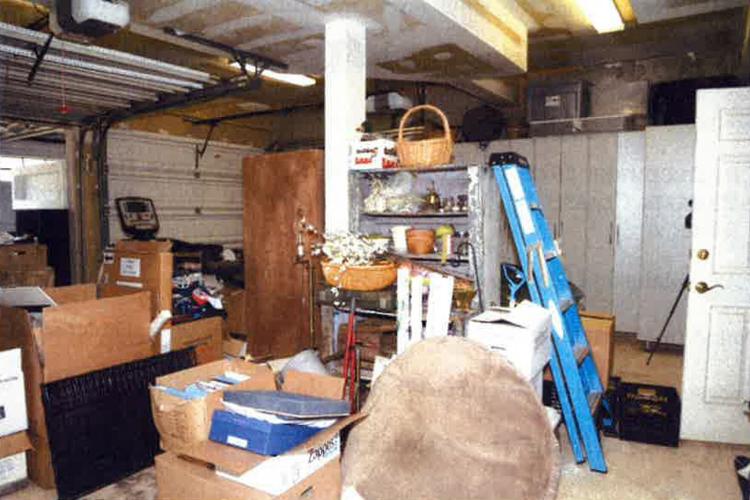
This image, contained in the report from special counsel Robert Hur, shows the cluttered garage of President Joe Biden Dec. 21, 2022, in Wilmington, Del., during a search by the FBI.
Documents found in a box in Biden's Delaware garage have classification markings up to the Top Secret/Sensitive Compartmented Information Level and "other materials of great significance to him and that he appears to have personally used and accessed." Hur wrote there was a "shortage of evidence" to prove Biden placed the documents in the box and knew they were there.
Investigators reviewed a recording of a February 2017 conversation between Biden and his ghostwriter in which Biden can be heard saying he "just found all the classified stuff downstairs."
Prosecutors believe Biden's comment, made at a time he was renting a home in Virginia, referred to the same documents FBI agents later found in his Delaware house. Though Biden sometimes skipped over presumptively classified material while reading notebook entries to his ghostwriter, the report says, at other times he read aloud classified entries "verbatim."
The report said there was some evidence to suggest Biden knew he could not keep classified handwritten notes at home after leaving office. Yet, prosecutors say, he kept notebooks containing classified information in unlocked drawers at home. He viewed the notebooks "as highly private and valued possessions with which he was unwilling to part," the report said.
It says he was known to remove and keep classified material from his briefing books for future use and his staff struggled and sometimes failed to get those records back.
Photos: Trump indictment shows documents stacked in bathroom, bedroom, ballroom

Boxes of records are stored in a bathroom and shower in the Lake Room at former President Donald Trump’s Mar-a-Lago estate in Palm Beach, Fla., seen in this image contained in an indictment charging him with 37 felonies related to the mishandling of classified documents. The indictment paints an unmistakably damning portrait of Trump’s treatment of sensitive information, accusing him of willfully defying Justice Department demands to return documents he had taken from the White House, enlisting aides in his efforts to hide the records and even telling his lawyers he wanted to defy a subpoena for the materials stored in his estate.

This image, contained in the indictment against former President Donald Trump, shows boxes of records on Dec. 7, 2021, in a storage room at Trump's Mar-a-Lago estate in Palm Beach, Fla., that had fallen over with contents spilling onto the floor. Trump is facing 37 felony charges related to the mishandling of classified documents according to an indictment unsealed Friday, June 9, 2023.

This image, contained in the indictment against former President Donald Trump, shows boxes of records being stored on the stage in the White and Gold Ballroom at Trump's Mar-a-Lago estate in Palm Beach, Fla. Trump is facing 37 felony charges related to the mishandling of classified documents according to an indictment unsealed Friday, June 9, 2023.

This image, contained in the indictment against former President Donald Trump, shows boxes of records that had been stored in the Lake Room at Trump's Mar-a-Lago estate in Palm Beach, Fla., after they were moved to a storage room on June 24, 2021.

This image contained in a court filing by the Department of Justice on Aug. 30, 2022, and partially redacted by the source, shows a photo of documents seized during the Aug. 8, 2022, FBI search of former President Donald Trump's Mar-a-Lago estate.

This image, contained in the indictment against former President Donald Trump, shows boxes of records that had been stored in the Lake Room at Trump's Mar-a-Lago estate in Palm Beach, Fla., after they were moved to a storage room on June 24, 2021.

Boxes of records seen in a storage room at former President Donald Trump's Mar-a-Lago estate in Palm Beach, Fla., that were photographed on Nov. 12, 2021.

Pages from the affidavit by the FBI in support of obtaining a search warrant for former President Donald Trump's Mar-a-Lago estate are photographed Aug. 26, 2022. U.S. Magistrate Judge Bruce Reinhart ordered the Justice Department to make public a redacted version of the affidavit it relied on when federal agents searched Trump's estate to look for classified documents.

A page from a FBI property list of items seized from former President Donald Trump's Mar-a-Lago estate and made public by the Department of Justice, are photographed Friday, Sept. 2, 2022. FBI agents who searched the home found empty folders marked with classified banners. The inventory reveals in general terms the contents of the 33 boxes taken during the Aug. 8 search.

Pages from a FBI property list of items seized from former President Donald Trump's Mar-a-Lago estate and made public by the Department of Justice, are photographed Sept. 2, 2022.

The indictment against former President Donald Trump is photographed on Friday, June 9, 2023. Trump is facing 37 felony charges related to the mishandling of classified documents according to the unsealed indictment that also alleges that he improperly shared a Pentagon "plan of attack" and a classified map related to a military operation.

The indictment against former President Donald Trump is photographed on Friday, June 9, 2023. Trump is facing 37 felony charges related to the mishandling of classified documents according to the unsealed indictment that also alleges that he improperly shared a Pentagon "plan of attack" and a classified map related to a military operation.