WASHINGTON (AP) — The U.S. is putting new restrictions into place at its southern border to try to to stop migrants from crossing illegally and encourage them instead to apply for asylum online through a new process.
The changes come with the end of coronavirus restrictions on asylum that have allowed the U.S. to quickly turn back migrants at the U.S.-Mexico border for the last three years. Those restrictions are known as Title 42, because the authority comes from Title 42 of a 1944 public health law that allows curbs on migration in the name of protecting public health.
Disinformation is swirling and confusion is setting in during the transition. A look at the new rules (and the old ones):
WHAT IS TITLE 42 AND WHAT DID IT DO?
Title 42 is the name of an emergency health authority. It's a holdover from the Trump administration and it began in March 2020. The authority allowed U.S. officials to turn away migrants who came to the U.S.-Mexico border on the grounds of preventing the spread of COVID-19.
People are also reading…
Before that, migrants could cross illegally, ask for asylum and be allowed into the U.S.. They were then screened and often released to wait out their immigration cases.
Under Title 42, migrants were returned back over the border and denied the right to seek asylum. U.S. officials turned away migrants more than 2.8 million times. Families and children traveling alone were exempt.
But there were no real consequences when someone illegally crossed the border. So migrants were able to try again and again to cross, on the off chance that they would get into the U.S.
President Joe Biden initially kept Title 42 in place after he took office, then tried to end its use in 2022. Republicans sued, arguing that the restrictions were necessary border security. Courts had kept the rules in place. But the Biden administration announced in January that it was ending national COVID-19 emergencies, and so the border restrictions are now going away.
Biden has said the new changes are necessary, in part because Congress has passed no immigration reform in decades.

SO WHAT'S HAPPENING NEXT?
Starting at 11:59 p.m. EDT Thursday, the Title 42 restrictions will lift.
The Biden administration has put into place a series of new policies that crack down on illegal crossings. The administration says it's trying to stop people from paying smuggling operations to make a dangerous and often deadly journey.
Now, there will be strict consequences. Migrants caught crossing illegally will not be allowed to return for five years. They can face criminal prosecution if they do.
NEW ASYLUM RULES
Under U.S. and international law, anyone who comes to the U.S. can ask for asylum. People from all over the world come to the U.S-Mexico border to seek asylum in the U.S. They are screened to determine whether they have a credible fear of persecution in their homeland. Their case then goes to the immigration court system to determine if they can stay in the U.S., but that process can take years. Usually they are released into the U.S. to wait their cases out.
The Biden administration is now turning away anyone seeking asylum who didn't first seek protection in a country they traveled through, or first applied online. This is a version of a Trump administration policy that was overturned by the courts, so it's not clear whether this restriction will hold up. A lawsuit is expected.

A migrant couple struggles while carrying their baby as they approach a gate in the border fence after crossing from Ciudad Juarez, Mexico into El Paso, Texas, in the early hours of Thursday, May 11, 2023. Migrants rushed across the border hours before pandemic-related asylum restrictions were to expire Thursday, fearing that new policies would make it far more difficult to gain entry into the United States. (AP Photo/Andres Leighton)
WHO'S ALLOWED IN?
The U.S. has said it will accept up to 30,000 per month from Venezuela, Haiti, Nicaragua and Cuba as long as they come by air, have a sponsor and apply online first. The government will also allow up to 100,000 people from Guatemala, El Salvador, and Honduras into the U.S. who have family here if they, too, apply online. Border officials will deport people otherwise, including turning 30,000 a month from Venezuela, Haiti, Nicaragua and Cuba back over the border to Mexico.
Other migrants may be allowed in, too, if they apply through the CBP One app. Right now, 740 people per day have been allowed in through the app and they're increasing it up to 1,000 per day.
WHAT ABOUT FAMILIES?
Families crossing the border illegally will be subject to curfews, and the head of household will have to wear an ankle monitoring bracelet. Immigration officials will try to determine within 30 days whether a family can stay in the U.S. or be deported. Usually that process would take years.
The administration considered detaining families until they cleared initial asylum screenings but opted instead for the curfews, which will run from 11 p.m. to 5 a.m. and begin soon in Baltimore; Chicago; Newark, New Jersey; and Washington, D.C., according to a U.S. official who spoke on condition of anonymity because the information was not intended to be public. Families who do not show up for their screening interviews will be picked up by immigration authorities and deported.

Migrants arrive to the Mexican side of the bank of the Rio Grande river, with plans to cross to the U.S., from Matamoros, Mexico, Thursday, May 11, 2023. Pandemic-related U.S. asylum restrictions, known as Title 42, are to expire May 11. (AP Photo/Fernando Llano)
OVERCROWDING
Border Patrol stations are meant to house migrants temporarily and don't have capacity to hold the volume of people coming. Some stations are already too crowded. As a result, agents began releasing migrants into the U.S. with instructions to appear at an immigration office within 60 days, or face deportation.
Agents were also told to start the releases in any area where holding facilities were at 125% capacity or the average time in custody exceeded 60 hours. They were also to start releases if 7,000 migrants were taken into custody across the entire border in any one day.
That's already happened. Some 10,000 people taken into custody on Tuesday. This could create problems for Biden administration officials trying to crack down on those coming in.
Florida filed a lawsuit claiming the releases violate an earlier court ruling.

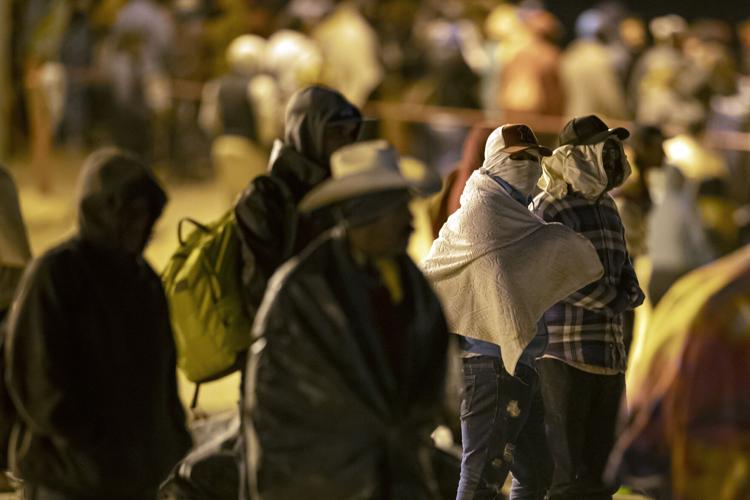
Migrants wait in the cold at a gate in the border fence after crossing from Ciudad Juarez, Mexico into El Paso, Texas, in the early hours of Thursday, May 11, 2023. Migrants rushed across the border hours before pandemic-related asylum restrictions were to expire Thursday, fearing that new policies would make it far more difficult to gain entry into the United States. (AP Photo/Andres Leighton)
MIGRATION HUBS
U.S. officials plan to open 100 regional migration hubs across the Western Hemisphere, where people can come to seek placement in another country, including Canada and Spain.
There will be hubs in Colombia and Guatemala, but it's not clear where the others will be. It's also not clear when they will be up and running.
___
Photos: Migrants rush across US border in final hours before pandemic rule expires

A Texas National Guardsman stands along a stretch of razor wire as migrants try to cross into the U.S., on the banks of the Rio Grande, as seen from Matamoros, Mexico, Thursday, May 11, 2023. Migrants rushed across the Mexico border Thursday in hopes of entering the U.S. in the final hours before pandemic-related asylum restrictions are lifted. (AP Photo/Fernando Llano)

Members of the Texas National Guard prepare to deploy to the Texas-Mexico border in Austin, Texas, Monday, May 8, 2023. The Title 42 policy, a federal rule that has allowed the government to strictly regulate border entries, is set to expire this week. (AP Photo/Eric Gay)

Migrants pass through razor wire on the bank of the Rio Grande river where Texas National Guards verbally tell them not to cross, as migrants enter the U.S. to turn themselves into immigration authorities, seen from Matamoros, Mexico, Thursday, May 11, 2023. Pandemic-related U.S. asylum restrictions, known as Title 42, are to expire May 11. (AP Photo/Fernando Llano)

Migrants stand on the bank of the Rio Grande river as Texas National Guards block them from behind razor wire, seen from Matamoros, Mexico, Thursday, May 11, 2023. Pandemic-related U.S. asylum restrictions, known as Title 42, are to expire May 11. (AP Photo/Fernando Llano)

Venezuelan migrants take a break during their walk across the Darien Gap from Colombia to Panama, in hopes of reaching the U.S., Tuesday, May 9, 2023. Pandemic-related U.S. asylum restrictions, known as Title 42, are to expire Thursday, May 11. (AP Photo/Ivan Valencia)

Migrants walk across the Darien Gap from Colombia to Panama in hopes of reaching the U.S., Tuesday, May 9, 2023. Pandemic-related U.S. asylum restrictions, known as Title 42, are to expire Thursday, May 11. (AP Photo/Ivan Valencia)

Texas National Guard soldiers tie rows of barbed-wire to be installed near a gate in the border fence in El Paso, Texas, in the early hours of Thursday, May 11, 2023. Migrants rushed across the border hours before pandemic-related asylum restrictions were to expire Thursday, fearing that new policies would make it far more difficult to gain entry into the United States. (AP Photo/Andres Leighton)

A man from Colombia uses metallic fabric to keep his feet warm as he waits to apply for asylum after crossing the border from Mexico on Wednesday, May 10, 2023, near Jacumba, Calif. The Biden administration on Thursday will begin denying asylum to migrants who arrive at the U.S.-Mexico border without first applying online or seeking protection in a country they passed through, marking a fundamental shift in immigration policy as the U.S. readies for the end of a key pandemic restriction. (AP Photo/Gregory Bull)

A migrant from Colombia, center, gives a blanket to a father and son, also from Colombia, as the group waits to apply for asylum after crossing the border Wednesday, May 10, 2023, near Jacumba, Calif. The group have been camping just across the border for days, waiting to apply for asylum in the United States. As members of the group get to the front of the line to be escorted into vans, they hand off all warm clothing to those who might still have to camp overnight. (AP Photo/Gregory Bull)

Migrants cross the Rio Grande river into the U.S., seen from Matamoros, Mexico, Wednesday, May 10, 2023. Asylum seekers have been showing up at the US-Mexico border in huge numbers in anticipation of the restriction of Title 42, that had allowed the government to quickly expel migrants to Mexico. New measures were announced Wednesday creating new legal pathways for migrants. (AP Photo/Fernando Llano)

Migrants wait for U.S. authorities, between a barbed-wire barrier and the border fence at the US-Mexico border, as seen from Ciudad Juarez, Mexico, Wednesday, May 10, 2023. The U.S on May 11 will begin denying asylum to migrants who show up at the U.S.-Mexico border without first applying online or seeking protection in a country they passed through, according to a new rule released May 10. (AP Photo/Christian Chavez)

Migrants wait in line adjacent to the border fence under the watch of the Border Patrol and Texas National Guard to enter into El Paso, Texas, Wednesday, May 10, 2023. President Joe Biden’s administration on Thursday will begin denying asylum to migrants who show up at the U.S.-Mexico border without first applying online or seeking protection in a country they passed through, according to a new rule released Wednesday, as U.S. officials warned of difficult days ahead as a key limit on immigration is set to expire.(AP Photo/Andres Leighton)

Asylum-seekers wait between the double fence on U.S. soil along the U.S.-Mexico border near Tijuana, Mexico, Monday, May 8, 2023, in San Diego. The migrants wait between the fences to be processed by U.S. Border Patrol agents. (AP Photo/Denis Poroy)

Asylum-seekers wait between the double fence on U.S. soil along the U.S.-Mexico border near Tijuana, Mexico, Monday, May 8, 2023, in San Diego. The migrants wait between the fences to be processed by U.S. Border Patrol agents. (AP Photo/Denis Poroy)

Members of the Texas National Guard prepare to deploy to the Texas-Mexico border in Austin, Texas, Monday, May 8, 2023. The Title 42 policy, a federal rule that has allowed the government to strictly regulate border entries, is set to expire this week. (AP Photo/Eric Gay)

FILE - Migrants that were trying to evade U.S. Border Patrol agents, wait to be processed in Granjeno, Texas, early Thursday, May 4, 2023. A recent surge of migrants in the Brownsville area of the U.S.-Mexico border is highlighting immigration challenges as the U.S. prepares for the end of a policy linked to the coronavirus pandemic that allowed it to quickly expel many migrants. (AP Photo/Veronica G. Cardenas, File)

Migrants from El Salvador cross the Rio Grande river to the U.S. side, from Matamoros, Mexico, Thursday, May 11, 2023. Pandemic-related U.S. asylum restrictions, known as Title 42, are to expire May 11. (AP Photo/Fernando Llano)

Texas National Guards stand guard on the bank of the Rio Grande river, seen from Matamoros, Mexico, Thursday, May 11, 2023. Pandemic-related U.S. asylum restrictions, known as Title 42, are to expire May 11. (AP Photo/Fernando Llano)

A couple of migrants watch as the Texas National Guard add more rows of barbed-wire around a gate in the border fence into El Paso, Texas, in the early hours of Thursday, May 11, 2023. Migrants rushed across the border hours before pandemic-related asylum restrictions were to expire Thursday, fearing that new policies would make it far more difficult to gain entry into the United States. (AP Photo/Andres Leighton)

Migrants sit under a sign marking the Panama-Colombia border during their trek across the Darien Gap, Tuesday, May 9, 2023. Pandemic-related U.S. asylum restrictions, known as Title 42, are to expire Thursday, May 11. (AP Photo/Ivan Valencia)

A Venezuelan migrant buys an energy drink at a stall set up along the route of the Darien Gap, from Colombia into Panama, Tuesday, May 9, 2023. Pandemic-related U.S. asylum restrictions, known as Title 42, are to expire Thursday, May 11. (AP Photo/Ivan Valencia)

Migrants gather to start the walk across the Darien Gap from Colombia to Panama in hopes of reaching the U.S., at the trailhead camp in Acandi, Colombia, Tuesday, May 9, 2023. Pandemic-related U.S. asylum restrictions, known as Title 42, are to expire Thursday, May 11. (AP Photo/Ivan Valencia)

Migrants arrive at a gate in the border fence after crossing from Ciudad Juarez, Mexico into El Paso, Texas, in the early hours of Thursday, May 11, 2023. Migrants rushed across the border hours before pandemic-related asylum restrictions were to expire Thursday, fearing that new policies would make it far more difficult to gain entry into the United States. (AP Photo/Andres Leighton)

Migrants wait for U.S. authorities, between a barbed-wire barrier and the border fence at the US-Mexico border, as seen from Ciudad Juarez, Mexico, Wednesday, May 10, 2023. Asylum seekers have been showing up at the US-Mexico border in huge numbers in anticipation of the restriction of Title 42, that had allowed the government to quickly expel migrants to Mexico. New measures were announced Wednesday creating new legal pathways for migrants. (AP Photo/Christian Chavez)

Wheelchair-bound Colombian migrant Mireya Payares is helped by another migrant to cross the Rio Grande river from Matamoros, Mexico, Wednesday, May 10, 2023. Payares is part of a family group of nine Colombian migrants who are traveling together from Bucaramanga, Colombia, since February 19, 2023, to reach the United States. (AP Photo/Fernando Llano)

Migrants walk up the bank on the U.S. side of the Rio Grande river, as seen from Matamoros, Mexico, Wednesday, May 10, 2023. Asylum seekers have been showing up at the US-Mexico border in huge numbers in anticipation of the restriction of Title 42, that had allowed the government to quickly expel migrants to Mexico. New measures were announced Wednesday creating new legal pathways for migrants. (AP Photo/Fernando Llano)

A migrant crosses the Rio Grande river with a baby in a suitcase, as seen from Matamoros, Mexico, Wednesday, May 10, 2023. The U.S. on May 11 will begin denying asylum to migrants who show up at the U.S.-Mexico border without first applying online or seeking protection in a country they passed through, according to a new rule released on May 10. (AP Photo/Fernando Llano)

Venezuelan migrant Luis Parra, third right, joins other migrants crossing the Rio Grande river, seen from Matamoros, Mexico, Wednesday, May 10, 2023. Parra and his niece Leidy Arriza arrived at the border after staying overnight in the Mexican city of Monterrey. (AP Photo/Fernando Llano)

Migrants use plastic bottles as floatation devices to cross the Rio Bravo river into the United States from Matamoros, Mexico, Wednesday, May 10, 2023. The U.S. on May 11 will begin denying asylum to migrants who show up at the U.S.-Mexico border without first applying online or seeking protection in a country they passed through, according to a new rule released on May 10. (AP Photo/Fernando Llano)

Texas National Guardsmen stand along a stretch of razor wire as a migrant woman carrying a child tries to cross into the U.S, on the banks of the Rio Grande, as seen from Matamoros, Mexico, Thursday, May 11, 2023. Migrants rushed across the Mexico border Thursday in hopes of entering the U.S. in the final hours before pandemic-related asylum restrictions are lifted. (AP Photo/Fernando Llano)

Migrants walk toward immigration authorities to turn themselves in as they make their way past Texas National Guardsmen, on the bank of the Rio Grande, as seen from Matamoros, Mexico, Thursday, May 11, 2023. Migrants rushed across the Mexico border Thursday in hopes of entering the U.S. in the final hours before pandemic-related asylum restrictions are lifted. (AP Photo/Fernando Llano)

Migrants cross the Rio Grande to the U.S. side, from Matamoros, Mexico, Thursday, May 11, 2023. Migrants rushed across the Mexico border Thursday in hopes of entering the U.S. in the final hours before pandemic-related asylum restrictions are lifted. (AP Photo/Fernando Llano)

An official interviews a migrant who was deported from the United States upon his arrival on a chartered plane, at the airport in Bogota, Colombia, Thursday, May 11, 2023. Colombian migration authority said 209 Colombians were flown on a charted flight from the U.S.- Mexico border. (AP Photo/John Vizcaino)

Yised Marulanda cries after arriving with other Colombia migrants deported from the United States, at the airport in Bogota, Colombia, Thursday, May 11, 2023. Colombian migration authority said 209 Colombians were flown on a charted flight from the U.S.- Mexico border. (AP Photo/John Vizcaino)

A migrant gestures to Texas National Guards standing behind razor wire on the bank of the Rio Grande river, seen from Matamoros, Mexico, Thursday, May 11, 2023. Pandemic-related U.S. asylum restrictions, known as Title 42, are to expire May 11. (AP Photo/Fernando Llano)

A young migrant holding swimming inner tubes stands on the Mexican-side of the Rio Grande river, from where migrants swim across to the U.S. side, in Matamoros, Mexico, Thursday, May 11, 2023. Pandemic-related U.S. asylum restrictions, known as Title 42, are to expire May 11. (AP Photo/Fernando Llano)

Venezuelan migrants take a break during their walk across the Darien Gap from Colombia to Panama, in hopes of reaching the U.S., Tuesday, May 9, 2023. Pandemic-related U.S. asylum restrictions, known as Title 42, are to expire Thursday, May 11. (AP Photo/Ivan Valencia)

Texas National Guardsmen reinforce a stretch of razor wire as migrants try to cross into the U.S., on the banks of the Rio Grande, as seen from Matamoros, Mexico, Thursday, May 11, 2023. Migrants rushed across the Mexico border Thursday in hopes of entering the U.S. in the final hours before pandemic-related asylum restrictions are lifted. (AP Photo/Fernando Llano)

A young migrant swims across the Rio Grande river to the U.S. from Matamoros, Mexico, Wednesday, May 10, 2023. The U.S on May 11 will begin denying asylum to migrants who show up at the U.S.-Mexico border without first applying online or seeking protection in a country they passed through, according to a new rule released May 10. (AP Photo/Fernando Llano)

Migrants cross the Rio Grande river into the U.S. from Matamoros, Mexico, Wednesday, May 10, 2023. The U.S on May 11 will begin denying asylum to migrants who show up at the U.S.-Mexico border without first applying online or seeking protection in a country they passed through , according to a new rule released May 10. (AP Photo/Fernando Llano)

Migrants cross the Rio Bravo on an inflatable mattress into the United States from Matamoros, Mexico, Tuesday, May 9, 2023. The U.S. is preparing for the Thursday, May 11th end of the Title 42 policy, linked to the coronavirus pandemic that allowed it to quickly expel many migrants seeking asylum. (AP Photo/Fernando Llano)

Migrants walk through a barbed-wire barrier into the United States after crossing the Rio Bravo from Matamoros, Mexico, Tuesday, May 9, 2023. The U.S. is preparing for the Thursday, May 11th end of the Title 42 policy, linked to the coronavirus pandemic that allowed it to quickly expel many migrants seeking asylum. (AP Photo/Fernando Llano)

Migrants cross the Rio Grande river into the United States from Ciudad Juarez, Mexico, Tuesday, May 9, 2023. The U.S. is preparing for the May 11th end of the Title 42 policy, linked to the coronavirus pandemic that allowed it to quickly expel many migrants seeking asylum. (AP Photo/Christian Chavez)

Migrants cross a barbed-wire barrier into the United States from Ciudad Juarez, Mexico, Tuesday, May 9, 2023. The U.S. is preparing for the Thursday, May 11th end of the Title 42 policy, linked to the coronavirus pandemic that allowed it to quickly expel many migrants seeking asylum. (AP Photo/Christian Chavez)

Migrants line-up between a barbed-wire barrier and the border fence at the US-Mexico border, as seen from Ciudad Juarez, Mexico, Tuesday, May 9, 2023. The U.S. is preparing for the Thursday, May 11th end of the Title 42 policy, linked to the coronavirus pandemic that allowed it to quickly expel many migrants seeking asylum. (AP Photo/Christian Chavez)

Migrants camp at a makeshift shelter in Reynosa, Mexico, Tuesday, May 9, 2023. The U.S. is preparing for the Thursday, May 11th end of the Title 42 policy, linked to the coronavirus pandemic that allowed it to quickly expel many migrants seeking asylum. (AP Photo/Fernando Llano)

Moto taxis transport migrants to Las Tecas camp from where they will start walking across the Darien gap from Colombia to Panama in hopes of reaching the US, in Acandi, Colombia, Monday, May 8, 2023. (AP Photo/Ivan Valencia)

Venezuelan migrant Rowil Espinoza, 34, carries his son Calel on the bank of the Rio Grande river, planning to cross to the U.S., from Matamoros, Mexico, Wednesday, May 10, 2023. Espinoza said he is traveling with his wife and three children. (AP Photo/Fernando Llano)

Texas state police finish placing barbed-wire as migrants walk up the bank of the Rio Grande river, seen from Matamoros, Mexico, Wednesday, May 10, 2023. The U.S on May 11 will begin denying asylum to migrants who show up at the U.S.-Mexico border without first applying online or seeking protection in a country they passed through, according to a new rule released May 10. (AP Photo/Fernando Llano)
Associated Press Writers Rebecca Santana in Washington and Elliot Spagat in San Diego contributed to this report.