

WASHINGTON – Congress won't be sending money to Buffalo, Erie County or any of the nation's other fiscally stressed states and municipalities anytime soon – but it looks like it will be putting stimulus checks in the hands of Americans nationwide.
That was the bottom line Wednesday as congressional negotiators edged toward a stimulus deal of $900 billion or so aimed at propping up the nation's coronavirus-wracked economy. The emerging deal likely will include checks of $600 or more for working class Americans and their children; an extension of unemployment benefits with a $300 weekly supplement; money for schools and vaccine distribution; and a new round of Paycheck Protection Program small business loans.
But $160 billion in state and local aid, advocated by a bipartisan group of senators and the House Problem Solvers Caucus in their stimulus proposal, ended up getting cut. Senate Majority Leader Mitch McConnell would agree to such funding only in tandem with a measure protecting businesses from lawsuits amid the pandemic – a measure most Democrats saw as a deal-killer.
People are also reading…
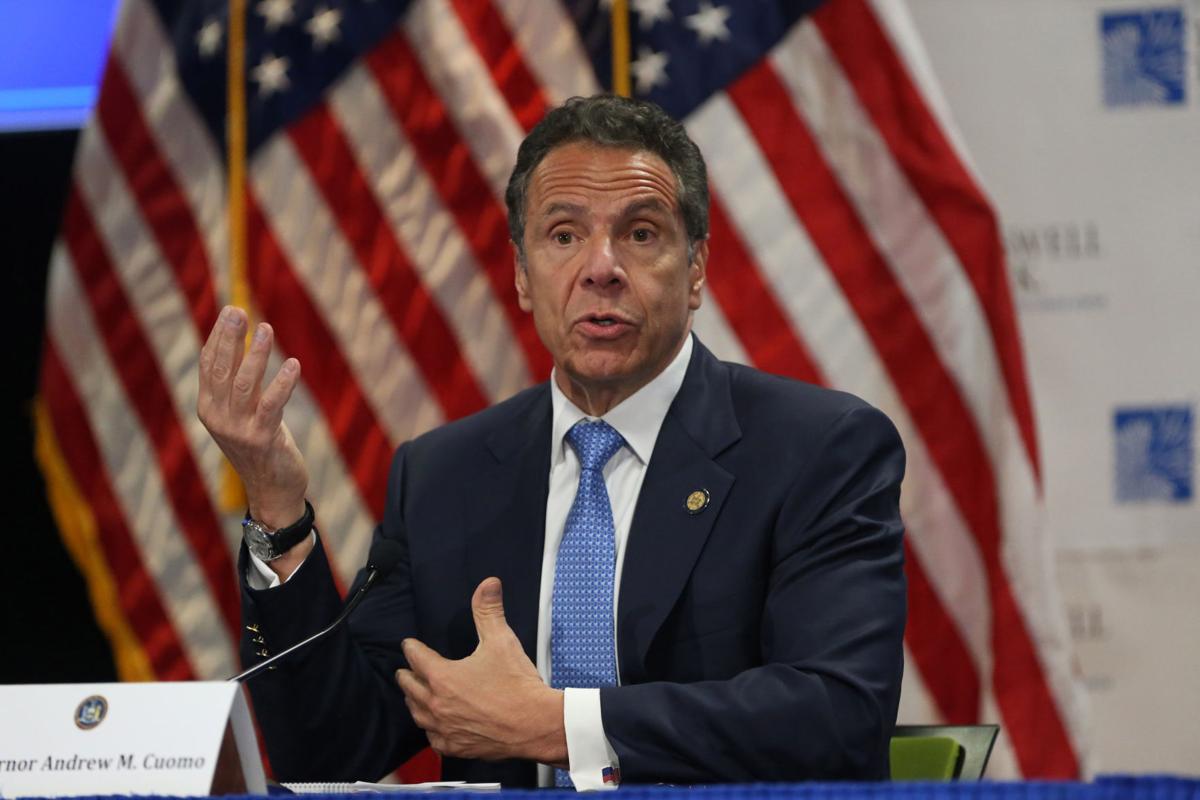
Hearing that New York won't be getting federal aid this year to help patch a multi-billion dollar budget gap, Gov. Andrew M. Cuomo erupted.
“It’s madness. Hyper-political. Parochialism. Madness," Cuomo said at a briefing in Albany.
Erie County Executive Mark C. Poloncarz, who says the county needs direct aid to pay for Covid-19 vaccination centers and other pandemic-related purposes, was equally outraged.
"I feel like we got thrown under the bus," he said.
More precisely, states and localities saw the money they wanted traded away once congressional leaders started negotiating in earnest over the stimulus deal earlier this week. With McConnell and other Republicans wary of helping states and localities, negotiators grabbed that money and used it to partly fund a demand of the unlikely duo of Sens. Josh Hawley, a Missouri Republican, and Bernie Sanders, the democratic socialist from Vermont. Both of them insisted that the stimulus bill include direct payments to individuals.
"It would be a dereliction of duty if Congress adjourns for Christmas without having a vote on providing working families with direct payments," Hawley said. "Working people are struggling. And they should be the first people given relief, not last."
The exact size of those payments remained unclear, as did the income limits that would determine who is eligible. But congressional staffers said the payments would likely be in the $600-$700 range. That's considerably smaller than the $1,200 stimulus payments that many Americans received under the Cares Act Covid-19 relief bill this spring – and it is a potential stumbling block, given that Sanders said he is unhappy with the smaller payments.
"It is my hope that we can see some light here and get to the $1,200 direct payment that adults in this country desperately need," he said.
McConnell, who previously dismissed state and local aid as too "controversial" to be included in any deal, never even mentioned it as he took to the Senate floor to tout the still-unfinished stimulus deal.
“The American people need more help. It’s that simple," said McConnell, a Republican from Kentucky. "Further targeted relief is now months overdue. We need vaccine distribution money. We need to re-up the Paycheck Protection Program to save jobs. We need to continue to provide for laid-off Americans. Congressional leaders on both sides are going to keep working until we get it done.”
For states and localities, though, the emerging agreement means another wait for federal aid that may or may not arrive once President-elect Joe Biden and a new Congress take office in January.
“I believe President Biden will correct the situation. He gets it," Cuomo said. "The problem is he has to get into office and then he has to propose a budget, so we’re looking at February, March.”
In the meantime, Assembly Democrats are pushing a plan to help fill the state's budget gap with an income tax on wealthy New Yorkers, although Cuomo said he prefers waiting to fix the state's finances during budget negotiations next year that could also lead to dramatic cuts in state spending.
Buffalo also faces a budget crunch because of the lack of aid to localities in the new stimulus bill. The city budgeted $65 million in federal aid and will eventually have to fill that hole.
Buffalo Mayor Byron Brown said the current stimulus bill "falls far short of providing local and state governments the funding they need to support their front-line workers, maintain critical infrastructure and prevent extensive layoffs in the essential public sector workforce that would only magnify the recession after the pandemic ends."
A spokeswoman for Senate Minority Leader Charles E. Schumer, Allison Biasotti, said that the current bill will include more than $10 billion that will help New York and its localities in a variety of ways other than direct fiscal relief – and that the fight for direct fiscal relief is by no means finished.
"While the deal is still being finalized, it is expected that direct aid in the form of education funding, transit funding and highways, vaccine distribution and Covid health funding and emergency assistance for renters will immediately help the state and city’s budgets," said the aide to Schumer, a New York Democrat. "With President Biden, we will continue to aggressively fight to overcome Leader McConnell’s obstinate opposition to deliver the resources New York State and our state and localities so justly need and deserve to keep our front-line workers on the job and energize our economy.”
Rep. Chris Jacobs, an Orchard Park Republican, said he would keep pressing for state and local aid as well.
"Many municipalities in my district are rural and were too small to receive funding in the original Cares Act," he said. "We need to help these smaller governments to ensure they have the resources to continue a strong response to Covid-19 and support public safety, education services and economic recovery."
And Rep. Tom Reed, the Republican co-chair of the Problem Solvers, accentuated the positive – both about the emerging stimulus deal, and about the possibility of state and local funding in another bill next year.
“When it’s inked, this deal will be a huge victory for the American people and for the way Congress should work," Reed said. "While key discussions are ongoing, it’s important to note this deal will include things like school funding and vaccine distribution support – that’s money that will directly benefit local governments."
Noting that the Problem Solvers proposed a framework that congressional leaders largely followed in their negotiations, Reed added: "With respect to liability and additional state and local aid – Congress will be dealing with these issues in short order."
News Albany Bureau Chief Tom Precious contributed to this report.


