

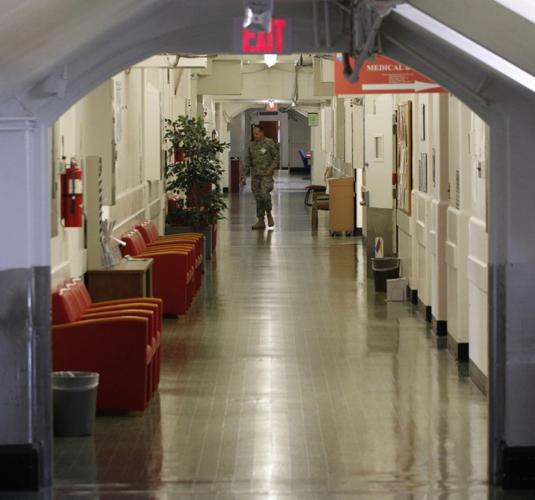
WASHINGTON - Walter Reed Army Medical Center, the Army's flagship hospital where privates to presidents have gone for care, is closing its doors after more than a century.
Hundreds of thousands of the nation's war wounded from World War I to today have received treatment at Walter Reed, including 18,000 troops who served in Iraq and Afghanistan.
President Dwight Eisenhower died there. So did Gens. John J. Pershing and Douglas MacArthur.
It's where countless celebrities, from Bob Hope to quarterback Tom Brady, have stopped to show their respect to the wounded. Through the use of medical diplomacy, the center also has tended to foreign leaders.
The storied hospital, which opened in 1909, was scarred by a 2007 scandal about substandard living conditions on its grounds for wounded troops in outpatient care and the red tape they faced. It led to improved care for the wounded, at Walter Reed and throughout the military. By then, however, plans were moving forward to close Walter Reed's campus.
People are also reading…
Two years earlier, a government commission, noting that Walter Reed was showing its age, voted to close the facility and consolidate its operations with the National Naval Medical Center in Bethesda, Md., and a hospital at Fort Belvoir, Va., to save money.
Ceremony Wednesday
Former and current patients and staff members will say goodbye at a ceremony Wednesday on the parade grounds in front of the main concrete and glass hospital complex. Most of the moving will occur in August. On Sept. 15, the Army hands over the campus to the new tenants: the State Department and the District of Columbia. The buildings on campus deemed national historic landmarks will be preserved; others probably will be torn down. The city is expected to develop its section for retail and other uses.
"For many of the staff members, even though they know that this is the future of the military health system, in a way, it's still like losing your favorite uncle, and so there is a certain amount of mourning that is going on, and it is an emotional time," said Col. Norvell Coots, commander of the Walter Reed Health Care System.
The new facility will be called the Walter Reed National Military Medical Center. It will consolidate many of Walter Reed's current offerings with the Navy hospital.
"Frankly, I will say it's with a heavy heart that Walter Reed closes. I don't know. I know that there was a process for that decision, but we've lost a great, important part of history," said Susan Eisenhower, granddaughter of the former president.
She recalled bringing to the hospital a birthday cake she had baked for her grandfather, who spent the last several months before his death in 1969 in a special suite where politicians and foreign leaders visited him.
There are countless pieces of history throughout the campus.
At the rose garden, some nurses from the Vietnam War era were said to have married their patients. The memorial chapel is where President Harry S. Truman went for his first church service after taking office, following a visit with Pershing, who lived in a suite at Walter Reed for several years, said John Pierce, historian for the Walter Reed Society.
A marker identifies the spot on the hospital grounds where, long before the hospital was built, Confederate sharpshooters fired near President Abraham Lincoln, leading an officer to call Lincoln a "damned fool" and order him to the ground, according a brochure produced by Walter Reed about its history.
Presidents now are sent to Bethesda for treatment because it's considered more secure, said Sanders Marble, senior historian with the Office of Medical History at Fort Sam Houston, Texas.
Amputee care
The original red-brick hospital had about 80 beds, but inpatient capacity grew by the thousands during the wars of the last century. Today, it treats about 775,000 outpatients annually, and has an inpatient load of about 150. It wasn't just service members and military retirees treated at the hospital over the decades, but their families, too. Countless babies were born at the hospital into the 1990s.
Rehabilitation for the wounded, including care for amputees, has been an important part of the mission since it opened. The wounded commonly spend a year or longer at the hospital now, although they are more quickly moved to outpatient care.
Photos from World War I show troops at Walter Reed learning skills such as typing and knitting. During World War II, brochures distributed to the war amputees featured pictures of amputees smoking and shaving. The message was, "Your life isn't over, don't get down," Marble said.
Closure Plan Moved Ahead
Despite all the warm feelings, a Washington Post investigation in 2007 uncovered shoddy living conditions in an outpatient ward known as Building 18. Troops were living among black mold and mouse droppings while trying to fend for themselves as they battled a complex bureaucracy of paperwork related to the disability evaluation system.
Afterward, some in Congress pushed for the Pentagon to change course and keep Walter Reed open, but an independent group reviewed the idea and recommended moving forward with Walter Reed's closure plans.
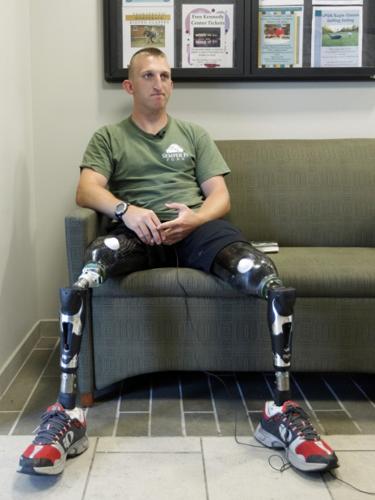
In addition to improved living conditions, one of the other upgrades after the scandal was the opening of an advanced rehabilitation center for troops with amputations.
On a recent day, several amputees, including some who had lost three limbs, were exercising in the room, one even on a skateboard.
Marine Sgt. Rob Jones, 25, is a double amputee from the Afghanistan war who spends much of his days rowing. His goal is to become an FBI agent or make the U.S. Adaptive Rowing Team.
One of more than 440 troops from the recent wars getting outpatient care, he sat on a bench outside the center reading a book.
"I'll probably just remember the people I was working with, the staff here, how much they helped me get back on my feet." Jones said.
Online
• Walter Reed Society: www.walterreedsociety.org
• National Naval Medical Center: www.bethesda.med.navy.mil
• Walter Reed Army Medical Center: www.wramc.amedd.army.mil
• Office of Medical History: history.amedd.army.mil
Did you know
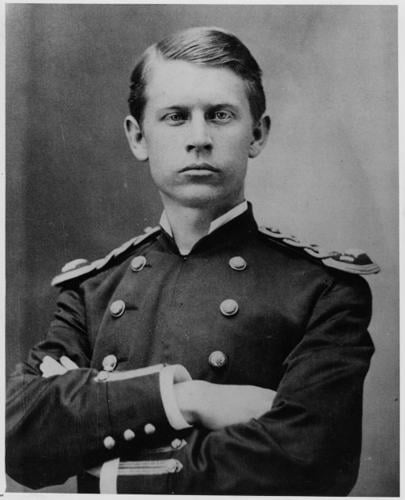
The hospital was named to honor Maj. Walter Reed, an Army physician who treated troops and American Indians on the frontier.
Among his medical achievements was lifesaving research that proved that yellow fever was spread by mosquito. One of his early military assignments was at Camp Lowell outside Tucson. He died in 1902 at age 51 of complications related to appendicitis.


