

WASHINGTON - Closed-door federal budget negotiations hit a standstill just days before government funding expires and President Obama summoned congressional leaders to the White House for a meeting today that could provide the setting for a deal.
Negotiators tripped on several difficult issues as they tried to craft the details of an agreement that would cut $33 billion from domestic spending over the remaining six months of the 2011 fiscal year.
Federal government workers began preparing for a disruption in government services, including a possible delay in income-tax refunds, that would occur if a compromise is not struck by Friday's shutdown deadline. Republicans and Democrats risk voter backlash if they are unable to come to an agreement on the 2011 spending plan.
A new Pew Research Center poll showed voters would almost equally blame Republicans and the Obama administration if the federal government is shut down. But both also face the anger of their supporters, with conservatives clamoring for deeper cuts and liberals demanding social services and programs for the poor be spared.
People are also reading…
House Republicans have grown eager to turn the page on the 2011 budget debate. GOP leaders today will unveil their 2012 budget, an ambitious blueprint that aims to fulfill their campaign pledge to dramatically cut the size and scope of federal operations, going beyond the 12 percent slice of the budget now under being debated.
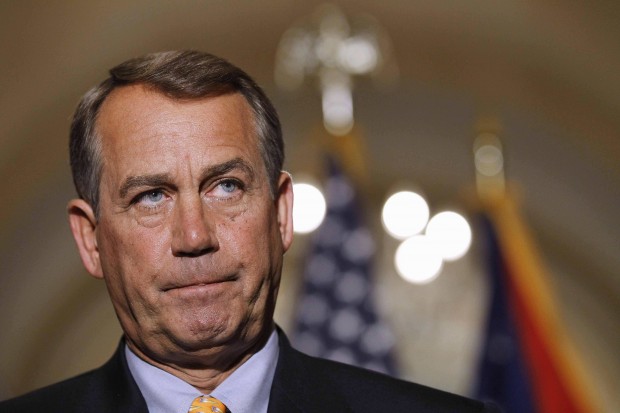
Still, House Speaker John Boehner, R-Ohio, remains under pressure from tea-party conservatives not to yield to Democrats. He insisted no agreement on the $33 billion package had been reached.
"I've made clear that their $33 billion is not enough and many of the cuts that the White House and Senate Democrats are talking about are full of smoke and mirrors," Boehner said Monday. "That's unacceptable."
The two sides disagree on the types of programs to be cut. Republicans have insisted that the savings come by shrinking discretionary domestic programs. Substantially cutting or eliminating such programs would make it politically difficult to reinstate them in future years.
Democrats, though, have introduced ways to save money by reducing accounts in mandatory programs such as agriculture supports and transportation projects.
The GOP had included such reductions in an earlier House-passed bill, but Democrats want to expand their use to as much as half the $33 billion to come from those kinds of savings, an approach denounced by Republicans.
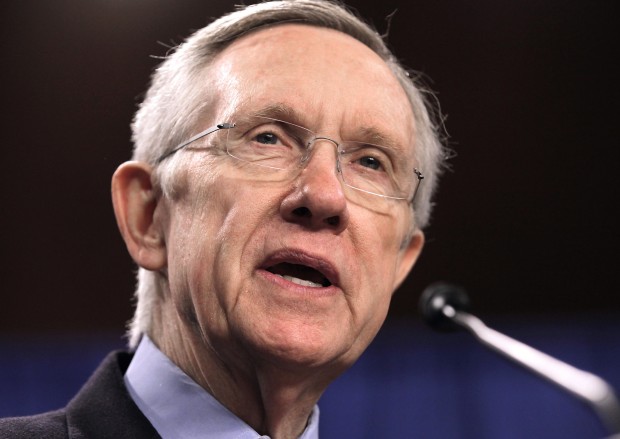
Many conservatives want to see inclusion of nearly 70 policy proposals, such as laws to defund Planned Parenthood and gut the EPA - which Senate Majority Leader Harry Reid, D-Nev., has said would not be accepted.
"We are confident that in the end Republicans will reject cries from the tea party to shut down the government and work with us on a solution," said Reid spokesman Jon Summers.
HOUSE REPUBLICANS PLAN THIRD STOPGAP BILL
With budget talks deadlocked, House Republicans readied a week-long bill to cut spending by as much as $12 billion while averting a government shutdown threatened for Friday, officials disclosed Monday night.
The measure also would include enough money to operate the Defense Department through the Sept. 30 end of the fiscal year, the officials added.
They said House Speaker John Boehner, R-Ohio, told the rank and file in a closed-door meeting he would seek passage of the bill if it became clear it was necessary to avoid shutting the government down.
He presented the plan at the end of a day marked by increasing acrimony in negotiations involving the Obama administration, Senate Democrats and Republicans.
The Associated Press


