WASHINGTON — Shortly after Russia invaded Ukraine, refugees from the threatened nation started showing up at Mexico's border with the United States. Roughly 1,000 Ukrainians a day flew to Tijuana on tourist visas, desperate to reach U.S. soil.
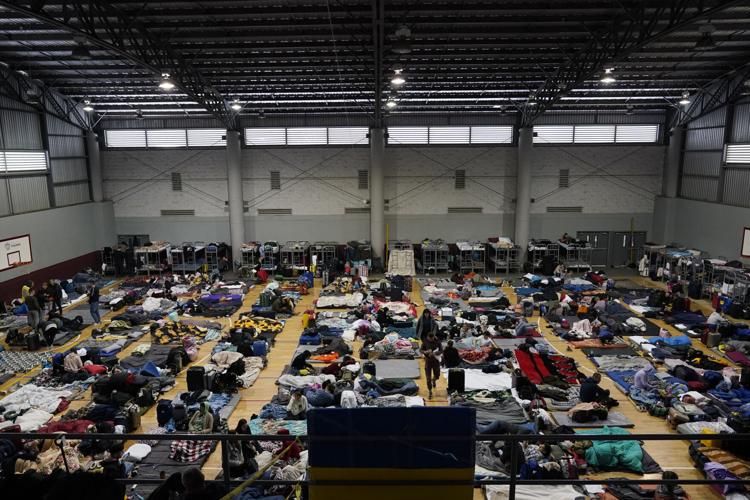
The volume was overwhelming the nation's busiest border crossing in San Diego. In Tijuana, thousands of Ukrainians slept in a municipal gym hoping for a chance to cross into the U.S.
In response, the Biden administration announced it would admit up to 100,000 Ukrainians for two years — if they applied online, had a financial backer and entered through an airport. At the same time, border officials turned back Ukrainians who arrived on foot at the U.S. border.

Ukrainian refugees wait April 5, 2022, in a gymnasium in Tijuana, Mexico.
The Democratic administration considered those policies to be so effective, a similar model became the centerpiece of a broader border policy rolling out in earnest Thursday as coronavirus pandemic restrictions that allowed U.S. officials to quickly turn away migrants crossing illegally come to an end.
People are also reading…
The results are sure to be a test for President Joe Biden, who is seeking reelection. Republicans seek to portray him as soft on security.
It's an approach that pairs beefed-up enforcement with expanded legal pathways and diplomacy.
The policies have been criticized by the left as too much like former President Donald Trump's. Others wonder whether anything Biden does will stop the flow of migrants along the southern border, and whether the new policies can survive expected legal challenges and a lack of resources.
Some immigration experts think it may be a balanced approach that results in fewer illegal crossings while still providing a haven for those fleeing persecution.
"I think they have a fighting chance, over time, to turn this into a real system that is both more fair and more controllable," said Andrew Selee, president of the Migration Policy Institute, a nonpartisan immigration think tank.

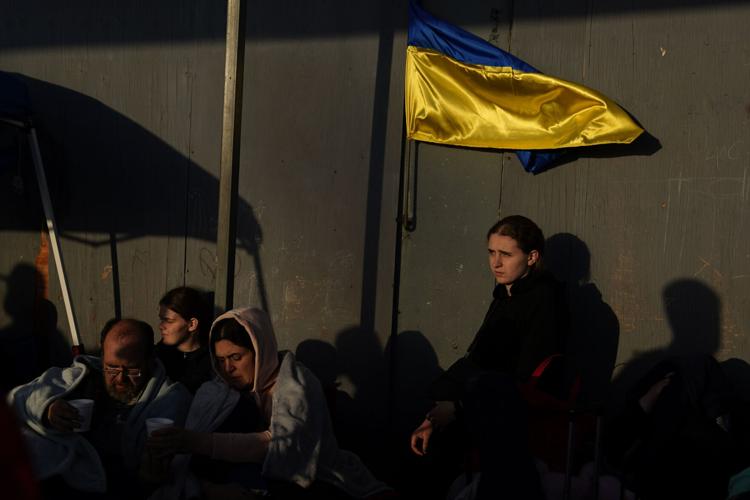
Ukrainian refugees wait April 4, 2022, near the U.S. border in Tijuana, Mexico.
This account is based in part on interviews with more than a dozen current and former administration officials who spoke on the condition of anonymity.
Within his first month in office, Biden signed a slew of executive actions to undo Trump-era policies. He backed legislation to provide a path to citizenship for millions in the country illegally. He stacked his administration with immigrant advocates.
Most of the people coming to the U.S. border illegally are fleeing persecution or poverty in their home countries. They ask for asylum and generally are allowed into the U.S. to wait out their cases, which can take years under a badly strained immigration court system. That has prompted increasing numbers to come to the border hoping to get into the U.S.
The legal asylum pathway is narrow and most do not meet the standard.
After Russia invaded Ukraine on Feb. 24, 2022, Homeland Security Secretary Alejandro Mayorkas and others worried Ukrainians could be unsafe in their travels and their circuitous route to the U.S. was straining border resources. That led to the "Uniting for Ukraine" policy, under which 128,000 people were allowed into the U.S., with tens of thousands more approved to come. The number of Ukrainians coming on foot essentially stopped.

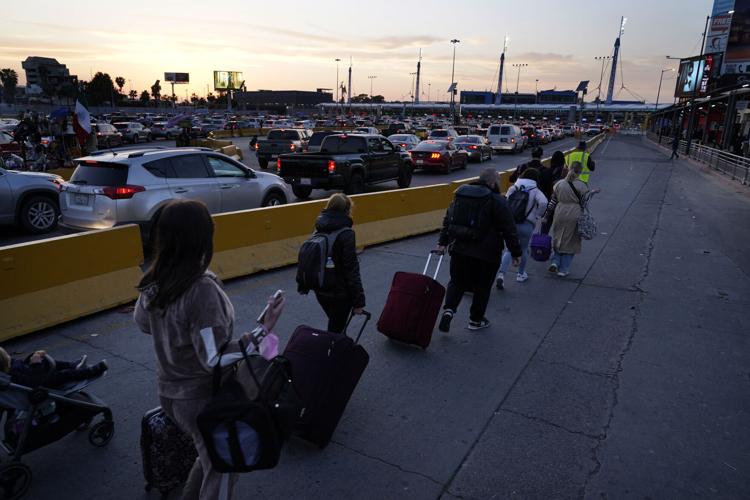
Ukrainian refugees follow a volunteer April 4, 2022, toward the San Ysidro Port of Entry in Tijuana, Mexico, as they prepare to cross the border.
The administration turned its focus to other people coming to the border illegally who could not be easily returned to their home countries.
Venezuelans were the second-largest nationality at the border after Mexicans, and in October 2022 became the second group to which the policy would apply. If they crossed illegally on foot, 24,000 would be returned back over the border to Mexico. If they came by air with sponsors, the U.S. would take in 24,000.
Meanwhile, Cubans and Nicaraguans pushed illegal crossings to the highest levels on record in December.
Republican-led states sued to keep the COVID-19 restrictions in place. Congress failed to pass a bipartisan immigration bill.
So in January, Biden announced the policy would be expanded again to people from Cuba, Haiti and Nicaragua, and increased the number of people: 30,000 from each of the four nationalities would be allowed in as long as they flew in, met background checks and had sponsors. Mexico agreed to take the same number back from those four countries who cross the border illegally.
"We can't stop people from making the journey, but we can require them to come here in an orderly way under U.S. law," Biden said in announcing the policy.
Soon, the administration reported Cubans, Haitians, Nicaraguans and Venezuelans made up only 3% of illegal crossings in March, down from 40% in December.
Last week, the administration said it would admit 100,000 people from Guatemala, Honduras and El Salvador who come to be reunited with their families in the U.S. New immigration hubs in Guatemala, Colombia and perhaps elsewhere will field applications to come to the U.S.
Border officials also are speeding up the process asylum seekers go through to more quickly expel those who fail, and finalizing a new rule — similar to a Trump policy blocked in court — to make obtaining asylum extremely difficult for anyone who passes through another country, such as Mexico, to reach the U.S. border.
Photos: Chicago, other cities say shelters full, budgets hit by immigration uptick

Immigrants from Venezuela are reflected in a marble wall while taking shelter at the Chicago Police Department's 16th District station on Monday, May 1, 2023. Chicago has seen the number of new arrivals grow tenfold in recent days. Shelter space is scarce and migrants awaiting a bed are sleeping on floors in police stations and airports. (AP Photo/Charles Rex Arbogast)

Migrants from Venezuela take shelter in the Chicago Police Department's 16th District station on Monday, May 1, 2023. Chicago has seen the number of new arrivals grow tenfold in recent days. Shelter space is scarce and migrants awaiting a bed are sleeping on floors in police stations and airports. (AP Photo/Charles Rex Arbogast)

Migrants from Venezuela take shelter in the Chicago Police Department's 16th District station on Monday, May 1, 2023. Chicago has seen the number of new arrivals grow tenfold in recent days. Shelter space is scarce and migrants awaiting a bed are sleeping on floors in police stations and airports. (AP Photo/Charles Rex Arbogast)

Yessika Chirino, an immigrant from Venezuela plays with her daughter Charlotte, left, and Avril Brandelli as they take shelter in the Chicago Police Department's 16th District station on Monday, May 1, 2023. Chicago has seen the number of new arrivals grow tenfold in recent days. Shelter space is scarce and migrants awaiting a bed are sleeping on floors in police stations and airports. (AP Photo/Charles Rex Arbogast)

Karen Malave, center, an immigrant from Venezuela, smiles as she fixes her daughter Avril Brandelli's hair, while they and other families take shelter Monday in the Chicago Police Department's 16th District station.

Venezuelan immigrant girls Avril Brandelli, left, and Charlotte, play Monday in an area of the Chicago Police Department's 16th District station where their families have taken shelter. Shelter space is scarce, and migrants awaiting a bed are sleeping on floors in police stations and airports.

Chicago Police Department desk Sgt. Greg Noncz works as migrants from Venezuela are reflected in a marble wall while taking shelter Monday in the department's 16th District station. Chicago has seen the number of new arrivals grow tenfold in recent days.

A migrant from Venezuela talks outside on a cell phone where he has taken shelter with others in the Chicago Police Department's 16th District station on Monday, May 1, 2023. Chicago has seen the number of new arrivals grow tenfold in recent days. Shelter space is scarce and migrants awaiting a bed are sleeping on floors in police stations and airports. (AP Photo/Charles Rex Arbogast)

Karen Malave, left, an immigrant from Venezuela, and her daughter, Avril Brandelli, smile as Charlotte runs past them while they take shelter in the Chicago Police Department's 16th District station Monday, May 1, 2023. Chicago has seen the number of new arrivals grow tenfold in recent days. Shelter space is scarce and migrants awaiting a bed are sleeping on floors in police stations and airports. (AP Photo/Charles Rex Arbogast)

Charlotte, a Venezuelan immigrant, stands in silhouette holding a baby doll as her family and others take shelter in the Chicago Police Department's 16th District station on Monday, May 1, 2023.