

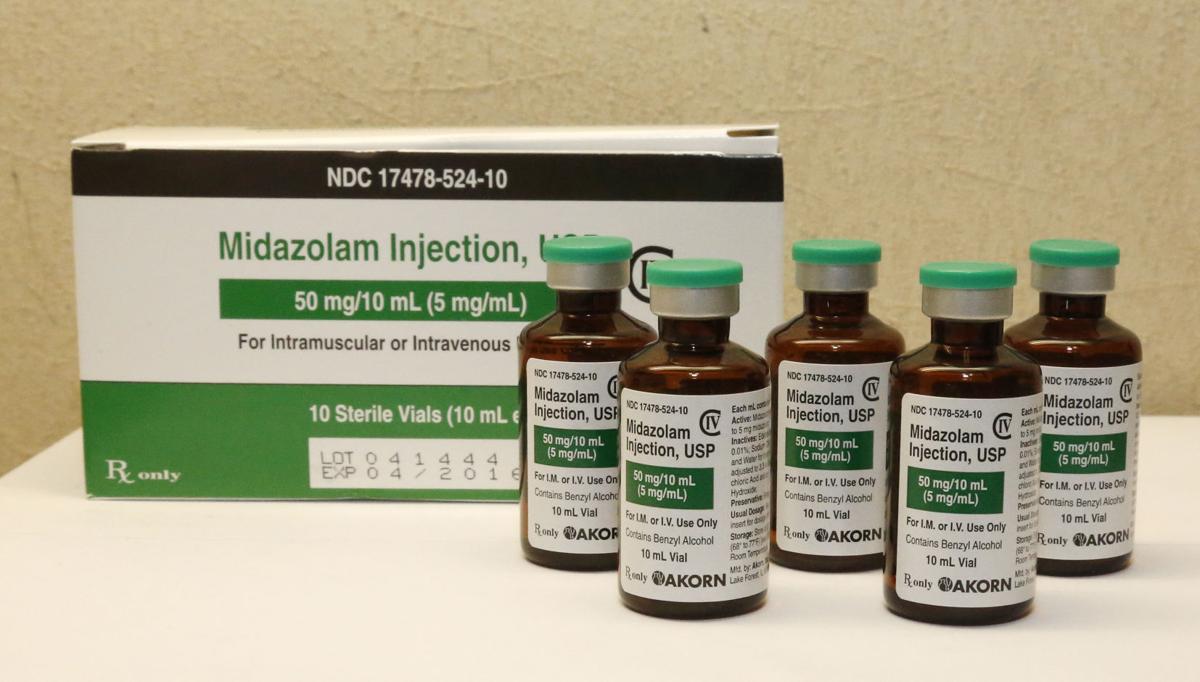
PHOENIX — Arizona is free to continue using a controversial drug as part of a cocktail to put inmates to death despite its connection to two botched executions.
In a 5-4 ruling Monday, the justices did not dispute that other drugs may be preferable to midazolam.
That is a sedative designed to render an inmate unconscious. Challengers said there was evidence that drug did not sufficiently render the inmate unconscious so there would be no pain when the other drugs were administered to stop respiration and induce cardiac arrest.
But Justice Samuel Alito, writing the majority ruling, noted that states like Arizona were having trouble obtaining alternatives. And he said the evidence about how midazolam works convinces him and those in the majority that the use of that drug does not violate the Eighth Amendment prohibition against cruel and unusual punishment.
People are also reading…
“Because it is settled that capital punishment is constitutional, it necessarily follows that there must be a constitutional means of carrying it out,” Alito wrote. “And because some risk of pain is inherent in any method of execution, we have held that the Constitution does not require the avoidance of all risks of pain.”
Alito said while most humans wish to die a painless death, “many do not have that good fortune.” And he said any requirement that states eliminate all risks of pain would effectively outlaw the death penalty entirely.
Monday’s ruling drew several stinging dissents — and a specific mention by Justice Sonia Sotomayor of an incident in Arizona nearly a year ago where inmate James Woods “continued moving and breathing for nearly two hours” after being administered the drug. She cited the testimony of a doctor who said that would not have occurred “during extremely deep levels of anesthesia.”
There were also reports of other botched executions from Oklahoma and Ohio.
Alito said court precedent is that a challenge cannot succeed simply because an inmate shows there is a marginally safer alternative.
He said a federal appeals court did not err when it concluded that midazolam is “highly likely to render a person unable to feel pain during an execution.”
Justice Stephen Breyer, in dissent, suggested it is time for the high court to revisit the whole question of whether the death penalty is constitutional.
Writing for himself and Justice Ruth Bader Ginsburg, Breyer said the administration of the death penalty involves “fundamental constitutional defects,” including serious unreliability, arbitrariness in its application and “unconscionably long delays that undermine the death penalty’s penological purpose.”
That contention drew ridicule from Justice Antonin Scalia.
“His argument is full of internal contradictions and (it must be said) gobbledy-gook,” Scalia wrote in his own concurring opinion. And he rejected arguments that the death penalty is cruel because it is unreliable.
“It is convictions not punishments that are unreliable,” Scalia said. “Moreover, the pressure on police, prosecutors and jurors to secure a conviction, which (Breyer) claims increase the risk of wrongful convictions in capital cases, flows from the nature of the crime, not the punishment that follows its commission.”


