

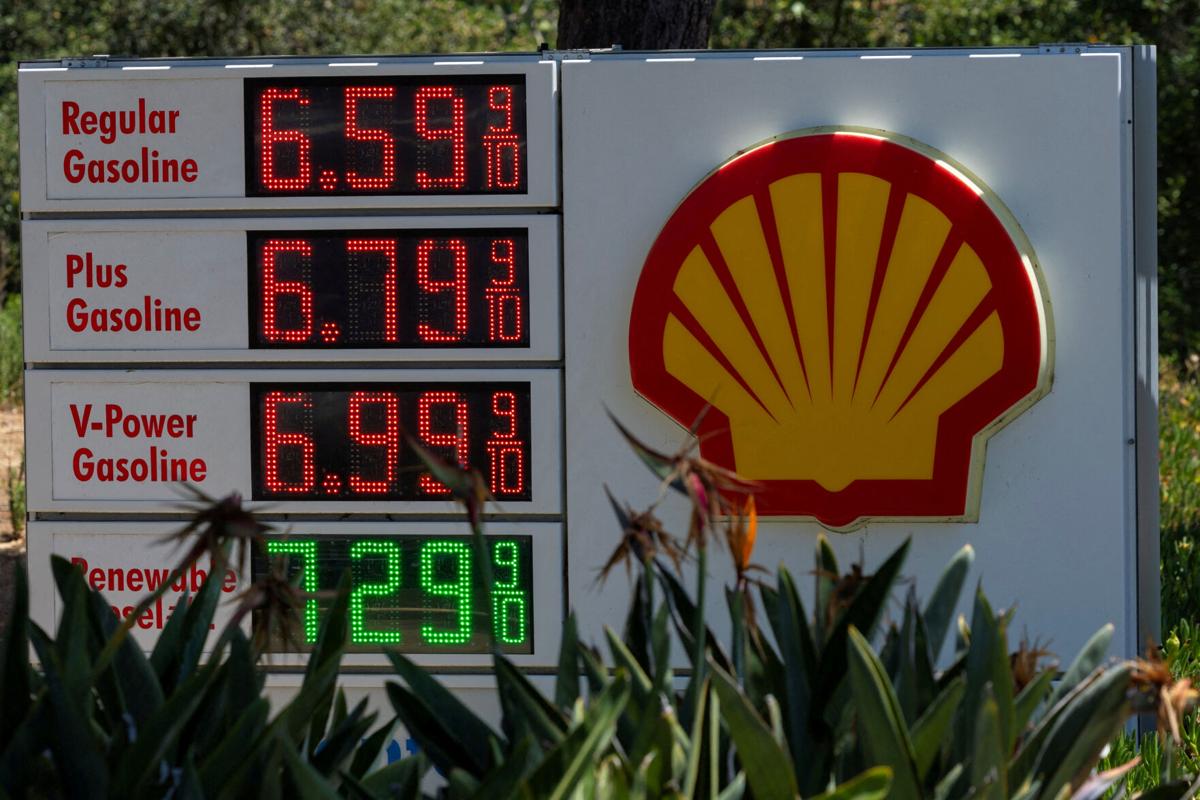
The average price of a gallon of gas in the United States could soon reach $4.80 per gallon, one fuel industry analyst said.
"BREAKING: GasBuddy Forecasts Most Expensive Summer at the Pump in Years Amid Strait Closure... possibly touching $5/gal, setting new record average of $4.80 per gallon, exceeding 2022's summer average of $4.43 if the Strait remains closed," Patrick De Haan, head of petroleum analysis at GasBuddy, wrote in an X post.
The prediction comes as the average price of gas rose to $4.55 per gallon on May 20, up from an average of $4.04 one month ago on April 24. De Haan said in a blog post that gas prices are expected to keep rising in the coming weeks as the Iran war continues.
"The national average price of gasoline spent much of last week drifting lower after jumping early in the week as oil prices softened on hopes that diplomatic progress between the U.S. and Iran could help ease supply concerns," De Haan wrote. "However, that optimism faded after President Trump’s meeting with China’s Xi Jinping failed to produce a breakthrough on Iran, while renewed warnings toward Tehran have helped push oil prices higher again."
People are also reading…
De Haan added, "with global oil inventories continuing to trend toward historically tight levels, markets remain extremely sensitive to geopolitical developments and potential supply disruptions."
"As a result, gasoline and diesel prices are likely to remain volatile, and with Memorial Day approaching, any sustained increase in oil prices could begin pushing retail fuel prices higher again in the weeks ahead," he wrote.
How are gas prices determined?
The American Petroleum Institute, which lobbies for the natural gas and oil industry, said in a post on its website that "gasoline prices reflect costs across the fuel supply chain − from crude oil production to refining, distribution and retail sales."
"The largest factor is the price of crude oil, which is traded in global markets," the group said. "Refining costs, distribution and marketing expenses, and federal and state taxes also contribute to the price drivers ultimately pay at the pump."
According to the U.S. Energy Information Administration, the price you see at the pump is composed of the following factors:
• Crude oil pricing: 51%
• Refining costs: 20%
• Federal and state taxes: 18%
• Distribution and marketing: 20%
For diesel pricing, the agency breaks down the composition of the posted pricing like this:
• Crude oil pricing: 41%
• Distribution and marketing: 24%
• Refining costs: 18%
• Federal and state taxes: 17%
Which states have the most expensive gas prices?
California has the highest gas prices in the United States, with drivers there paying an average of $6.14 on May 20, according to AAA. That was up from an average price of $5.83 per gallon in California one month ago on April 20.
Here are the five states with the most expensive gas prices in the nation:
1. California
• Average gas price on May 20: $6.14
• Average gas price on April 20: $5.83
• Difference in price: 31 cents
2. Hawaii
• Average gas price on May 20: $5.64
• Average gas price on April 20: $5.67
• Difference in price: -3 cents
3. Washington
• Average gas price on May 20: $5.78
• Average gas price on April 20: $5.38
• Difference in price: 40 cents
4. Oregon
• Average gas price on May 20: $5.35
• Average gas price on April 20: $4.98
• Difference in price: 37 cents
5. Nevada
• Average gas price on May 20: $5.27
• Average gas price on April 20: $4.93
• Difference in price: 34 cents


