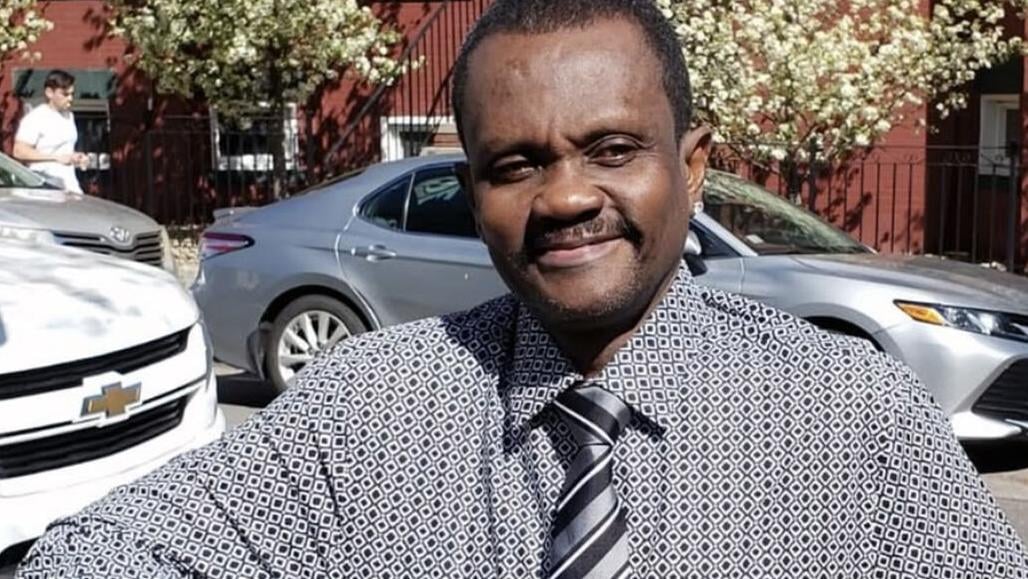
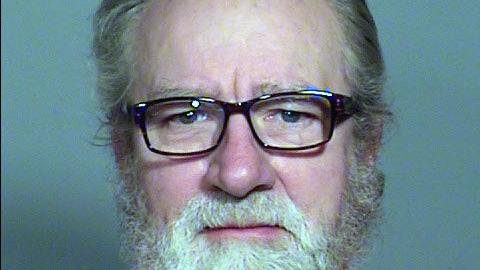
Leroy McGill, who killed a man and severely burned a woman with a napalm-like substance he had made by mixing gasoline with chunks of Styrofoam, was put to death on May 20 at a prison facility in Florence.
McGill was declared dead at 10:26 a.m., according to a statement from the Arizona Department of Corrections, Rehabilitation and Reentry. The process "went according to plan and without incident," the department said.
McGill was brought into the execution chamber at 10:01 a.m. with ADCRR staff reading the warrant of execution at 10:09 a.m., said ADCRR Deputy Director John Barcello.
In his final statement, McGill said, "I just want to thank everyone for being so accommodating and nice," Barcello recalled.
Sean Rice, a 12 News reporter who witnessed the execution, confirmed McGill making that statement along with the comment, "I'm going home soon."
People are also reading…
Rice and John Kelety with the Associated Press said they saw medical staff inject four syringes — two black and two green — into McGill's arms with no issues.
McGill's last meal consisted of onion rings, bread and butter, chocolate cake and a green salad, Barcello said.
The pentobarbital compound was administered between 10:11 a.m. and 10:14 a.m., according to Barcello.
Rice and Kelety said they observed McGill take deep breaths and make a snoring sound for roughly 30 seconds to a minute before going silent.

McGill
The Pinal County medical examiner took custody of McGill's body after the execution and will issue a certificate of death. It was not immediately known when McGill's autopsy would be made available.
McGill, now 63, landed on death row after he entered a north Phoenix apartment on July 13, 2002. He told a couple who accused him of stealing a shotgun that they shouldn’t talk about people behind their backs before he threw a cup of gasoline on them along with a lit match, setting them both ablaze, according to court filings.
The man, Charles Perez, 21, died from his injuries the next day, while Nova Banta, 24, survived but had to be put in a medically induced coma as third-degree burns covered 75% of her body. Banta later identified McGill as the person who had set her and Perez on fire.
Barcello noted that victim representatives did not attend McGill's execution.
"After more than two decades, justice was finally served for Charles Perez and the woman who survived this horrific attack. What Leroy McGill did — pouring gasoline on the victims and setting them on fire — was among the cruelest acts imaginable," Maricopa County Attorney Rachel Mitchell said in a statement.
"My thoughts are with the family of Charles Perez and the survivor, who has lived with the physical and emotional scars of that night for nearly 24 years. May this bring them some measure of peace."
Arizona Attorney General Kris Mayes gave a brief comment stating that the death penalty was the law of the land in Arizona and that her job as the state's top law enforcement official involved seeing it carried out.
"My thoughts today are with the family and the loved ones of Charles Perez as well as with Nova Banta," Mayes said.
A jury convicted McGill of first-degree murder and attempted first-degree murder, along with arson and endangerment charges, before sentencing him to death in 2004.
The courts denied McGill’s multiple appeals throughout his time in prison, with an appeals attorney arguing that trial counsel had been ineffective at presenting evidence of McGill’s difficult childhood, addiction history and other matters.
McGill denied an interview request from The Arizona Republic this spring, according to an Arizona Department of Corrections, Rehabilitation and Reentry spokesperson.
He was the third person killed under the administrations of Arizona Attorney General Kris Mayes and Gov. Katie Hobbs, both Democrats, after the executions of Aaron Gunches and Richard Djerf in 2025.
On taking office in 2023, Gov. Katie Hobbs and Attorney General Kris Mayes paused executions pending a review of the state's capital punishment system by an independent commissioner.
Hobbs cut short the review, which was conducted by retired U.S. Magistrate Judge David Duncan, saying she had lost confidence in the effort. In a draft of his report, Duncan said lethal injections were, in practice, "fundamentally unreliable, unworkable and unacceptably prone to errors."
Hobbs said the state was ready to begin putting prisoners to death again after the corrections department sent her an "execution preparedness" review in November 2024.
McGill was to be killed through lethal injection. Arizona previously used a mixture of drugs to carry out lethal injections, but now only uses a compounded form of pentobarbital, which has been criticized for sometimes causing pulmonary edema and potentially violating the Eighth Amendment, which prohibits cruel and unusual punishment.
Barring any major complications in McGill's execution, state officials were expected to execute a second death row inmate in 2026.
As of Wednesday, 108 Arizona inmates remained on death row following McGill's execution.