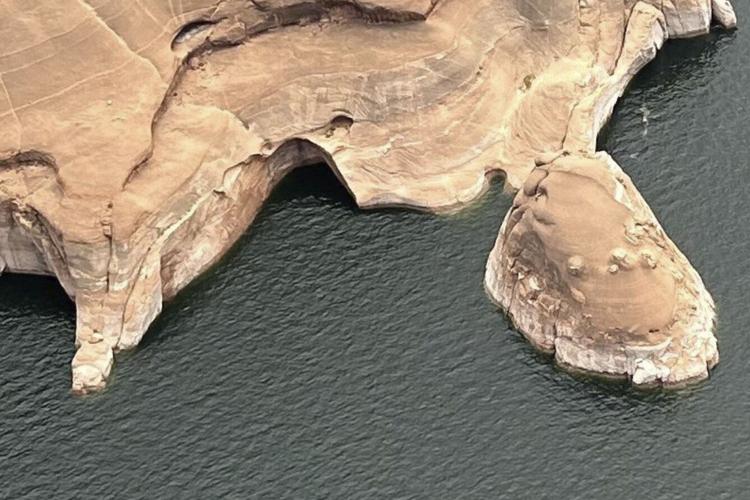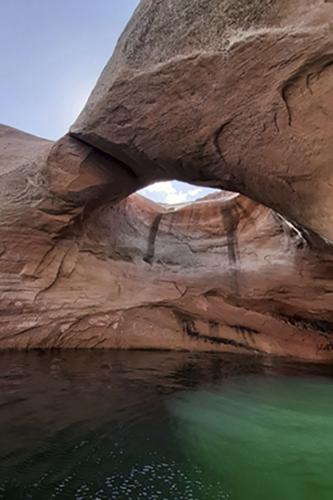
PAGE, Ariz. — A large geological feature in southern Utah known as the "Double Arch," the "Hole in the Roof" and sometimes the "Toilet Bowl" collapsed, National Park Service officials said Friday. No injuries were reported.
The popular arch in the Glen Canyon National Recreation Area fell Thursday, and park rangers suspect changing water levels and erosion from waves in Lake Powell contributed to its demise.

This photo provided by the National Park Service shows the Double Arch, center, after the collapse, Friday, August 9th, 2024, in Rock Creek Bay of the Glen Canyon National Recreation Area, Utah. (Jacob E. Ohlson/National Park Service via AP)
Michelle Kerns, superintendent of the recreation area that spans the border of Utah and Arizona, said the collapse serves as a reminder to protect the mineral resources that surround the lake.
"These features have a life span that can be influenced or damaged by manmade interventions," she said in a statement.

This undated photo provided by the National Park Service shows Double Arch prior to collapse in Rock Creek Bay of the Glen Canyon National Recreation Area, Utah. (National Park Service via AP)
The arch was formed from 190 million-year-old Navajo sandstone originating in the late Triassic to early Jurassic periods. The fine-grained sandstone endured erosion from weather, wind and rain, the statement said.
People are also reading…
The recreation area encompasses nearly 2,000 square miles and is popular among boaters and hikers.