

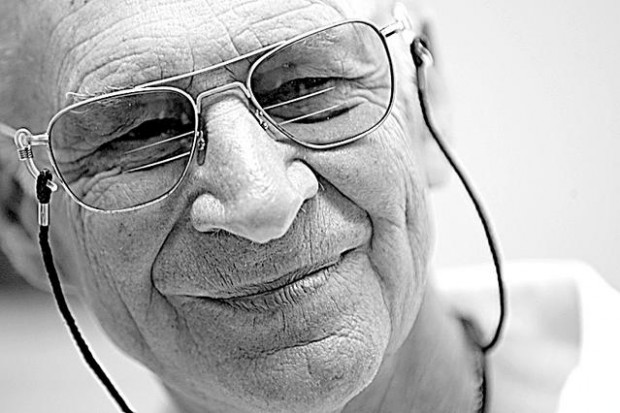
EDGEWOOD, Md. — Dr. William Bernhard was distraught when a knee injury kept him out of the Marines as a young man. But he still found a way to spend his life in the military by becoming a surgeon in the Army Reserve and National Guard.
Today, the 75-year-old Bernhard deploys to Afghanistan for four months. And he hopes it's not his final mission.
"As long as I can help, I'm going to help," he said.
Bernhard, now a Department of Defense medical contractor, keeps flight suits and duffel bags ready for deployment. He periodically calls to see if the department needs retired military physicians. When the answer is yes, off he goes.
"I've always had a love for the military," said Bernhard, a spry and chatty man who lifts weights three days a week and works out on a stair machine. He's fit, and he expects the same of the servicemen who see him for flight physicals.
People are also reading…
Bernhard's interest in the military started when he tagged along with his flight-surgeon father, also named William Bernhard, during World War II. He was wowed by "seeing those big guns and the bombers."
So after starting college, Bernhard enlisted in the Marines in 1950. His knee injury from skiing led to a medical discharge.
"I was discharged the week before Korea broke. And I was so disappointed as a young kid, but my dad said, 'No, this is an opportunity for you. Why don't you go into pre-med?' " he said.
Bernhard decided he would find another way into the service. He started his military career in earnest in 1961, serving two years as a Navy doctor at military hospitals in Massachusetts and New York. After that, he went back to private practice in Vermont and raised two sons.
By 1979, he wanted to serve again, so he joined the Army Reserve, deploying twice to Central America in the 1980s. In 1991, he joined the Army National Guard in Maryland and deployed to Kuwait for several months to tend to prisoners of war during Operation Desert Storm.
In 1998, Bernhard turned 68, mandatory retirement age at the medical center and as a military surgeon. He thought his career was done, though he occasionally gave flight physicals at his clinic.
Two years ago, he learned that there were not enough trauma surgeons for soldiers fighting in Iraq and Afghanistan. Bernhard suggested the military consider using retired surgeons, then passed a flight-duty medical exam and deployed to Iraq for five months.
It was a different experience than his first to the Persian Gulf. This time, he carried a gun and troops were greeted with hostile looks instead of the grateful smiles he saw in Kuwait.
His wife, a former military nurse who served in Vietnam, said her husband will keep soldiering as long as he is able.
"Most people would say he's crazy," said M.P. Bernhard. "I think he was born a soldier and then became a doctor."


