

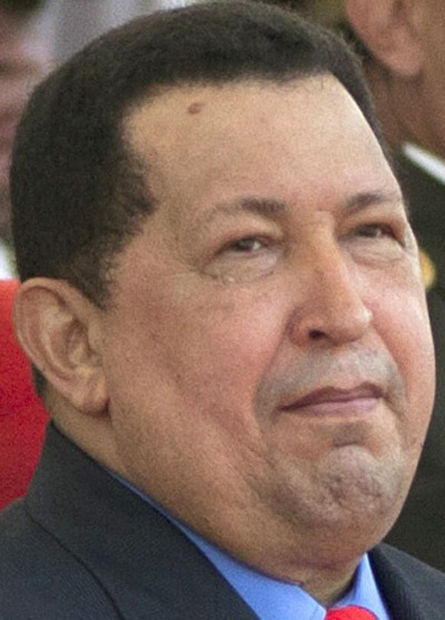
CARACAS, Venezuela - For Hugo Chavez, Simón Bolívar is more than a founding father to be feted once a year on his birthday. He's the icon of an entire political movement. He's a muse whose words inspire nearly two centuries after his death.
For Chavez, Bolívar is an obsession.
The president's admiration for "El Libertador," who has been his guiding light since Chavez was a rank-and-file soldier, goes far beyond the conventional reverence most Venezuelans hold for the independence leader who was honored Saturday on the 227th anniversary of his birth.
The socialist Chavez views himself as the modern emissary and disciple of Bolívar, and sees parallels between his hero's efforts to free South America from Spanish rule and his own crusade to challenge U.S. influence in the region.
Critics say he is trying to cast himself as Bolívar's reincarnation - an allegation Chavez vehemently denies.
People are also reading…
Chavez's fascination with Bolívar has been on display this month like never before as he has exhumed Bolívar's bones in hopes of using modern forensics to confirm his identity - and investigate a theory that his idol was felled by a murder conspiracy.
Historians have generally concluded Bolívar died of tuberculosis, and some Venezuelans are saying Chavez has gone too far.
"It's madness. Bolívar's dead. His remains should remain untouched," said Rosalinda Fuentes, a 53-year-old housewife who doesn't support either Chavez or his political opponents.
On walls in Caracas, graffiti has appeared reading: "Let me rest in peace. Bolívar."
On Saturday, Chavez presided over a special ceremony honoring Bolívar at the National Pantheon, where soldiers dressed in colonial-era uniforms placed a new flag over the independence hero's tomb.
The flag was driven across the country this week. Thousands of Chavez supporters marched the large red, yellow and blue flag through downtown Caracas on Saturday to the pantheon.
Marcos Suarez, a 57-year-old security guard, said Chavez is right to investigate Bolívar's death.
"Bolívar's legacy lives on today," Suarez said. "We must know the truth about his fate."
Chavez is undeterred in using Bolívar as a nationalist symbol to rally his supporters.
A portrait of the 19th-century independence leader often serves as a backdrop during televised speeches in which Chavez reads Bolívar's writings and expounds on his aims.


