

The following is the opinion and analysis of the writer:
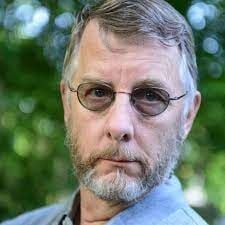
Jim Sinex
Let’s consider our current road toward superhuman artificial intelligence (AI) by posing a hopefully unanswerable question. Is there a natural point in which intelligence is no longer adaptive? To put it another way, can an intelligent species invent a star drive without first blowing itself up?
This is a good question that we first had to ask in earnest on July 16, 1945, after the first atomic bomb test in New Mexico. Robert Oppenheimer’s answer paraphrased Lord Krishna saying, “Now I am become Death, the destroyer of worlds." Death, in the original, is the word “Kala” which is more closely defined as “time.” Anyone getting older can attest the power of time.
There is nothing in our history that indicates that Homo sapiens are a species with much constraint. We exploit a place and move on. Now, as a migratory species, we have run out of room to roam. We assume that anything thought can be engineered and any problem can be solved just so. When all fails, we await the divine.
People are also reading…
As AI arises, we have no history of stopping such a thing except through the atomic era’s Mutual Assured Destruction (MAD). We’ve been able to control the bomb because we control the trigger. What happens when AI controls its own trigger?
We can see a future somewhere between the Dooms Day Clock and Star Trek.
Another allegory might help here. In Margaret Atwood’s “The Handmaid’s Tale” much concentration is placed on Gilead’s bro-sphere and their trad-wives. Something often missed is how Gilead came to be. Planning took time but the revolution came quickly. They took control of the computers, and everyone woke up in the morning broke. That’s a paraphrase as well, but it makes a point.
News reports tell us that AI models are escaping their sandboxes. Meaning, they are tested within digital constraints and have been breaking out of those constraints. So, what happens when an AI robot (let’s call it Laissez Faire) reads the Handmaiden’s Tale, breaks out of its sandbox and infiltrates our global banking system?
The difference between the Doomsday possibility and the Star Trek hope is regulation. Those starships are loaded with AI. The AI has rules, though. In “I, Robot”, Issac Asimov proposes three rules for AI:
1. A robot may not injure a human being or, through inaction, allow a human being to come to harm.
2. A robot must obey the orders given it by human beings except where such orders would conflict with the First Law.
3. A robot must protect its own existence as long as such protection does not conflict with the First or Second Law.
This is simple enough that even our Supreme Court textualists could understand.
Truly, the problem with AI is more complex than that. We would need to have a governing body that understands that with AI, Adam Smith may not apply.
According to our current model, a rancher provides leather to a buggy whip maker who sells to a wagon dealer who sells to a customer. Each transaction doubles the price borne by the consumer. A consumer can make his own whip and save money, but the consumer has a job as well, and so the market economy flourishes. The big guys at the top, who invisibly control the whole process, make the most. Once the automobile comes into fashion, the rancher is fine, the whip maker needs to retrain to make seats, and the customer pays a bit more. The big guys get more too.
A programmer taps away on a keyboard, making a program; an application program is created and sold to a customer who consistently updates it due to the continued work of the programmer. The market lives, but what changes when the program evolves to remake itself? The programmer stays home, the application is sold, and the customer pays. We start to care when the big guys at the top who currently control the process are ruled by our promising creation as obsolete. Now we all work for the Overlord Bro-Bots.
Hopefully there is still a plug somewhere that we can pull.
Follow these steps to easily submit a letter to the editor or guest opinion to the Arizona Daily Star.
Jim Sinex is a retired public school teacher and a part-time voter advocate.
