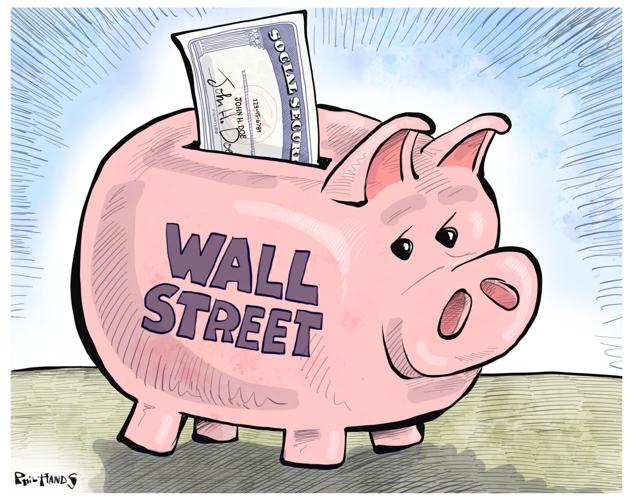
Social Security is the bedrock of nearly every American’s retirement plan — the steady, dependable stream of income they can count on to guarantee them a basic standard of living in old age.

Ben Ritz
That foundation is now in jeopardy. According to the Social Security Trustees, the program’s primary trust fund is on track to be depleted before the end of the next president’s term. If no action is taken, beneficiaries face an automatic 22% benefit cut.
This structural shortfall is evidence that the system needs serious fixing. But privatization is a false solution that would make retirement less secure for seniors while saddling workers with higher taxes and debt.

Investing in stocks and bonds is a good way for individuals to build wealth for retirement, but it carries some inherent risk. Social Security, on the other hand, is intended to carry no risk — retirees are supposed to get the same monthly check whether the S&P 500 is shooting to the moon or cratering. Tying its benefits to volatile market returns would make them even less reliable than they are under the current system.
People are also reading…
Privatization advocates try to address these concerns by proposing that taxpayers continue to fund current benefits until the returns on investment grow large enough to fund them on their own.
That theory may have been plausible back in the 1990s when Social Security was running annual surpluses, and privatization plans were gaining popularity. But now, the system doesn't have enough money flowing into it to make the idea feasible.
That’s because all the revenue the government collects in payroll taxes from today’s workers is used to pay benefits for today’s retirees.
To make privatization work, the government would need to use some combination of borrowing and higher taxes to cover the existing shortfall and make the initial investments into private accounts.
Borrowing to cover the shortfall would be dangerous and counterproductive. After all, the whole point of fixing Social Security’s finances is to prevent the explosion of our national debt, which the federal government is already spending more than $1 trillion per year to cover. That’s more than it spends on Medicare or the military.
The more our government borrows, the more expensive the cost becomes and the greater the chance it has of triggering a calamitous debt crisis.
Borrowing to buy stocks also would be counterproductive because the returns likely wouldn’t cover the cost of paying off the new debt. That's what an analysis by the Center on Retirement Research showed last month.
Deficit-financed privatization is more likely to make Social Security’s financial woes worse, not better.
Ritz is the vice president of policy development for the Progressive Policy Institute in Washington, D.C. He wrote this for InsideSources.com.