

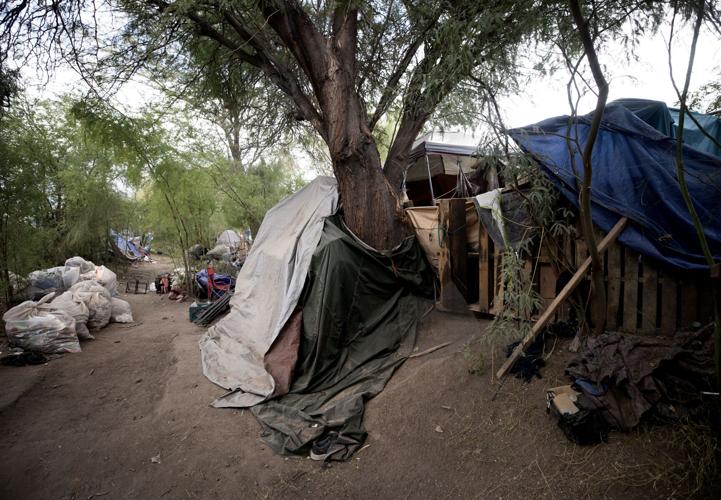
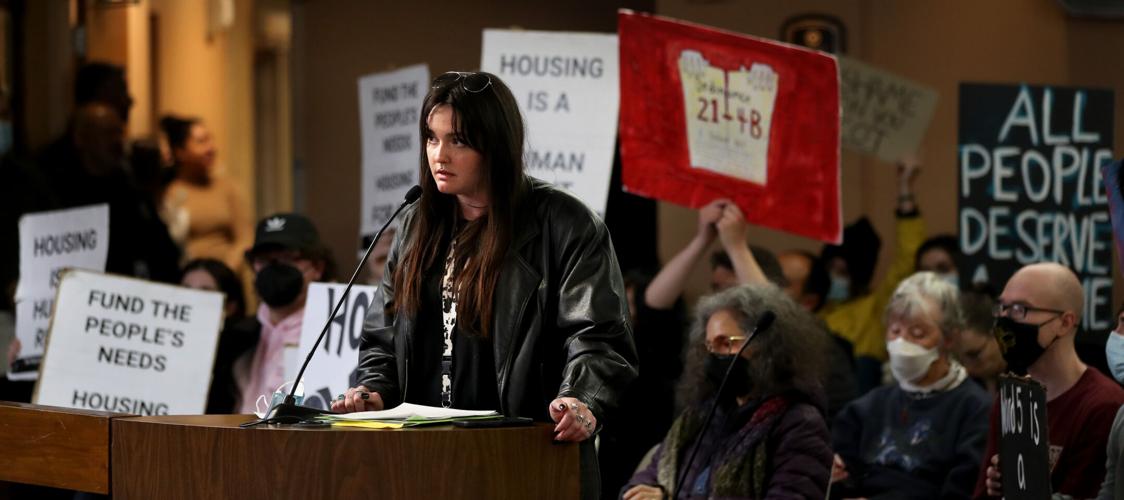
Question to candidates: What steps would you take to resolve the homelessness crisis in Tucson?
Mayor
Arthur Kerschen
Year round and city wide enforcement of existing anti-camping ordinances, as well as strict shoplifting enforcement are required.
Regina Romero
When I was elected Mayor, one of my goals was to create the solutions Tucson needed to address the growing challenge of unsheltered homelessness. I introduced the Housing First concept to my colleagues on the council in January 2020 and with unanimous support we created a position of Housing First Program Director. Since then, we have also brought on a team of Housing Navigators to connect people to resources.
With our use of American Rescue Plan dollars we have brought to life our Housing First program with the purchase of 3 properties:
People are also reading…
- There are currently three facilities in operation: Wildcat Inn, Desert Cove and the NoTel adding up to 164 beds.
- Under my direction, additional properties will be acquired and to add to our shelter capacity.
- I successfully advocated for federal dollars to support the Housing First Resource Center at Amphi.
We have provided low-barrier shelter/bridge housing at newly acquired properties targeting high-needs unsheltered individuals experiencing homelessness. In total, newly acquired shelter projects served approximately 75-125 persons nightly. To solve homelessness in Tucson, it is clear that we need more housing.
In 2021, I directed City Staff to create our first Housing Affordability Strategy for Tucson (HAST). It was adopted by Mayor and Council on December 21, 2021, and since then, has been our guide to expand housing stock across the spectrum from emergency shelter to affordable housing to market rate housing.
As defined in the Housing Affordability Strategy for Tucson, “we consider housing to be affordable when a household can pay for it while still having money left over for other necessities like food, transportation, and healthcare.”
With this strategy we have a road map on how to start building more units that are affordable for our Tucson Community. I have and will continue to work with our regional and state partners to bring more low income housing tax credit projects to Tucson to ensure long term affordability. With the partners that we already have on the ground, we need to start identifying opportunities to build more congregate shelters that are able to increase our capacity city wide.
I am also working with city staff and local non-profits to continue to build their capacity to provide shelter and services to our unsheltered population.
It is clear that this is a complex issue with many underlying causes that requires collaboration, creativity and commitment from all of us to move the needle.
Janet “JL” Wittenbraker
Enforce current City statute, e.g., park hours (no camping) and the prohibition of any person soliciting or attempting to solicit employment, business, contributions, donations or sales of any kind from the occupant of any vehicle, as well as cracking down on homeless encampments and charging homeless people on private property with trespassing. I would also work with government and local charitable organizations to mitigate homelessness through community involvement.
Ed Ackerley
EXPAND CENTER FOR OPPORTUNITY. The very best response to homelessness has been the creation of the HSL Family Foundation Center for Opportunity. Eleven states and one other country so far have visited within the last few months to see how this center operates. The “one stop” format of a place to stay, to be fed, to receive medical care, to receive short term and long-term housing assistance, job training, and mental health services is unique. It is one of the best programs of its kind. The city should increase the footprint of the Center and expand the reach across the valley. Providing low barrier housing or a free home is not the total solution, a wholistic approach to the homelessness problem including mental health assistance, law enforcement, compassionate counseling and economic alternatives need to be increased.
Ward 1
Victoria Lem
Victoria Lem did not respond to our questionnaire.
Miguel Ortega
Affordable housing should not be symbolic or minimal. The unsheltered crisis must be addressed as a crisis, necessitating the management of programs and development agreements that require real affordable housing, with a percentage that is more equitable and accessible to the people that need housing the most. We must properly fund the programs and agencies that address many root causes of being unsheltered: domestic violence, addiction, mental illness, economic insecurity, etc.
We must respect the concerns of neighbors that have safety and quality of life concerns about the various camps that have popped up around the City. The vast majority of these residents that have safety concerns regarding unsheltered populations in or near their neighborhoods are also compassionate about the plight of these individuals as well. We should partner with neighborhood leaders to address both: resident safety concerns and the needs of the unsheltered.
Lane Santa Cruz
In my first term I prioritized this issue as we all witnessed how during a pandemic and accompanying economic crisis many of our neighbors lost their homes. We developed the Housing First program as well as launched the El Pueblo Housing Development to provide services and infrastructure to address the issue. Solutions to this issue must intersect with other issues such as employment programs, exploring options such as universal basic income, increasing access to mental health, harm reduction and detox services. Increasing the supply of housing that is quality and affordable with low barriers for entry are critical as well.
Ward 2
Paul Cunningham
I have worked with homeless youth for 20 years and this crisis is unprecedented. Our traditional strategies for addressing homelessness are not going to be enough. We need to continue doing the things that have worked in the past and develop them to scale AND we need to come up with innovative strategies to augment our traditional approaches.
The City of Tucson continues to purchase motels (including an eastside location coming online very soon) that offer shelter and services to those who are ready to accept help and I have personally placed a number of individuals in housing that I have come across in my duties as a teacher, a parent or a city councilman. We need to continue to purchase locations that make sense to develop into housing.
At Ward 2, I am trying a number of things; I’ve hired a Homeless Outreach Specialist out of my office to help our response times both to offer services to unsheltered individuals and to clean up tier 3 and problem homeless camps. Though in its early stages, this experiment seems to be working, and I look forward to replicating it in other parts of the city. Most significantly however, I have been working with the Pima County Attorney, pretrial services as well as other City and County officials to develop a Continuum of Shelter program that will provide more flexibility in the amount of structure and autonomy in regional shelter programs. I’ve personally talked to hundreds of homeless individuals and my office has assisted dozens of people find permanent housing so I know how widespread this crisis is. I remain open to any reasonable ideas and will meet with anyone to discuss them.
Lisa Nutt
Homelessness in Tucson, as it has in many cities, has multiple causes including a lack of affordable housing options, under-staffed mental health/substance treatment resources and a seemingly inability to develop a comprehensive plan to deal with the issue. While there is no one size fits all solution, it is my belief that none of the key stakeholders on this issue are coming together to set an actual plan in motion. My first step is to convene those resources and develop a plan that ensures real federal, state and local public/private players are coordinated, collaborating and held accountable for meeting specific goals for ending homelessness.
Ernie Shack
Ernie Shack echoed Wittenbraker’s responses.
Pendleton Spicer
The police need to remove encampments and individual tents from public areas, and charge the individuals involved with the crimes they are committing such as loitering, camping on public property, defecating in public, stealing, assault, etc. This must be done with as much kindness as possible. Drug addicts need to be offered treatment, and the mentally ill cared for as needed based on their condition. Government handouts need to stop and the private sector encouraged to assist the homeless; the government rules and regulations that are currently in place make the development of assistance programs in the private sector unreasonably difficult. Any food that is offered to the homeless needs to be as healthful and nutritious as possible.
Ward 4
Ross Kaplowitch
Tucson’s homeless crisis is partially a self-created problem. Homeless individuals should be offered services like those offered by non-profits such as Gospel Rescue Mission, and if they chose not to participate, they should be relocated. Those individuals who suffer from mental health issues should also be offered assistance, but as a city council member, I will prioritize the rights of our residents over the rights of those who chose to remain homeless. Parks must be returned to local neighborhoods, residents should not have to bear the burden of tent encampments on their front yards, and all citizens should feel safe.
Nikki Lee
I recognize the pressing need to address the homeless crisis in Tucson. While our recent investments, including the $10 million allocation for low barrier shelter housing, the distribution of $53 million in Federal Rental Assistance Funds to support over 9,800 households in Tucson and South Tucson, and the utilization of the majority of FY 22/23 Ward 4 American Rescue Plan Act (ARPA) funds to tackle homelessness, are commendable, we must build on this progress through additional strategic measures.
Expand affordable housing: Continue working with developers, non-profit organizations, and the private sector to increase the availability of affordable housing units, offering incentives such as tax breaks and zoning adjustments to facilitate development.
Strengthen support services: Work with the State of Arizona, Pima County, and non-profit organizations to enhance existing services and establish new ones to address mental health, substance abuse, and job training, helping individuals transition out of homelessness and into stable living situations.
Regular evaluation and assessment: Continuously monitor and evaluate the effectiveness of our initiatives, using data-driven approaches to refine strategies and allocate resources where they will have the greatest impact.
By implementing these comprehensive steps, we can create a more inclusive and supportive community for all Tucsonans. As a city council member, I am dedicated to working collaboratively with my colleagues, local organizations, and the community to ensure that we address homelessness with the urgency and compassion it deserves.