The following column is the opinion and analysis of the writer:
If you had the misfortune of watching the charade that was the Rudy Giuliani-led press conference last Wednesday, here’s a bonkers (yet actual) recap: according to President Trump’s team of lawyers, Venezuela’s Hugo Chavez (who died in 2013) conspired with George Soros, Black Lives Matter, antifa, rogue judges and the Clinton Foundation to launch a centralized, widespread and closely-guarded “plan” to enact mass voter fraud in swing-state cities to help Joe Biden win (while ignoring House and Senate races, apparently).
It’s like a Velcro presser event — throw everything at the wall and see what sticks. Thankfully, neither CNN nor MSNBC aired the petty and deranged spectacle that will come to be defined by Giuliani sweating out his hair dye on live, national television.
People are also reading…
Giuliani, along with Trump attorneys Jenna Ellis and Sidney Powell, spoon-fed the public a cache of insidious yet predictable lies they wouldn’t dare present in a court of law — and have yet to do so (at the time of writing this, the Trump campaign remains 1-33 in court, even after affirming on the record that their cases are not based on allegations of fraud).
And while Rudy and Co. continue to destabilize the free and fair election process that acts as a pillar of our great democracy, (most) Republicans remain silent and complicit, perfectly willing to let Nero fiddle as Rome burns. Aside from Sens. Mitt Romney, Ben Sasse, Susan Collins and Lisa Murkowski and Reps. Fred Upton, Adam Kinzinger, Don Young, Paul Mitchell, Don Bacon and Tom Reed, most remain mealy-mouthed and sublimated by an increasingly authoritarian party apparatus.
On the other hand, some Republicans, like Wayne County Board of Canvassers members Monica Palmer and William Hartmann and Florida Governor Ron DeSantis, have openly advocated an electoral coup, sowing deep divisions that will continue to fracture our republic long after Trump leaves office.
So why are Republicans so scared? That’s easy. They’re afraid of a primary opponent. David Mayhew reminds us that Members of Congress are single-minded seekers of reelection. Pathetically, they’re even more terrified of a mean tweet from the president himself. They’re also worried that the money will run out, and PACs will punish defectors, and small-dollar donors will turn their backs. And some are realizing, as they prepare to take the next step in their political careers, that Kingmaker Trump will exact his revenge, dashing their future hopes and dreams of advancement.
Even though not one court in Arizona, Georgia, Michigan, Nevada, Pennsylvania or Wisconsin has found any tangible evidence of widespread voter fraud or electoral irregularities, the Trump campaign is openly calling on Republicans in these states’ legislatures to ignore the popular vote and overturn the result by installing Trump electors. Some Republican state legislators have unequivocally said no, that would not happen. Others? They think it’s a great idea!
Over the last 60 or so years, the legislative and executive branches (with states not far behind) have tethered themselves to one another, playing a dangerous game of mutually assured destruction. The 2020 election, and its political fallout, is the culmination of the nonseparation of powers, the abandonment of federalism and the rise of a national party brand that expects unwavering loyalty.
Republicans have officially gone through the looking glass, and they aren’t looking back. Because of this, the Democratic Party — no matter how imperfect — is the only legitimate vanguard of our constitutional republic.
It did not have to be this way. But when the Trump train left the station, what did people expect would happen?
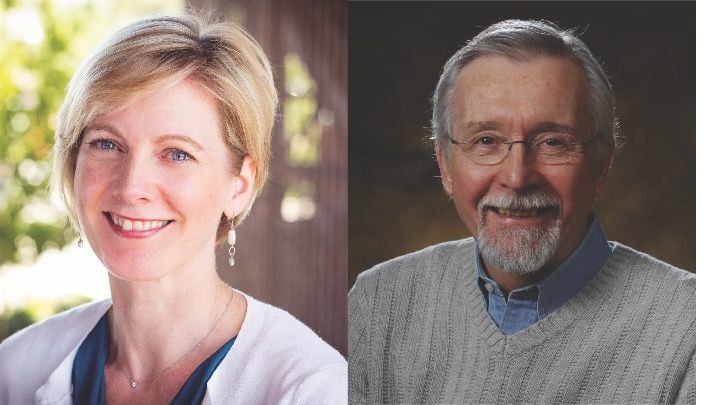
Ryan Denson is an Arizona native and has worked in the U.S. House of Representatives and most recently with the Progressive Turnout Project.