

The following editorial is the analysis and opinion of the Star’s Editorial Board.
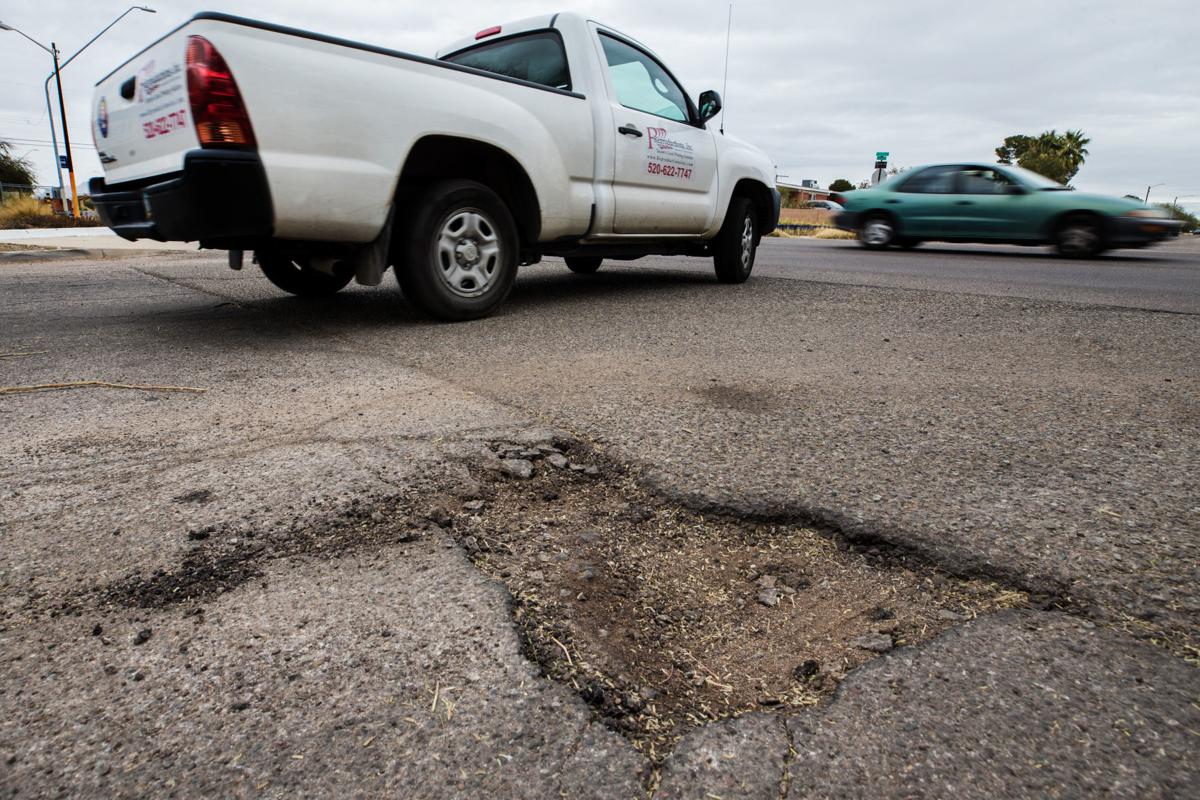
Addressing concerns surrounding the safety and upkeep of city streets, the Tucson City Council will soon consider if, and by how much, taxpayers should help property owners who organize and agree to pay higher taxes for specific road improvement projects.
Municipal improvement districts, which are outlined in Arizona statute, are self-taxing districts that can vary in size, from a city block to a cul-de-sac. Neighborhoods looking to repave or replace disintegrating infrastructure — or looking to stem the tide of vehicle-pedestrian collisions — can form their own districts to address local needs without burdening other city residents who don’t frequent or use the streets in question.
If council members are serious about helping neighborhoods who are willing to put additional money in the game, then they must make clear what projects would qualify — repairs and safety improvements, not beautification efforts — and how to make the process equitable across the city.
People are also reading…
There are potential economic potholes to overcome in drafting a process.
For example, if a lower-income neighborhood wishes to form its own municipal improvement district, the city might look to Community Block Development Grant monies to contribute a higher percentage of a project’s cost than it would for a wealthier neighborhood.
The positives of such a move are evident: Who better than local residents to know what a neighborhood — or even a street — needs than those who drive, bike and cross it daily?
Plus, the policy could help alleviate the road maintenance backlog, some of which are safety-related.
According to Democratic Ward 6 Council member Steve Kozachik, “For neighborhoods that want to move themselves up the list and accelerate their repairs, then this is an option for them.”
It is easier said than done, however. According to state statute, more than half of a proposed district’s residents, along with half of the proposed district’s property value holders, must agree to an added tax.
Democratic Councilman Paul Cunningham said he supports requiring a neighborhood consensus of 60 percent to qualify for city help, to demonstrate more unity among owners, and we agree.
“This is supposed to be about a neighborhood coming together to get things done,” Cunningham said. “I’m not interested in creating a municipal improvement district that creates divided neighborhoods. Divided neighborhoods are cancerous.”
There are limitations on what municipal improvement taxing districts can do.
Residents, for example, can’t just add a sidewalk where it doesn’t make sense, and engineers at the Tucson Department of Transportation wouldn’t allow it, according to Kozachik.
The elephant in the room, of course, is that Tucsonans already pay taxes for road maintenance, repair and improvements in regular property taxes and in a city-wide sales tax for roads that voters approved in 2017.
Tucsonans are willing to shell out coin to improve the streets. In 2017 voters passed Prop. 101, a half-cent sales tax increase for five years that would bring in $100 million for road maintenance and upkeep: $40 million for residential street fixes, $60 million for major thoroughfares, with 540 miles of street being resurfaced and 134 more reconstructed.
Even with the influx of Prop 101 funds, city officials recently estimated it would cost $500 to $600 million to clear the project backlog. “There is just stuff we’re not getting to. We’re moving as fast as we can,” Cunningham said.
Unfortunately, in the political and financial reality the city of Tucson finds itself in today, this measure is needed.
No, it isn’t perfect, but it does allow for local control of identifying a problem common to all Tucsonans while also providing an avenue to a potential solution.
“We are giving people the opportunity to go ahead and say, ‘Hey, I really do want this project done,’” Cunningham said. “Well, if you want to put skin in the game to help do it, we’re going to help.”
Yes, our streets need help. The Tucson City Council can provide some measure of that by assisting neighborhoods that are willing to make the effort, in a way that doesn’t leave out lower-income parts of town.
Editorials are written by the Daily Star’s editorial board.

Eddie Celaya
Cannabis Writer/Podcast Host
