

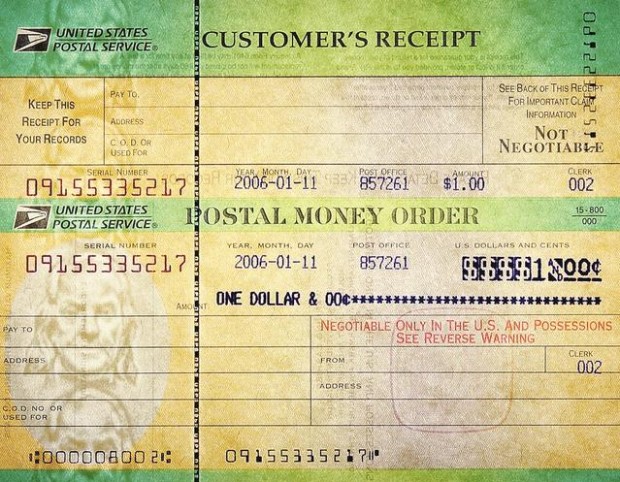
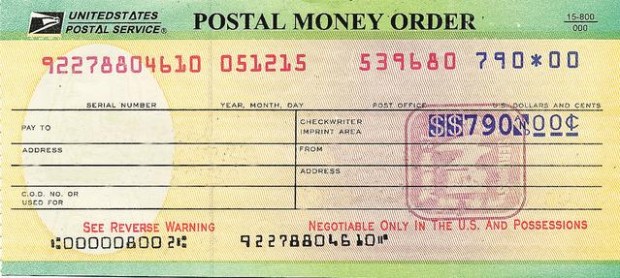
Con artists and counterfeiters are collaborating on a rash of scams in Southern Arizona that involve fake cashier's checks or counterfeit postal money orders, law enforcement officials said.
The criminals often target people selling items through classified ads, said Jim Harper, head of the Tucson office of the U.S. Postal Inspection Service, which investigates counterfeit postal money orders.
The scam also has snared people looking for roommates and members of online dating services, he said.
The Pima County Sheriff's Department and the Arizona Attorney General's Office have issued fraud warnings since Jan. 4 as they noted a surge in reports of counterfeit cashier's checks and money orders.
Attorney General Terry Goddard said Thursday that consumers should be wary about cashier's checks, especially those being offered as "prizes" in a phony sweepstakes or lottery.
People are also reading…
"Scam artists have figured out that there are certain types of instruments that people question less than others," Goddard said. "Unfortunately, cashier's checks are high on that list. So are money orders."
People need to treat a cashier's check like any other check, Goddard said.
"They assume a cashier's check will never bounce," he said. "That's just wrong."
No matter how it begins, the basics of the scam remain the same.
A victim receives a cashier's check or money order from somebody he or she does not know. The victim is told that he or she should cash the check or money order and send some or all of the money to a third party.
When a bank discovers the check or money order is counterfeit, victims can lose thousands because they are required to pay the money back, Harper said. Some see their credit ratings wrecked.
"Some (victims) are greedy, some are gullible, and some are doing it for romantic reasons," he said.
Often, Harper said, people are enticed because they are told they can do a good deed by sending money. One local woman was told to cash a money order and wire about $2,800 to pay for someone's hospital bills in the United Kingdom.
"It's quite an ordeal to go through for trying to do the right thing," he said.
Phony money orders
National postal inspection statistics indicate counterfeit money orders present a growing problem.
In the 2003 fiscal year, postal inspectors reported about 1,400 counterfeit money orders were illegally cashed for $1.5 million. In 2004, the most recent year for which statistics are available, about 3,700 counterfeit money orders were cashed for $6.5 million.
Harper said the scams in Tucson have involved people selling items ranging from used cars to puppies.
One scam cost Carol Musselman of Tucson $6,500 last year.
Musselman said she took out a classified ad in September to sell her 2001 Volvo V40. The ad was published in print and on the Internet.
She was contacted via e-mail by someone posing as a buyer from the East Coast. The buyer said a "shipper" would come to Tucson and take the car back East, Musselman said.
She said she received what looked like a cashier's check from "J.P. Morgan Bank."
"I felt safe," said Musselman, 52.
Although Musselman agreed to sell the Volvo for $13,000, the amount on the cashier's check was $19,500.
The buyer said the remaining $6,500 belonged to the "shipper" and asked Musselman to send the money via Western Union to a recipient in "Queens Village, New York." Musselman did. The shipper never showed up, but when the check was found to be a fake, she had to pay the bank $6,500.
Musselman said she wished she had heeded her suspicions before wiring the money.
"If I had just stopped for four seconds and thought about the whole damn thing," she said, adding later, "Don't give up whatever you're selling until the check clears."
"I kind of raised heck"
Sandy Hoelzer of Tucson said her brush with the scam reminded her to beware of anyone asking to buy something without seeing it first.
Hoelzer placed a classified ad to sell a computer desk for $110.
She received a phone call from someone using a TTY service (phone service for the deaf or hearing-impaired) who offered to buy the desk. Hoelzer was told someone else would get the desk and ship it. Then she received postal money orders for $3,120.
"I said, 'What in the world am I supposed to do with the rest of this money?' " said Hoelzer, 58. "I kind of raised heck."
The "buyer" asked for the overpayment to be sent to New York. Hoelzer refused. She turned over the money orders to postal inspectors, who confirmed they were fakes.
"Why would he trust me with that much additional money?" she said. "I'm out no money, (only) time and frustration. But I understand there are some people who have really been hurt, and it breaks my heart."
● Counterfeit postal money orders usually lack several key details found in real money orders, according to Jim Harper, head of the Tucson office of the U.S. Postal Inspection Service. To see if a money order is genuine, hold it up to light, and look for the following:
● A watermark on the left side will reveal an image of Benjamin Franklin's face.
● A narrow, dark line runs from top to bottom. Upon the line, the letters "USPS" will repeat.
● The ink used to print the dollar amount will bleed through the paper and be visible from the reverse side.
Source: U.S. Postal Inspection Service