

A spur-of-the-moment decision to wear a helmet may have saved bull rider Willy Ives' life last August.
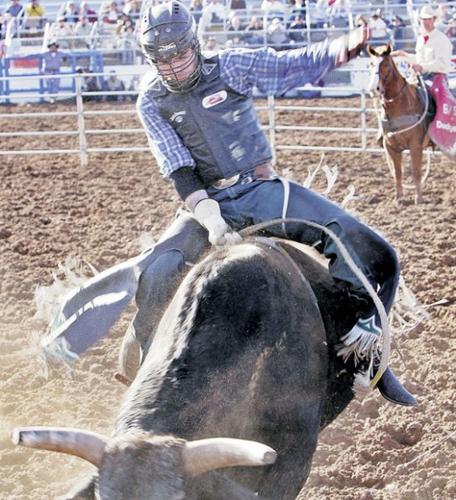
He borrowed a friend's helmet on a whim. While riding in the competition, Ives was bucked off. The bull's hind feet landed on the 21-year-old's head, shattering the helmet.
It could have been his skull.
The experience prompted Ives to convert from the traditional cowboy hat to a helmet. That includes his riding in this week's Tucson Rodeo.
"If we ride bulls, we're going to get stepped on," Ives said.
Seven of the 12 bull riders wore helmets while competing Saturday, the opening day of La Fiesta de los Vaqueros at the Tucson Rodeo Grounds.
Ives is part of a growing national trend of bull riders who wear helmets, though the Professional Rodeo Cowboys Association doesn't require it.
People are also reading…
About 40 percent of professional bull riders now wear helmets, compared with 5 percent a decade ago, according to researchers at the University of Oklahoma College of Medicine.
"It's starting to become more accepted. Back in the day, it wasn't macho; it wasn't cowboy; it wasn't tough," said Andy Hopkins, program manager for the Justin Boots Sportsmedicine Team currently stationed at the Tucson Rodeo. He'll occasionally see a bronc rider wear one, but it's mostly bull riders, he said.
The Professional Rodeo Cowboys Association's 2006 world bull-riding champion, B.J. Schumacher, wears a helmet.
Wesley Silcox, the 2007 world champion bull rider, is among the majority who don't.
"I didn't start out wearing a helmet, and it just doesn't feel right. … I just don't want to change anything from what I've been doing," said Silcox, 22.
He broke his jaw and fractured his eye socket last October — and though that did make him think about wearing a helmet, he decided against it.
"If I get hit in the face, I probably deserve it," he said. Silcox will compete in the Tucson Rodeo on Friday.
The earlier kids start wearing helmets, the more accustomed to it they become, said Michael Allison Sr., a rodeo dad who helps out as a volunteer at the Tucson Rodeo. His 18-year-old son prefers not to wear one, he said.
The Tucson Rodeo provides the 4- to 6-year-olds who do mutton bustin' — riding on sheep rather than bulls or broncs — with helmets and protective vests, said Joan Liess, media director. "They have no problem putting the helmet on."
The Arizona Junior Rodeo Association doesn't require helmets, but the headgear is increasingly popular, Allison said.
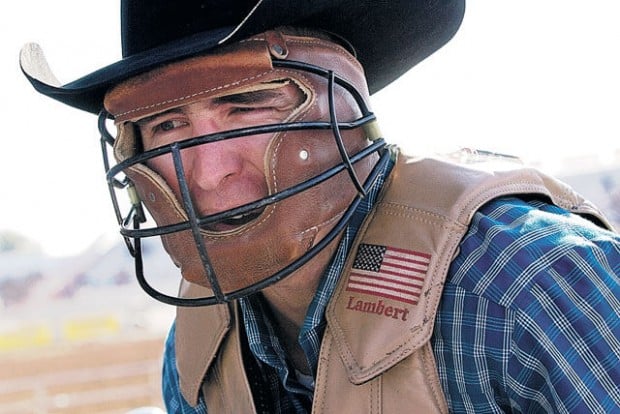
A bull-riding helmet looks a lot like something a hockey player would wear, closely resembling a hockey helmet with a face mask. The bull rider's helmet is the only barrier between a bull's hoof or horns and a rider's head or face.
Competitive bull riding involves a cowboy riding a bucking bull for at least eight seconds. Competitors are scored by judges on their style and a combination of the bull's performance and how difficult he is to ride.
Three head-covering options exist for bull riders: a cowboy hat, a helmet with attached face mask or just a face mask. However, very few wear the face mask solely. If they opt to use protection, they usually go for the full helmet, Hopkins said.
For now, bull rider Mike Stanley of Alamogordo, N.M., wears a face mask, but he's considering switching to a full helmet.
"Right now it's just a matter of getting some money won so I can buy one," Stanley, 32, said.
Helmet costs range from about $90 to nearly $500. By contrast, Stetson's Professional Bull Riders Collection cowboy hats range from about $65 to around $190.
Stanley started wearing a face mask in 2002 after riding bulls for about 10 years. He converted after he dislocated his jaw, broke his nose and lost some teeth, he said.
Bull riders' facial and head injuries have increased dramatically over the past decade, Hopkins said. He attributes the increase to the caliber of the bulls — those bred and born to buck.
Helmets won't eliminate a rider's chance for injury, but they do help, officials said.
"I think they greatly decrease the chance for severe injury," Hopkins said. "Some guys are still going to get hurt, and some guys are going to get hurt seriously wearing a helmet, but I think they can help a great deal in preventing injury or decreasing the severity of injuries that occur."
In his nearly 10 years with the sports medicine program, Hopkins has seen a lot of injuries.
He recalls seeing a bull step on the face of a rider who was wearing a helmet with face mask a few years ago. The medical team had to peel the helmet off. The rider lost some teeth and suffered from some lacerations.
Without it, "that could have easily been a fatality right there in the arena," Hopkins said.
Get a taste of what's to come as the rodeo hits Tucson in a video preview at azstarnet.com/rodeo.
danger ratings
Most rodeo injuries occurred in bull riding versus other rodeo events from 1981 to 2000.
• Bull riding: 49 percent of injuries.
• Bareback riding: 23 percent.
• Saddle bronc riding: 16 percent.
• Steer wrestling: 8 percent.
• Calf roping: 3 percent.
• Team roping: less than 1 percent.
Source: Justin Boots Sportsmedicine Team


 5 takeaways from Arizona football’s 34-24 victory over Washington State | Michael Lev


