

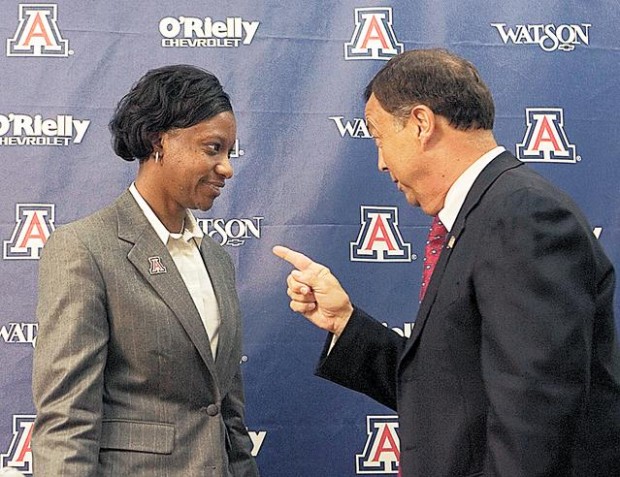
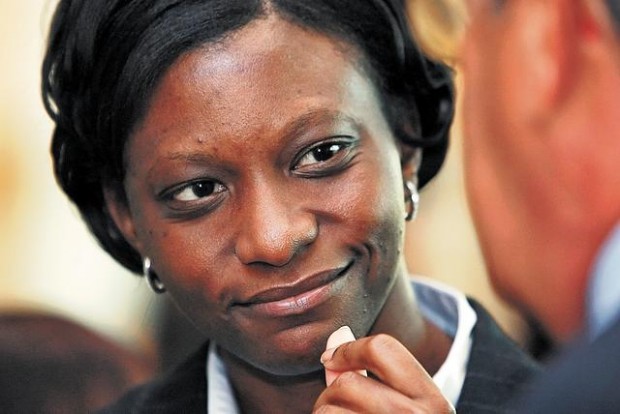
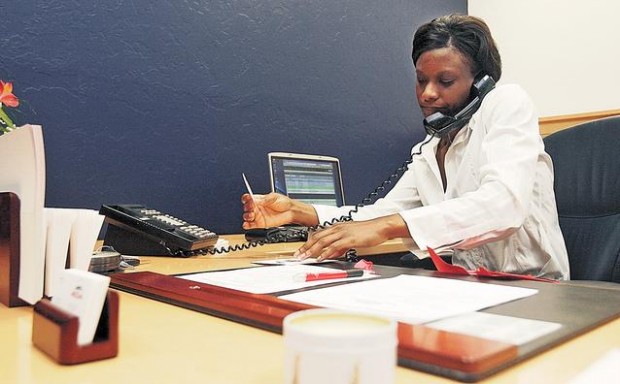
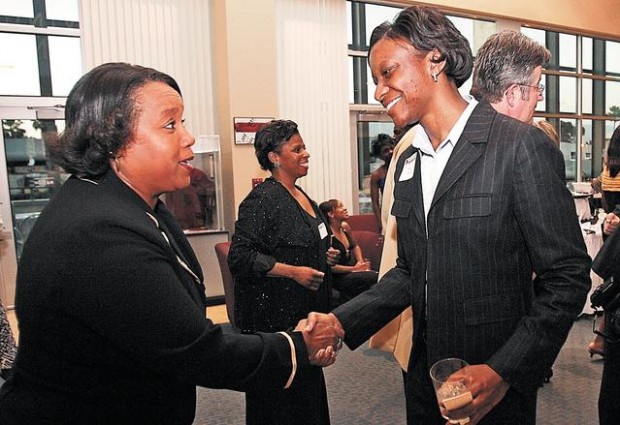
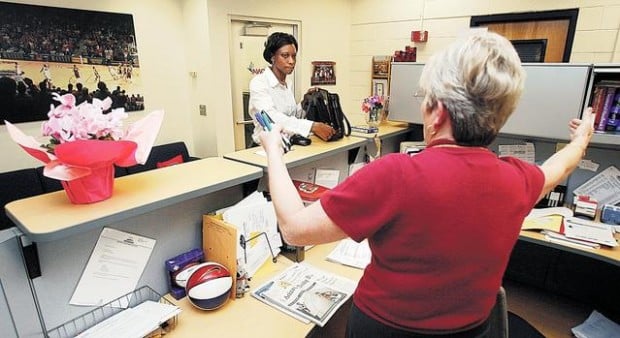
Niya Butts' pace quickens on the McKale Center concrete as she ascends the ramp to the Arizona Wildcats women's basketball office.
She smiles as she turns to a visitor behind her.
"You have to walk fast to keep up with me," she says.
Butts, 30, is on the fast track after accepting her first head coach job on April 3 at the University of Arizona. She is the first black female head coach at the school and youngest women's basketball coach in the Pac-10 Conference. She replaced Joan Bonvicini, who was fired last month after 17 seasons at the UA.
Like her pace, Butts' progress has been fast, but it hasn't been easy.
She grew up in a small town in Georgia, learning hard work from her mom, who cooked at the Rib Rack and cleaned churches to support the family.
People are also reading…
Butts earned a basketball scholarship to the University of Tennessee. There, she sacrificed individual accolades and learned to become a role player, helping the Lady Vols to two national championships.
After battling leg and back injuries during her career, Butts decided to try coaching — and discovered what she was meant to do.
"I just think so many great things can happen here," she said when she was hired. "I can't tell you how excited I am to get to tomorrow and the next day and the next day, so I can move forward and get to know my team, get to know these recruits, get to know the people of Arizona. … I'm just so excited about everything that's going on, I cannot express it enough."
Hard work
Raised by Mary Butts in public housing in Americus, Ga., Niya (pronounced Nye-uh) learned to value hard work.
Her three brothers called her a "nerd." She finished her homework at school and frequented the neighborhood court and played basketball against boys.
She aspired to play professionally, but after shin splints and a stress fracture in her back limited her college career, she tried coaching — to the surprise of her family, friends and former teammates, who said she never mentioned it.
"She was always that adventurous person, 'If I set my mind to it, I'm going to do it,' " her mother said. "She never would talk about it. She just did what she had to do."
Butts was born with a bowed right leg, causing her to be pigeon-toed. At a year old, doctors broke it to straighten it.
"Early on, the doctors weren't sure if I would be able to participate in sports," she said. "They thought it would be difficult to do, but it turned out I was able to compete. I had a lot of issues, but I competed."
She grew up in a three-bedroom apartment in a public-housing project in Americus, a city of about 17,000 in southwest Georgia and home to the Habitat for Humanity International headquarters.
In Americus, one out of four families lives below the poverty level, according to the 2000 Census.
"It seemed every time you'd look around, someone was either getting in trouble or having to drop out of school because they're now pregnant or just all kinds of things," Butts said. "I definitely wanted to make sure I did everything to guard against that."
Butts said her mom provided a good home life, and she and her brothers went to the doctor whenever they needed to, competed in sports and visited their father, Lawrence Marshall, during the summer in nearby Plains.
Mary Butts worked as a cook in the Americus school system and at the Rib Rack restaurant. She also cleaned churches and Niya sometimes helped. Mary's workload shaped Niya's perspective.
"Nobody's going to give you anything," Niya said. "And if you want something, you got to go get it. You got to work for it."
Two years ago, Butts bought her mother a three-bedroom, two-bathroom brick home in Americus. The backyard is big enough for a basketball court, Mary said.
"I walk in the living room and I look around and I cry," Mary said. "Sometimes you imagine yourself being in your own place and Niya did it for me. It is just wonderful."
Niya was the most accomplished athlete of the family. Brother Tim, 34, was a linebacker in high school, oldest brother Eddie, 38, was a cheerleader and Jeremiah, 28, liked computers.
"Niya and her brothers got along wonderful because Niya was one of them," Mary said. "She played just as rough and just as hard and just as tough as the boys."
Being a role player
A 5-foot-11-inch guard/forward who averaged 19 points and 12 rebounds as a junior at Americus High School, Butts led her team to the final four of the state tournament.
Georgia and Auburn recruited Butts early, but Tennessee did not enter the picture until the summer before her senior year when she attended a Tennessee camp.
Like many freshmen, she had to make the transition from post player to guard. To make an impact, Butts had to focus more on defense than scoring.
"Defense is about guts and hard work," Butts said. "When you're on a team with a bunch of Kodak All-Americans and the Chamique Holdsclaws and the Tamika Catchings, they don't need a bunch of points scored. You have to find a way to get on the floor and make your contribution.
"That's the one thing in today's times a lot of kids have a problem with and that's accepting roles. Not everyone can be the quote-unquote superstar, but if you can get everybody on your team to buy into whatever it is they do well, whatever their role is, you can become a much, much better team."
Butts defined her style of play by determination, yet she's also known for her sensitivity and humor.
During a team flight her freshman year, Butts sweated and fidgeted in her seat.
Upon landing, Butts bent down and kissed the floor of the airport terminal.
"That's typical Niya," former teammate Kellie Harper said, "something out of the ordinary."
Butts was named the Southeastern Conference defensive player of the year in 1997, her freshman season, when the Lady Vols won their fifth national title.
"Niya was very strong and very athletic, took pride in her defense," Harper said. The former Kellie Jolly, Tennessee's star guard, is now the head coach at Western Carolina. "She could get a stop when we needed it against a very good and skilled basketball player."
Tennessee coach Pat Summitt recognized Butts had strong people skills and focus that would make her a good coach.
"Everyone liked her and she brought a lot of energy," Summitt said. "She certainly understood discipline. I didn't have to worry about Niya breaking any rules or being out of line. She came in and did what she had to do and she did the same in the classroom."
Butts' role continued to evolve at Tennessee. She became a motivator from the bench as her injuries piled up. She missed part of her senior season with a deep thigh bruise, but helped guide the Lady Vols to two national titles.
Butts said the Hall of Fame coach still owes her a tattoo after winning the 1997 NCAA championship.
"If I owe her one," Summitt said, "tell her I will always owe her one."
Butts got her own tattoo — a basketball and hoop and the phrase "No Butts About It" — on her right arm when she was in high school. Butts says the tattoo has since been altered and she doesn't show it.
She averaged 2.3 points and 1.2 rebounds in 111 games at Tennessee from 1996 to 2000. Her time as a role player allowed her to see the game from a different angle.
"It's a huge eye-opener," she said. "I tell kids all the time, 'You'd be much better players if you could coach first and then play.' "
Finding her calling
Butts wasn't convinced she should coach until after she left Knoxville for small-town Cookeville, Tenn.
After earning a bachelor's degree at Tennessee in social work, she pondered entering that field.
"Originally I wanted to be a clinical social worker and have my own private practice," she said. "It's working with people, which was what I always liked doing."
Tennessee Tech coach Bill Worrell needed a third assistant and Butts was recommended.
When he hired Butts, who was then 22, she told him, "I want to see what I want to do."
"That's fine," Worrell replied. "It's my job to see if you want to do it."
Worrell allowed Butts to tackle nearly every aspect of coaching — from recruiting and analyzing film to working one-on-one with players and organizing camps. While working on a master's degree in education, she realized she wanted to coach.
"When I was in class, I found myself wanting to be in my office or on the phone with recruits or doing a workout," she said.
During Butts' tenure, Tech won two Ohio Valley Conference titles and went 46-14.
"She's such a people person, but she's a tough-nosed person and she's a very disciplined individual and very traditional in her beliefs," Worrell said. "She's not out there on a limb, trying weird things. She's right there and you can count on her. If you tell her to be there, she'll be there."
Butts then headed to Michigan State, where in one season, she worked with the guards, contributed to recruiting and helped lead the Spartans to a 17-12 record and the NCAA tournament.
Butts went to Kentucky in 2003, where she spent five seasons helping the Wildcats to an 88-72 mark and four postseason appearances. She was the recruiting coordinator for the last three seasons.
In her eight years as a coach, Butts has developed into an energetic, positive leader known for pumping her arms to inspire the fans during games and high-fiving each player as they leave a timeout.
"One of coach Butts' strongest attributes is that she's been through it all as a player," Kentucky senior point guard Carly Ormerod said. "She's been in close, tight games. She's been through the summer conditioning. She's been in every situation you've been in. On days when you're struggling, she can be there to support you."
It's those lessons Butts hopes to impart to her players at Arizona.
"Everyday I get up and come to the office, and I drive home or get something to eat, and I'm amazed at the view," she said. "Being from the South, I'm used to a little more grass, but also I don't get mountain views either.
"It's awesome."
"Nobody's going to give you anything.
And if you want something, you gotta go get it."


