


Feb. 24, 1979: Sunnyside wins the first of 30 state wrestling championships
If you’ve ever seen the trophy cases at Sunnyside High School, or the plaques and banners that hang on the walls in the wrestling room, you wonder if someone got carried away and ordered two of everything. Nobody could win all of these, could they?
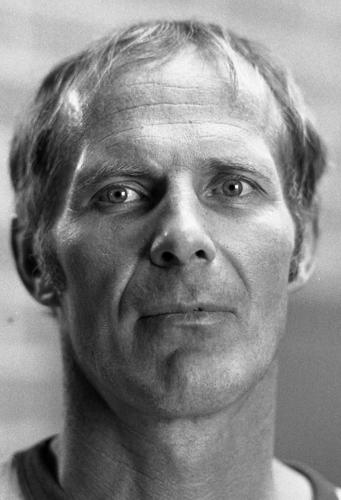
Don Klostreich ignited Tucson’s most enduring sports dynasty in 1979, coaching the Blue Devils’ first state wrestling championship. From 1981-88, the Blue Devils won eight straight.
Richard Sanchez picked up the torch in 1990 and won five consecutive state titles.
Then came Robert DeBerry, who unimaginably increased the pace. Under DeBerry, the Blue Devils won 15 state championships in 16 years, including 14 straight.
How did all of this happen? It started with a punch.
People are also reading…
Klostreich was the head football coach at Phoenix Carl Hayden High School in 1973, a former North Dakota prep wrestling coach who was, shall we say, of the no-nonsense brigade. At an offseason coaching meeting, Klostreich overheard another coach demeaning the Falcons.
Words were exchanged. Punches were thrown. Klostreich lost his job.
But because he once worked with Sunnyside High football coach Paul Petty, Klostreich wasn’t out of work long.
“Paul got me hired at Sunnyside,” Klostreich told me in 1986. “He had been on my staff at Carl Hayden. One thing led to another and it all worked out.”
Under Klostreich, the Blue Devils produced some of the great names in Arizona wrestling history, especially Eddie Urbano and Thom Ortiz.
“It’s work and it’s time,” Klostreich said in that ’86 interview. “There’s no place for part-time.”
By 1990, with a 161-9 dual meet record, Klostreich was exhausted. He moved first to California and then to Yuma; he said he needed a change of scenery. The Blue Devils somehow picked up the pace.
Sanchez, who had been a football and wrestling assistant coach at Sunnyside for 15 years, won five straight state championships, 1990-94. He left to become the Blue Devils’ football coach, building a longtime losing program into state champions in 2001 and 2003.
Sanchez’s approach was a lot like that of Klostreich.
“Work works,” said Sanchez.
DeBerry arrived in 1995 and finished second in the state finals. The Blue Devils then won every state championship from 1998-2011. Sunnyside overflowed with wrestling champions, including Nate and Nick Gallick and Erik Larkin, who became NCAA All-Americans.
DeBerry’s formula: “There’s no pressure; just don’t lose.”
In the summer of 2011, DeBerry chose to take a break and leave Sunnyside. The legacy was such that the Blue Devils had won 29 state championships in 32 years. He chose to be positive.
“Dr. Seuss is one of my favorite authors,” he told me. “Don’t be sad it’s over; be glad it happened.”
After the Klostreich to Sanchez to DeBerry excellence, maintaining Sunnyside’s wrestling tradition has been continued by new coach Anthony Leon. He coached the Blue Devils to the 2013 state championship and has been second in 2014, 2015 and 2016.
Under Leon, the Blue Devils have arguably the top wrestler in the state, junior Roman Bravo Young, a two-time undefeated state champion, who last month won the USA Cadet Freestyle championship and will be part of Team USA in the world championships this summer in Europe (in Tbilisi, Georgia.)
Where are they now: At 76, Klostreich has been an assistant wrestling coach in Yuma. Sanchez, who served as the Sunnyside school district athletic director after his coaching days, is retired. DeBerry is the athletic director at Tucson High.
How they did it: Sunnyside was so dominant that it won state championships by more than 100 points four times: 190-63 over Mesa in 1983; 191-81 over Tempe McClintock in 1986; 199-67 over Mesa Mountain View in 1984; and 282-177 over Sunrise Mountain in 2000.
In 2005, Nate Gallick and Matt Lopez became the 18th and 19th Sunnyside wrestlers to win four state championships in their careers. The most decorated ex-Blue Devil is probably Eddie Urbano, who won state wrestling titles in 1979 and 1980, NJCAA championships at Pima College in 1981 and 1982, and an NCAA championship at Arizona State in 1985. Urbano committed suicide in 2012; he was 50.


