Despite persistent sound problems at Smothers Theatre that September night, Roger McGuinn did what a veteran performer does: he soldiered on.
The vocals were muddy, particularly in the first half, and some of his stories were hard to follow. The audience stayed with him anyway, because this was an evening with one of the architects of folk rock, telling the story of his life one song — and one guitar — at a time.

Dr. Barton Goldsmith
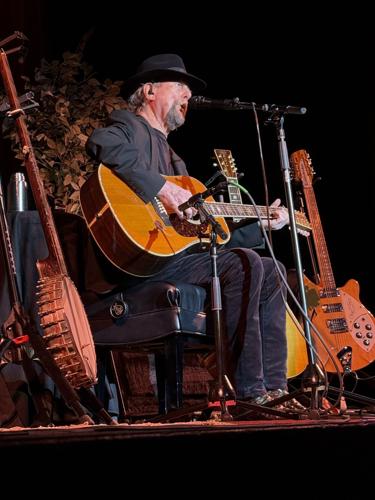
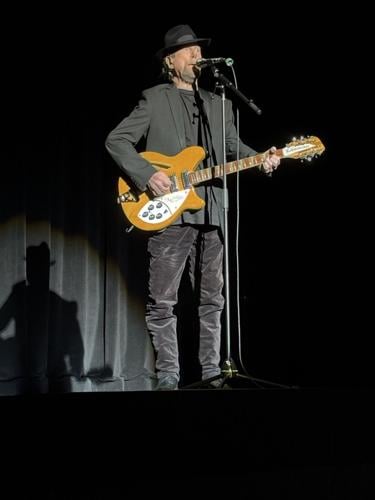
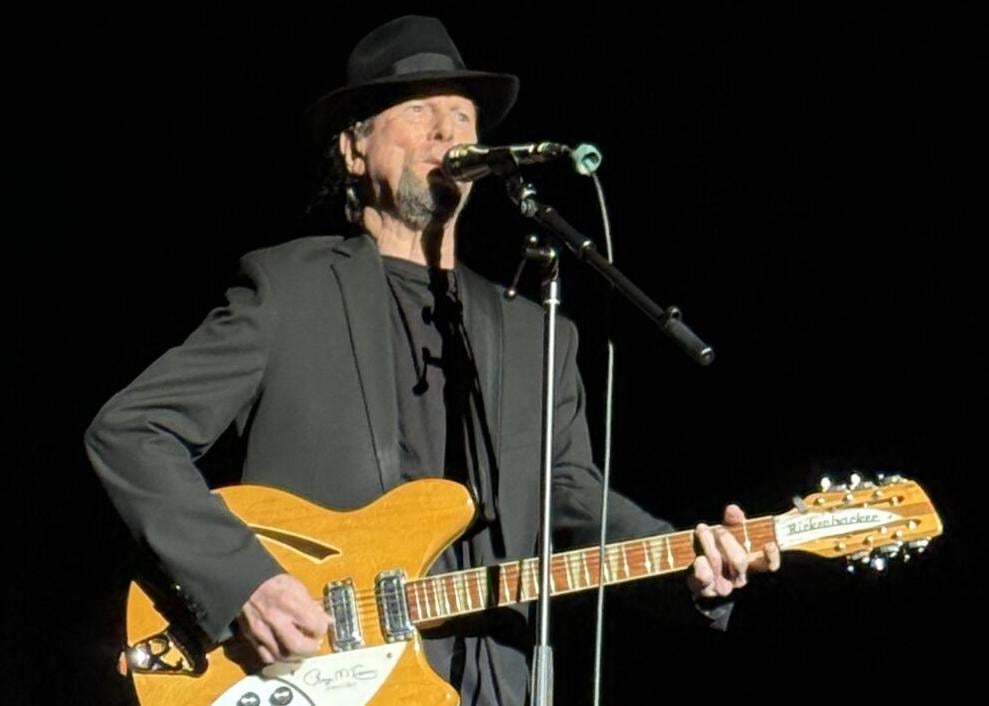
There was no band. McGuinn performed alone, surrounded by instruments representing the different chapters of his career: a five-string banjo, a Martin 12-string, his custom Martin HD-7 seven-string and, at the opening, the blonde Rickenbacker 12-string responsible for one of rock music's most recognizable sounds.
He opened by recalling the 1987 tour he shared with Bob Dylan and Tom Petty and the Heartbreakers — McGuinn opening the shows, the Heartbreakers backing Dylan, everyone coming together at the end. That period also produced "King of the Hill," which McGuinn wrote and later recorded with Petty. Then came what he called his theme song, Dylan's "My Back Pages." When the audience joined him on the chorus, the room suddenly sounded wonderful, mud and all.
People are also reading…
From there the concert traced McGuinn's path from a teenage music student in Chicago to the formation of the Byrds. He started guitar at 14 and left Chicago for his first professional job at 17, studying at the Old Town School of Folk Music and learning from Bob Gibson before he played "Well, Well, Well" on the seven-string Martin. He remembered the Chicago folk scene and the Gate of Horn, where the Limeliters gave the teenager his first real break, flying him to Los Angeles to play guitar and banjo on their RCA album Tonight: In Person. He later joined them at the Hollywood Bowl, opening for Eartha Kitt — he had to rent a tuxedo for the occasion.

Roger McGuinn performs a solo concert Sept. 9 at Smothers Theatre at Pepperdine University in Malibu, Calif.
At Club 47 in Cambridge, he met Joan Baez, a chapter he marked with the traditional "The Virgin Mary Had One Son." He toured as accompanist for the Chad Mitchell Trio, came back to Los Angeles to open for Lenny Bruce, and caught the ear of Bobby Darin, who offered him twice what he'd been making. When Darin came off the road, he brought McGuinn to the Brill Building as a songwriter. McGuinn became Judy Collins's musical director, helped Paul Simon cut the demo for "The Sound of Silence" and built a reputation as one of New York's go-to 12-string players.
Switching to banjo, he played "This Little Light of Mine" and the comic barnburner "The Preacher and the Bear" — technique he'd picked up as a young musician that would later shape his Rickenbacker style.
Everything changed when he heard folk chords played with a rock beat. Traditional folk audiences weren't impressed by McGuinn's "rocked-up" folk songs, but Gene Clark was. Clark joined him, and together they wrote "You Showed Me," later a hit for the Turtles.
After intermission, McGuinn returned with "Turn! Turn! Turn!," an audience favorite and one of the night's most moving moments, followed by "The Bells of Rhymney," its 12-string shimmer filling the theater — the sound that would reshape American popular music.
The second half moved through Byrds history: "Eight Miles High," a detour to Nashville in search of a different sound, and "You Ain't Goin' Nowhere," which the crowd recognized from Dylan's opening "Whoo-ee, ride me high" before McGuinn sang a note. Woody Guthrie's "Pretty Boy Floyd" led into the story of Gene Tryp, the unfinished musical he wrote with Jacques Levy, loosely based on Peer Gynt. It never reached Broadway, but it gave the Byrds "Chestnut Mare," "Lover of the Bayou" and "Just a Season." "Chestnut Mare" landed especially well, a reminder that McGuinn has always been as much a storyteller as a guitarist.
He recalled his friendship with Peter Fonda and the making of "Ballad of Easy Rider" — Dylan scribbling the opening lines on a cocktail napkin and telling Fonda to pass it to McGuinn, who finished the song for the film. When Dylan wouldn't license "It's Alright, Ma (I'm Only Bleeding)," it was McGuinn's version that ended up in the movie. His account of the Byrds' formation was just as entertaining: David Crosby angling to join the group McGuinn had started with Clark, demos cut at manager Jim Dickson's studio, bassist Chris Hillman and drummer Michael Clarke rounding out the lineup, and Miles Davis, of all people, championing them to Columbia Records.

Roger McGuinn performs a solo concert Sept. 9 at Smothers Theatre at Pepperdine University in Malibu, Calif.
McGuinn played a verse of "Mr. Tambourine Man," the Byrds' first No. 1 hit, and remembered that Crosby didn't want to record it at first. His arrangement — a Bach-like introduction grafted onto a Beatles-influenced beat — is what turned Dylan's folk song into the record that helped invent folk rock.
A story about meeting the Beatles and writing "Eight Miles High" carried the evening toward its close. Midsong, McGuinn slipped in a few bars of the James Bond theme, a small, playful proof that his musicianship hasn't dulled a bit. "Mr. Spaceman" closed the main set; for an encore, he offered "May the Road Rise to Meet You," its wish that rainbows follow the rain landing less like a final song than a benediction.
McGuinn has called the Byrds "a nice detour" on the way to his original dream of becoming a folk singer like Pete Seeger. Six decades on, this autobiographical one-man show made the case that he got there after all — just by a longer road than he planned.
The sound never fully cleared up. At 84, alone onstage with his guitars, his banjo and his memories, Roger McGuinn didn't need it to. The jingle-jangle still carried.


 Tucson's El Güero Canelo for sale