

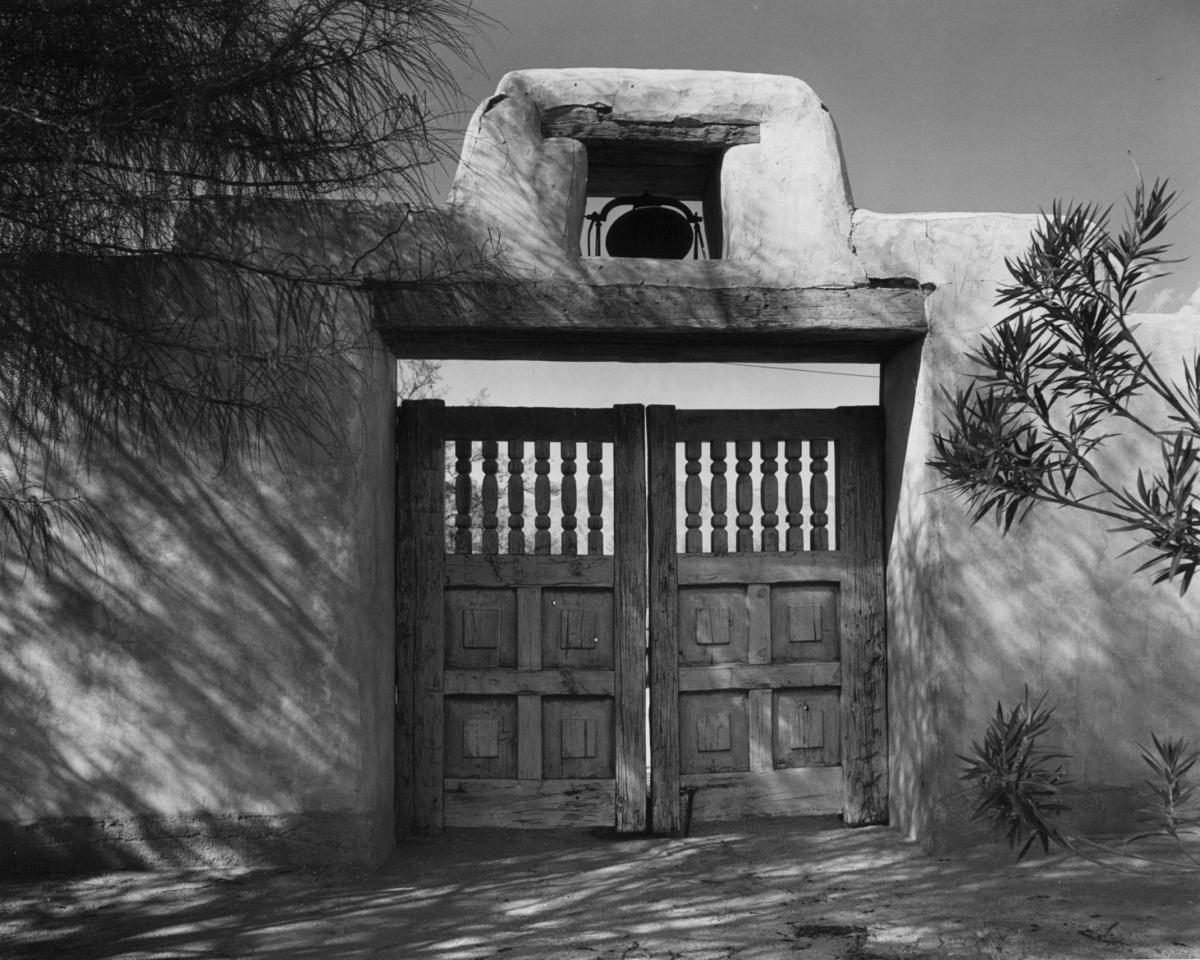
This "Tales from the Morgue" takes a look at a Tucson Citizen article and photo package from 1954. The photos appeared again 10 years later when the widowed homeowner, Peter Bolsius, considered selling his home.
From the Tucson Citizen, Dec. 18, 1954:
Old Landmark Lives Again
By Dianne Moore
Citizen Homes Editor
Some twenty years ago, the Suttler's store at old Ft. Lowell was falling into ruin. Crumbling adobes were strewn about the building and weathered timbers gave the place an air of a vanishing Arizona. The few Mexican laborers living in the area were loathe to come near the place for fear that the evil eye of ghosts would haunt them. And saddest of all, no one cared. Not until Mr. and Mrs. Peter Bolsius and Charles Bolsius came to town.
HAVING COME FROM New Mexico where they lived in a penitente village for several years, the Bolsiuses were interested in the story behind the Suttler store and although they knew nothing about the problems of renovating and restoring an abandoned building, they bought the place and the many acres of land that went with it. Here and there, they picked up bits of information about old Ft. Lowell and the history of their home-to-be.
It seems that at the height of the fort's activity, the WCTU got behind a bill in Congress forbidding the sale of liquor at a military establishment. Soon after the passing of the bill, a man named Suttler pushed a bill through which would allow a bonded man to run a bar and gambling house one hundred feet away from any military post—thus, the Suttler's store.
PIE ALLEN, a one-time mayor of Tucson, built the establishment and managed it until 1892 when the fort was abandoned. For a short time afterwards, a Dr. Swan used the building as a sanatorium but soon again the place was abandoned.
The Bolsiuses started their huge task of rebuilding in 1935, living in a nearby small adobe hut during the four years it took them to complete the job. The basic plan of the house consisted of two rooms on either side of the wide zaguan, a passageway from front to back through which stage coaches made their way to the enclosure behind the building. The two rooms on the left were devoted to the officers' bar and gambling room while the enlisted men took the right hand side.
ENCLOSING THE SAGUAN at either end was the first job undertaken by the Bolsiuses and this area they floored and finished as a living room. Into one wall they built a pueblo style fireplace and beside it, a figure of St. Elizabeth was done in relief. Says Mrs. Bolsius, "She was a Hungarian saint who turned bread to roses, you know, and we feel that she has helped us do the same thing with this house."
More than just plain construction has gone into this charming home, for the Bolsiuses, all three, are talented in the ways of woodcarving, painting, and tinwork. Mrs. Bolsius started on the doors first of all and she says a Sears Roebuck chisel did all the work!
THE TWELVE CHAIRS around the dining table are of more than passing interest. Aside from the handsome, massive design, Mrs. Bolsius carved into the back of each one the names of famous people who had at one time sat in them—Thornton Wilder, Dwight Eisenhower and Tucson's own Margaret Sanger Slee.
Peter Bolsius undertook the job of making all the light fixtures which are handcrafted of softly lustrous tin. And Charles Bolsius, an artist and woodcarver, designed and made the front doors. fitting them into the arched entrance of the one-time saguan.
ALTHOUGH MOST OF THE work which has gone into the house has spanned a mere twenty years, the Bolsiuses, in the true spirit of the old Southwest, have carried out a motif native to this part of the country.
The gate pictured on the cover, for instance, is not, as one would expect, left from Arizona territorial days. Its inspiration was the gift of an old bell to the Bolsiuses from friends in Illinois. Charles Bolsius studied the many old types of gates and built this one as a replica with the well-preserved adobe bricks found around Ft. Lowell. The gates he carved from old timbers, they, too, replicas of pre-territorial types.
Here, indeed, is a home of great warmth, created by hard work and hope.
People are also reading…
More photos of the home follow.

