

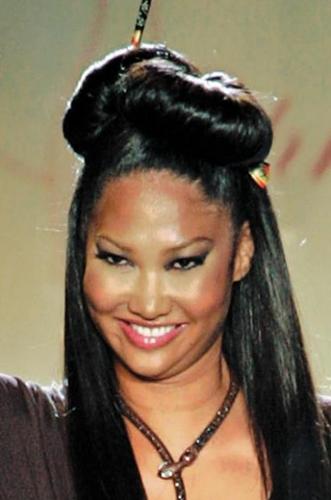
On a recent afternoon, Kimora Lee Simmons was wrapping up the taping of her VH1 reality series, "The Kimora Lee Simmons Show."
She was fielding calls from Sephora — she's working closely with the company on a line of high-gloss makeup set to debut next month.
This month, she was a guest judge for a few episodes of the third season of UPN's "America's Top Model." And to top it off, she's working on a new label, KLS, a higher-end version of her Baby Phat line.
Pretty fabulous, huh? And she knows it.
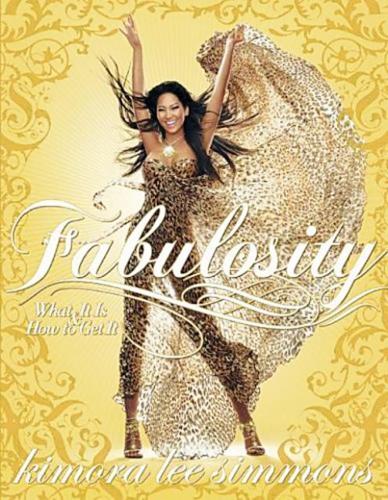
In fact, Simmons wrote the book on it, "Fabulosity: What It Is & How to Get It" (Regan Books, $25.95).
Since marrying the original hip-hop entrepreneur, Russell Simmons, eight years ago, Kimora Lee has taken Baby Phat from a simple group of T-shirts and sweats to a glammed-out, albeit slinky, collection of minis, corset tops and knee-high boots in lavish furs and leathers. She's also the brains behind a women's jewelry line — way big on the diamonds.
People are also reading…
Her public persona identifies her with all that is greed and "extra." Simmons is constantly criticized for her perceived materialism, from her obsession with Louis Vuitton bags to her use of daughters Aoki Lee and Ming Lee in fashion ads.
Her detractors say she even managed to make a farce out of Kabbalah when she was popped for driving while intoxicated and wore the signature red string bracelet in her police mug shot.
Does she have no respect?
Of course she does, Simmons says. Not to mention that it's all of her — the good, the bad, the pretty and the ugly — that makes this 6-foot former Chanel model truly fabulous.
On the day we caught up with Simmons, she was calm. A little rushed but still friendly. We got her on her cell phone while she was in Los Angeles, and for 20 minutes the toned-down diva gushed about what her 264-page primer with the shiny gold cover means for young girls.
Q: What is fabulosity?
A: It's the state of all things fabulous. It's a phrase I coined, and it concerns being fabulous from the inside out. Head to toe.
Q: What led you to it?
A: It's a word I started using, and other people caught on. When I was thinking about the concepts for my book, I decided to build essential rules around the word.
Q: What's the most important law on being fabulous?
A: One of my favorite laws is to defy the haters. I think that in any young woman's journey to being fabulous, you will come across people who are not as supportive of you as you would want them to be. . . . You can welcome them. But take their criticism with a grain of salt and keep it moving. Don't trip and fall over it.
Q: Tell me about your childhood. What about it made you a misfit?
A: When I was growing up — I grew up in St. Louis, Mo. — I was the only person that was black and Asian mixed. I was taller than the average kid. Gawky. I stuck out like a sore thumb. . . . I found my place in the world of modeling.
Q: How did you leave the misfit behind? I was a misfit, and it still haunts me.
A: I sort of embraced it and used it to develop myself as an independent thinker. I put myself into my own category since I didn't blend into other people's. What you do with those differences and those difficulties determines what kind of character you will have. . . . In modeling, my differences were accepted and celebrated; it didn't bring me down, but propped me up.
Q: What beauty accessory can you not do without?
A: A great smile. That's my best accessory. It's free, and it activates my muscles, and it lights up my face and appearance.
Q: Favorite designers?
A: I like Chanel, Versace, Cavalli and Carolina Herrera.
● "Fabulosity: What It Is & How to Get It" (Regan Books, $25.95).


