

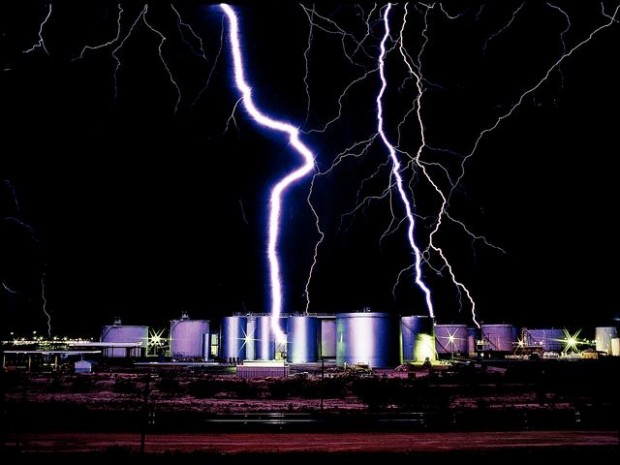
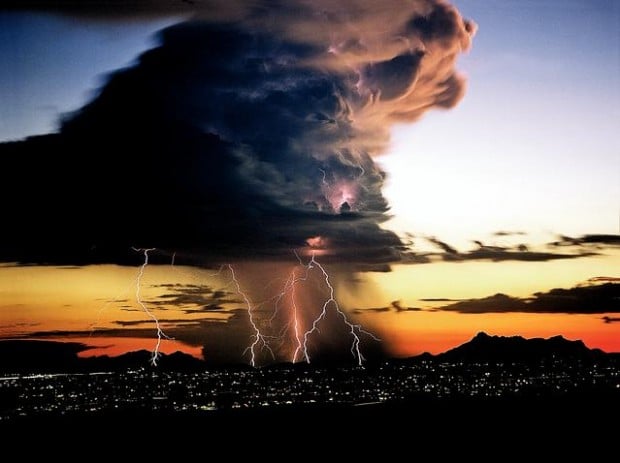
• Respect lightning. The first and last strike are often the most dangerous as they are unpredictable and lightning can strike many miles away from the main storm cloud. Shooting 10 miles from the storm is usually safe.
• Use longer lenses to increase the distance between you and the lightning. Zoom lenses are best because they allow the photographer to frame the area of interest. An 80-200 range zoom lens is perfect. You also need a tripod to steady the camera. Longer lenses are more vulnerable to shaking. That will blur the image.
• To shoot lightning, you need a camera that allows time exposures. Most "point and shoot" cameras do not allow manual time exposures.
You can capture daylight lightning by shooting normal exposures when the lightning strikes. You can use the camera's meter if it allows for longer exposures or a handheld meter.
People are also reading…
At night, you can use longer exposures, like f/5.6 at 1 minute or longer.
Bright city lights will be "overexposed" during long exposures for lightning.
Use the lowest ISO setting possible (such as ISO 50 or 100). High ISO settings will cause too much grain, or "noise." Lower ISOs are better for longer exposures.
• When driving in remote areas, remember that usually dry streambeds might be flowing with water on your way out.


