
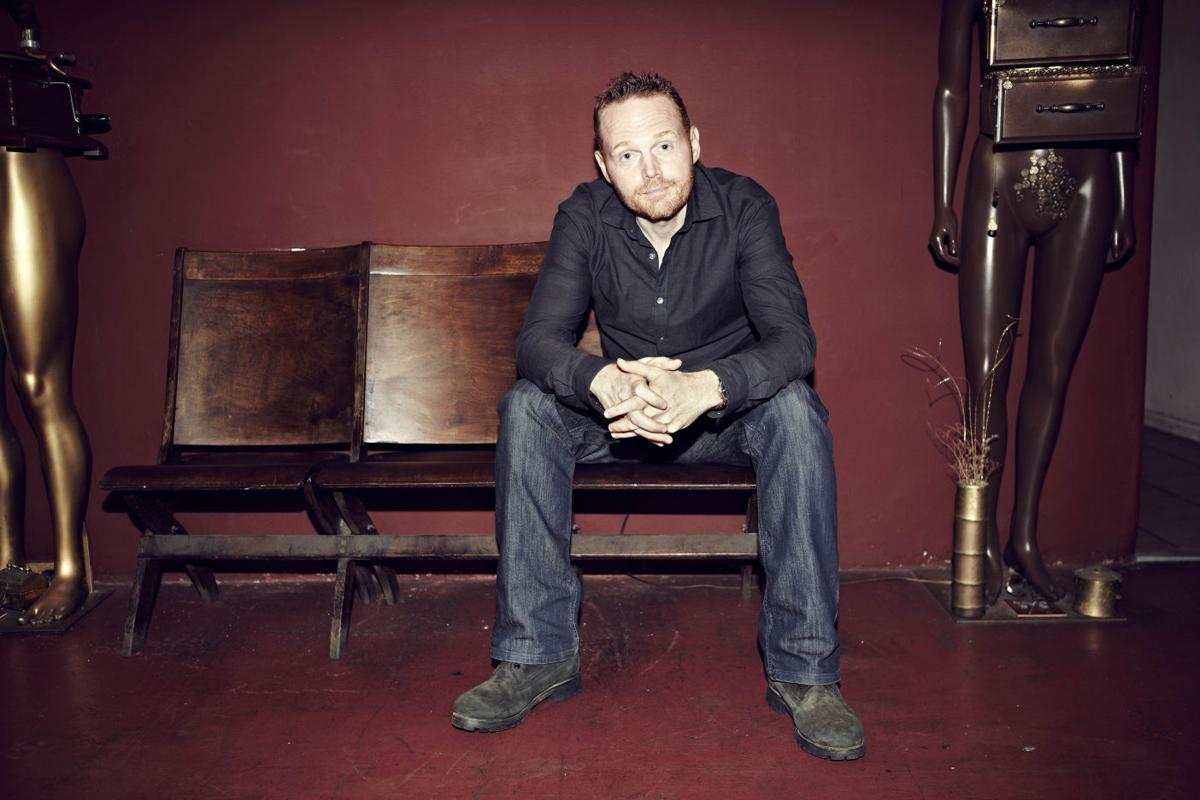
Bill Burr is still trying to go left, which may be a bit of a surprise to a legion of fans that consider him one of comedy’s progressive everymen.
Long into a career that has taken him all over the world, and finally, it seems, to Hollywood, Burr is discovering what life is like when funny and fame collide.
“There are things I’m working on with this tour coming up, a couple skills I’m trying to get better at,” Burr said in advance of his Sunday night show at Casino Del Sol Resort. “It’s like if you played basketball and you couldn’t go to your left, so you practice going left. I’m trying to do that with stand-up.”
He came up in the rough-and-tumble comedy scene of Boston in the early-’90s, where if there was a chop to be busted, it was busted. Patrice O’Neal could make a comedian walk into a club, turn around and walk right back out, if only because of a joke about the guy’s shirt. Robert Kelly, Dane Cook and Jim Norton all emerged from the scene around the same time, diamonds sharpening diamonds. Now Burr is finally getting the limelight he deserves.
People are also reading…
But does he want it?
“You get to a point of people knowing you when it’s not a good thing,” Burr said. “There’s a tipping point. I’ve always said, if I could do the show, and people showed up and the second I walk out everybody forgets who I am until the next time I come to do a show, and they say, ‘Oh yeah, that guy?’ I would take that in a second.”
He might be in trouble with that.
He’s too funny to not be famous, even more so than he already is. His television credits include “Chappelle’s Show” and “Breaking Bad,” an upcoming Netflix animated series, “F is for Family,” which also stars Laura Dern and Justin Long, and numerous movie roles. He is also known for his immensely popular weekly podcast, “Monday Morning Podcast,” which now runs twice per week.
But above all, Burr is known for his stand-up, for which he won Stand-up Comedian of the Year at Montreal’s Just For Laughs festival.
“As far as I know, stand-up is what my heart is telling me to do,” said Burr, opening the conversation and causing a huge sigh of relief from his growing legion of fans. “It is what I am supposed to be doing.”
Burr’s style is part and parcel of his comedy upbringing. After Boston, he arrived in New York and became a fixture at the famed Comedy Cellar, a small, intimate room with a brick wall backdrop, probably to remind comedians that they can’t simply run away from a bad room.
Burr never has.
He learned quickly to toughen his already thick skin, to dish it out as well as he received. An early brush with fame came in 2006 at an Opie and Anthony Virus Tour gig in Philadelphia, when Burr leveled a raucous, boisterous crowd with slam after slam, all impromptu.
It is a style he gleaned from his close friend and comedy comrade Patrice O’Neal, whom, Burr has said in the past, never wrote down a joke. Burr operates with the same freedom – he has his stories and he tells them, and he knows where the funny lurks inside of them.
Comedy for these artists is like sculpting. The joke is always there. It always has been, and always will be. You just have to clean up the rest of the dirt around it. You work rooms, work crowds, work material, and the joke is there, refined, stripped only to its funny.
And Burr has become the Michelangelo, or, as Rolling Stone deemed him, “The Next Louis C.K.”
He’s still putting in the work, though, no matter the setting, no matter the joke, no matter how many movies he books, no matter how famous he gets.
He’s still trying to go left.