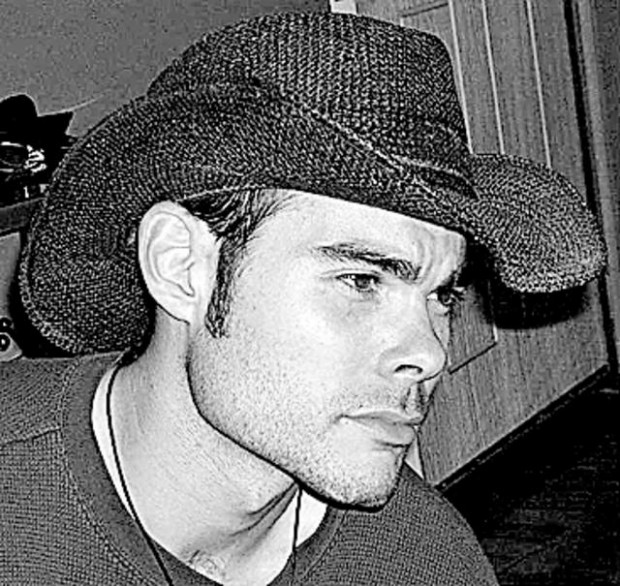
Tempe's Mill Avenue was once a breeding ground for rock stars, with an exciting, locally owned club scene. As filmmaker Nicholas Holthaus posits in his hour-long documentary, "Mill Ave Inc.," it has become a corporate wasteland of chain restaurants and bars.
The strip that spawned bands such as the Gin Blossoms, the Meat Puppets, the Refreshments and Jimmy Eat World has been reduced to Chili's Awesome Blossoms.
Holthaus, a 37-year-old Illinois native, is particularly bitter because it was exactly that creative local scene that drew him to Tempe in 1993.
Hoping to make a career in music, Holthaus moved there from Illinois and enrolled at Arizona State University, where he earned bachelor's and master's degrees in humanities. He became a music writer for AOL and spent every night on Mill Avenue either playing music or listening to it.
People are also reading…
"In the early 1990s, Tempe was one of the four big exporters of pop music," Holthaus said. Seattle, Chicago and Austin, Texas, are comparable hot spots.
When Holthaus sensed that Mill Avenue was on the decline in the mid-1990s, he started shooting footage of performers including Dead Hot Workshop, Gloritone, Flathead, Pistoleros, Walt Richardson, Chicken and Grave Danger. Holthaus also interviewed lesser-known musicians, business owners and government officials.
Holthaus belonged to several bands over the years, including the alt-rock group Canaille, and he still regularly sings around the Phoenix area. He makes his living designing seasonal haunted-house theme parks, including the one at the Rawhide Western Town and Steakhouse at Wild Horse Pass.
Holthaus premiered "Mill Ave Inc." in the Phoenix area in May. He plans to visit other cities that he says are plagued by corporate infestation, including Austin, St. Louis and Nashville, Tenn., to recruit filmmakers at each place to make their own "Mill Ave Inc."-like films for a nation-spanning "Main St. Inc." project.
Do you come to Tucson a lot?
"I did when I had a better vehicle. I haven't been down there much lately because I've been so busy, but I'd go down there about once a month for a couple years and meet Dave Slutes at Congress. The Sand Rubies were a big influence on me."
How do you make your living?
"Resourcefulness. Rent is $175 a month. Each year I make enough money doing haunted houses to pull me through the rest of the year."
What does that work entail?
"It's a seasonal thing. I help fix up the town, maintain audiovisual setups. I stay on and work a day or two a week, but that's picked up lately because it's Halloween season. It's the closest thing to a day job I've got."
What's happened to Mill Avenue?
"It's lost its identity. Like Robin Wilson of the Gin Blossoms says in the movie, Phoenix has always suffered from a cultural identity crisis because Phoenix is basically a transient city. People come here to up their game, get 1.2 cars and 1.5 kids or whatever, and then they move on. Or they settle down and forget their allegiances and responsibilities. Everyone here is content to stay home and kind of veg."
What will Tucsonans get out of your film?
"Why I think Tucson will really like this movie, aside from several other things, the main reason is Tucson has a really good sense of community. Really good. Especially on Fourth Avenue. Corporations are always trying to get on Fourth Avenue, but it's organized enough so it won't allow it to happen. Tempe watched its venues go down one by one. There wasn't enough communication between cultural leaders and musicians, who said: '(Expletive) this. We're just gonna leave — go to Portland or Austin or wherever.' "
Was there a particular boiling point that bothered you about Mill's transformation?
"I was a bit offended when McDonald's moved in in '96, and Hooters immediately after that."
And what was the most difficult closing for you to handle?
"Long Wong's in '05. That's where the Red Hot Chili Peppers were discovered. All sorts of major bands were signed there. It was a proving ground. It was a little tiny club, but sort of a club for the elite. Anybody who was anybody played there. The Meat Puppets, the Gin Blossoms and Jimmy Eat World played there. Calexico, I'm sure, played there."
Why did it close down?
"The owner had planned to raze Long Wong's and rebuild it but never did. It's still a parking lot. . . . By the time the lease expired, it would have taken $48,000 (of rent) a month to stay open. No way they could have afforded it."
Do you see the transformation as politically motivated?
"Through the 1990s, Tempe City Hall saw the benefits of a cleaner, more neon money generator. Corporations would be brought in. (Tempe) started offering incentives to corporations. They got all these tax breaks, and the big, clean, shiny, high-dollar neon boxes started moving in."
Is that still the outlook in Tempe government?
"(Before he was elected in 2004), Mayor (Hugh) Hallman was one of the voices railing against this, warning council members that sterilizing the environment was going to make it not have a cultural identity. It would lose its color and sense of community. . . . He's been trying to get rid of those incentives and restructure. He wants independent owners to get back in, but rents are so high."
Are you going to spend the rest of the year promoting your film?
"All this year, November and December, I'll be entering it into film festivals. It's not just about Tempe. It's got a universal flavor. . . . The problem is endemic to everywhere you go in this country."
If you're involved in filmmaking and would like to be featured in a Q&A, write to pvillarreal@azstarnet.com.
If you go
• What: "Mill Ave Inc." with a Q&A from director Nicholas Holthaus.
• When: 7:30 tonight.
• Where: The Loft Cinema, 3233 E. Speedway.
• Admission: $5.