

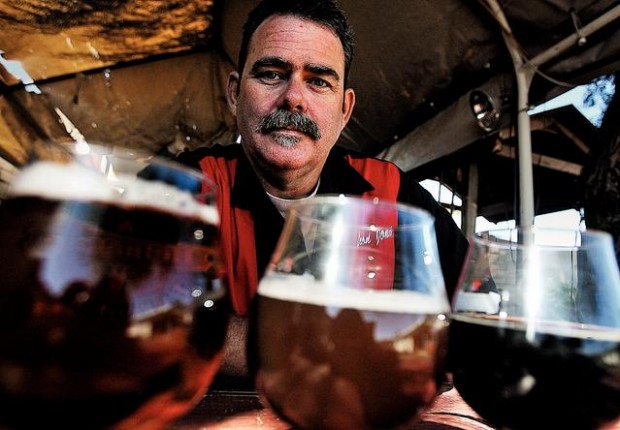
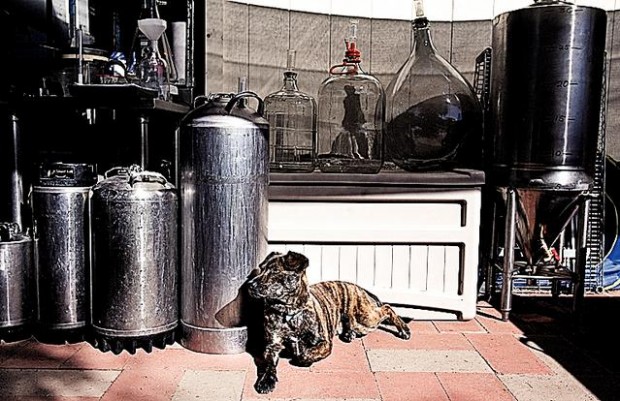
John Adkisson's house is overrun with beer brewing equipment.
He's got a walk-in fridge, a kegerator that holds six full-size kegs, an outside workspace with a sink and an 80-gallon kettle that he uses to cook grains. There are crates of bottles, fermenters, powders, sanitizing solution and other equipment.
It's a home brewer's dream setup. But it's Adkisson's wife's worst nightmare.
"She hates it," Adkisson says. "But she's got only herself to blame."
That's because Mary Adkisson gave rise to her husband's brewing obsession when she bought him a beer brewing kit for his birthday in 1991.
Adkisson says his first batch of beer — a continental light beer (like a Heineken) — didn't turn out. So he gave up. Then, a few months later, he decided he wanted to try again. He brewed an oatmeal stout. Then he brewed another, and another, and another, until he finally got the recipe exactly the way he wanted it.
People are also reading…
Then he entered his perfect oatmeal stout in a competition. It won the blue ribbon.
Over the years, Adkisson has won lots of prizes from competitions, including a gold medal for his Peach Belgian Wheat in the National Home Brew Competition. He even parlayed his hobby into a full-time job, working as the head brewer for Nimbus and for the former Habanero's at the Westin La Paloma Resort.
Adkisson has brewed all sorts of beers, including a Christmas ale made with ginger, cinnamon, nutmeg and orange peel, a green chile lager, and a beer he calls The Sword of God that took five years to ferment.
"We used five different kinds of yeast to make The Sword of God," he says. "It tastes more like port than beer and it's 18 percent alcohol."
Adkisson brews with a group of friends. They call themselves Los Cebadartistas, which roughly translates to "the barley artists."
Rather than brew five or 10 gallons of beer at a time like most home brewers, Los Cebadartistas brew 55 gallons.
"You spend eight hours brewing and you can make five gallons of beer or 50 gallons," Adkisson says. "So why not make more beer and brew less often?"
What do you do with all that beer?
"I end up giving a lot of beer away. This time of year people always have parties and I show up with a couple of five-gallon home brew kegs of beer. I pass it out at every kind of family gathering. My sister is a cop and she's going to a party next week where there's a white elephant gift and everybody has been asking her if she's going to bring my beer."
How alcoholic is your beer?
"I don't tend to make anything less than 7 percent alcohol. I think beer should be a drink where you have one or two at a sitting. I don't drink a lot of beer. I don't drink beer every day. It's like trying to do French cooking. If you're going to make French food you have to use the fat and cream or else it's something different."
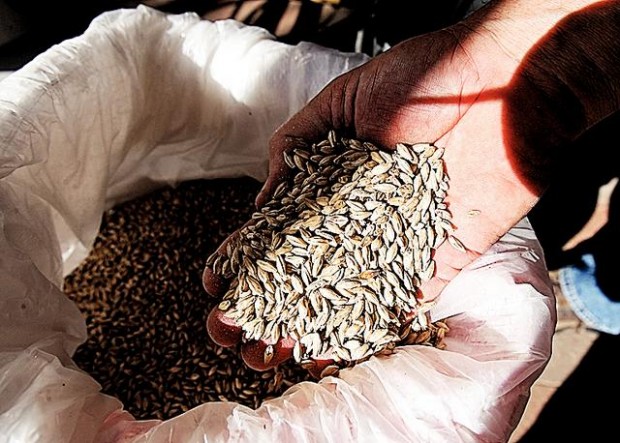
What do you do with the cooked grain after you've extracted all the sugars?
"I tried to start composting, but I've never gotten around to it. I generally spread the grain out in the back alley and the birds come eat it."
Do you ever make make beers using extract instead of cooking the grains yourself?
"Once in a while if I'm in a hurry and somebody has asked for something for a party, I'll throw together an extract brew. But otherwise it's all whole grain."
Why make beer from scratch when there are kits for sale that make the process simpler?
"I like to compare beer brewing to making chicken soup. If you really like chicken soup with a lot of garlic in it, you can buy a can off the shelf and hope it has a lot of garlic in it. You can buy a can and add more garlic to it. Or you can buy the ingredients and make the soup from scratch. Beer is like that. You've always got a better chance of it turning out the way you want if you make it from scratch."


