

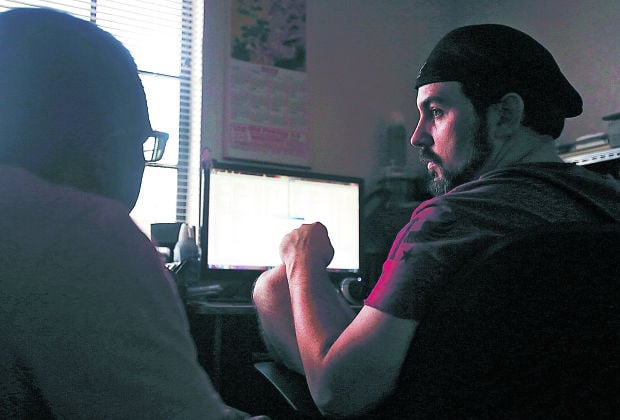

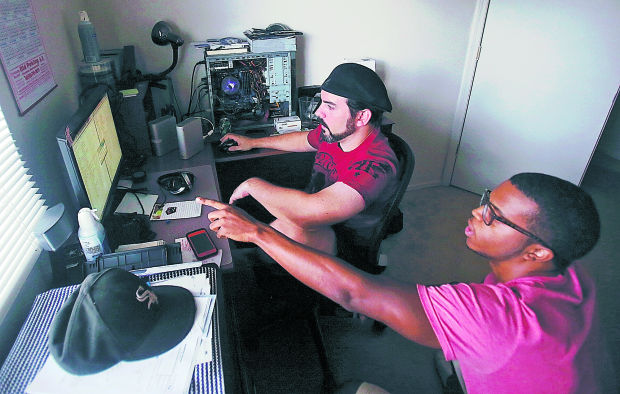
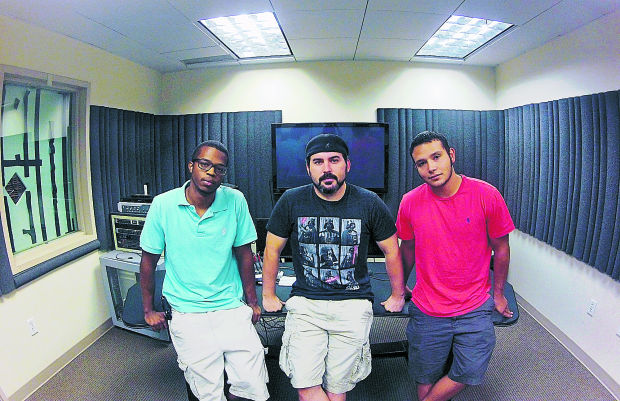
While most of their classmates in the University of Arizona's film program left for Los Angeles or New York after graduation, Darious J. Britt and Damon A. Mosier stayed in Tucson to finish production on their feature film, "Unsound," a labor of love three years in the making.
"Unsound" narrates Britt's fragile and often-volatile relationship with his mother as he sets out to help her in her lifelong battle with schizophrenia.
"When I was writing it, it wasn't about regurgitating my life so much as it was about sharing something that I think others could relate with, and I think they're two different approaches," Britt says.
Britt was well aware that shooting, directing and starring in the film, which finished shooting last week, would be an enormous undertaking. Still, he never anticipated how ambitious the project would become for him and Mosier, who is the film's producer and cinematographer.
People are also reading…
THE FIRST STEPS
Britt and Mosier met in a summer film-history class five years ago, relieved to find someone to relate to in a room full of 18-year-olds whose experience seemed mostly limited to overanalyzing "Donnie Darko" and buying movie tickets with their parents' credit cards.
Both are Air Force veterans and late arrivals to the UA, by traditional standards, Britt, now 28, and Mosier, 34, had enrolled to improve their chances of landing more promising film work in Tucson.
By contrast, their classmates "spent their years in the program figuring themselves out and figuring out what they wanted to be," Mosier says. "We came in already knowing what we wanted to be and where we wanted to go, and saw this as a means to do it, so we hit the ground running from day one."
Mosier had earned an associate's degree in film from Pima Community College in 2003, and was the director of photography on the 2006 film "The Decoy," shot in Old Tucson and directed by PCC classmate Justin Kreinbrink. Britt first gained experience on projects as a boom operator responsible for placing microphones on set.
Still, each realized they'd need a bachelor's degree to do the work they'd always aspired to.
The UA bachelor of fine arts in film and television program blends theory with craft, introducing students to an immersive look at the technicality, aesthetics and even business and legal aspects of film in both classroom and real-world settings.
"You come into (the program) not knowing anything, but you come out of it knowing what you don't know, which is still a valuable thing," says Mosier, who assists students as an employee in the UA film school's equipment lab. "That puts it on the student to go learn it, and the only way to learn it is to be on sets."
The Making of "unsound"
By the time Britt was preparing to leave the Air Force in 2008, his mother's health was deteriorating. Patricia Britt had been living alone but that situation had "been compromised," Britt said, not elaborating beyond saying a flooded house was involved. His older brother and father, by then estranged from his mother, were exasperated and unable to help, so Britt drove her from their home state of North Carolina to live with him in Tucson.
The two were often at odds as her illness intensified. She would wander into the road, see things that weren't there, and work herself into a frenzy over incidents that had never happened, he says.
"Seafood Tester," Britt's senior thesis film, chronicles those early days of their cohabitation, as doctors offered "cursory" diagnoses and Britt struggled to keep up with his schoolwork, take care of his mother and research her condition all at the same time.
Britt knew as it unfolded that this was a story that needed to be told, but only under near-perfect circumstances. He had always intended to play the role based on himself, but for the film to be convincing, he'd need a actress that wasn't afraid to venture into dark depths to play his mother.
The casting announcement went out: "African-American, woman, middle-aged." Although a handful of actresses expressed an interest, no one quite felt right for the part. They asked too many questions, had too many insecurities for a part that demanded them to venture into psychosis, however temporarily.
Then Britt found To-ree-nee Wolf, a local performance artist, stage actress, painter and singer-songwriter who has lived in Tucson for 30 years.
When they first met at her studio, their connection was immediate, not unlike Britt and Mosier's three years earlier. Unbeknown to her, Wolf had an edge on her competition before she'd spoken a word: she was wearing her black cowboy boots, the exact shoes Britt had always conceived that the character would wear in the film.
"I remember him looking at the black cowboy boots, and something was flickering on his face," Wolf says. They proceeded with the audition, and afterward Wolf asked when he'd let her know about the part: "He said, 'If you want this part, you have it.' "
Wolf understood the emotional burden of the role from the onset. She'd been able to discern that it was based on Britt's relationship with his mother, and incorporated her own experiences with her stepfather, who had bipolar disorder, into how she played the part.
"She's fearless as a person, so she's able to be fearless as an actress," Britt says of Wolf, who has had no professional acting training. "She's just so accessible to herself, without all that fluff."
That sense of self-trust is what Wolf says gave her strength to play such a sensitive role, especially considering that the character had a presence in her life for over two years - shooting began on "Seafood Tester" in October 2011, and was what Britt refers to as a 10-minute extraction of "Unsound," while production on the feature film began in spring 2012.
"When I commit to something, I just believe in doing it all the way," Wolf says. "If people allow me to go to my depths, I will dive as deep as I possibly can. And (Britt) wanted that from me."
Strength was most necessary when Wolf and Britt needed to clash on camera. One tense scene in "Seafood Tester" required them to brawl in a bathroom and took eight takes to get right. The cast and crew were emotionally drained, and a bruised, exhausted Wolf returned home to her horrified husband.
"His reaction was, 'I'm going to hunt this guy down,' " Wolf said with a laugh.
He didn't, but that was hardly the sole surprise in store during production. One day, the cast arrived at Britt's apartment to shoot a scene, and his mother emerged from a bedroom. At odds with how to play the role accurately without seeming disrespectful, Wolf chose to confront the elephant in the room.
"I told her it was an honor to portray this character that was based on her, because first and foremost, this is a story about love," Wolf says.
Britt says that day was a turning point for his mother, who originally opposed the film because she saw it as a very public airing of her "dirty laundry." After she met Wolf and saw the care she, her son and the crew were taking with the story, Britt says his mother experienced a change of heart that only intensified after she saw the completed version of "Seafood Tester."
"I was surprised, but I was proud that he wants to let the public know," says Patricia Britt, adding that she plans to see "Unsound" once it's finished. "(He's) getting it out there, getting it exposed."
Britt says she always knew her son would be involved in a creative field, but was nevertheless taken aback when that field ended up being film. Despite her initial fear of having such sensitive moments in their lives acted out onscreen, she says she learned to trust "the way that he saw it" and how he wanted their story to be told.
The two continue to live together, and remain close, according to both mother and son. If "Unsound" succeeds, Wolf says, it'll be yet another reminder of how much Patricia Britt has to be proud of.
"(Darious) is enormously talented and an all-around great guy," she says. "I would love to see what he would do with a lovely, huge budget, and I'm curious about the kind of stories he will tell. The world changes according to the kind of stories it hears."
THE NEXT STEP
"Seafood Tester" screened in May 2012 to a packed house at the Fox Tucson Theatre for the annual "I Dream in Widescreen" event, which celebrates the UA senior thesis films. Faculty members and audiences alike seemed to believe the sky was the limit for the film's future.
Britt and Mosier set out to enter the short in as many film festivals as possible.
That first screening marked the beginning of a yearlong journey that proved, according to Britt, "wild," "frustrating," and "a smack in the face with a newspaper," not necessarily in that order.
The hidden cost of simply submitting the film to festivals was a rude awakening; application fees can be up to $80 for a short and often twice that for a feature. That money hardly secures an invite, and Britt and Mosier learned the hard way that rejection might be the only true constant in the film business.
"There's a lot of politics, where it once used to be if you have a good film, it'll find its audience," Britt says. Now, he adds, finding your way through a crack in the fortress of Hollywood-level success requires a strong connection to the inside or an unprecedented amount of luck.
Their first festival experience was so awful they won't identify it for fear of burning that bridge forever. The usual mingling was promising at first, with a group of other filmmakers vowing enthusiastically over handshakes and cocktails to attend the "Seafood Tester" screening before their own film screened next door.
Not one of them showed up. Mosier and Britt left the theater, only to see all of them no more than 10 feet away, waiting to walk into their own screening. Needless to say, it left a bad taste in their mouths.
Another festival, one specializing in African-American film, proved just as disappointing. Despite a theme of camaraderie heavily hyped on the fest's website, Britt felt like he "didn't meet one sincere person there."
The lukewarm experiences left Britt, Mosier and Mosier's wife, Christina Marafino - who also was assistant director on "Unsound" - feeling jaded and ready to turn their focus to the feature-length film.
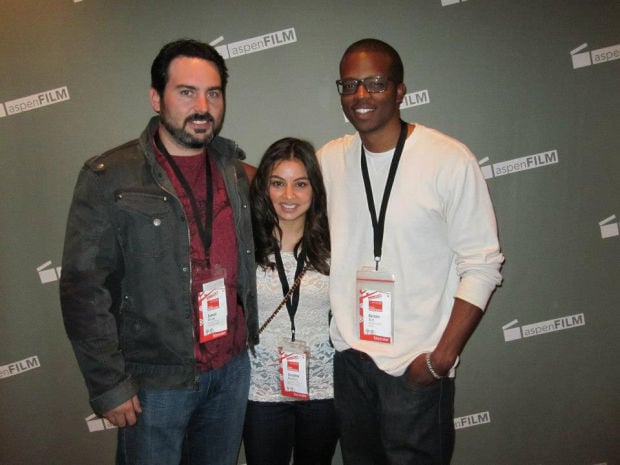
Not a moment too soon, they got word that "Seafood Tester" had been accepted into the Aspen Shortsfest in Aspen, Colo. One of the world's premier short-film festivals, it accepts 80 films out of more than 3,000 submissions each year.
Despite the prestige, festival organizers practically had to beg them to attend, Marafino says.
The head programmers texted, called and emailed in advance, made it a point to approach them on opening night - and even checked in to make sure they'd departed from Colorado safely when an April snowstorm hit.
"This place ... gets 3,000 submissions, and they are on that level with the filmmakers," Britt says. "It basically restored our faith in the idea that there are actually some decent festivals out there."
Mosier and Britt's former classmate, 23-year-old Ricardo Bracamonte, had almost parallel experiences with his own thesis film, the street art documentary "Bombing Arizona."
Now a video editor for more than a year at Tucson's KOLD-Channel 13 station, Bracamonte still found time to promote his short film and was accepted into numerous festivals, including the Arizona International Film Festival, San Francisco Latino Film Festival, San Diego Latino Film Festival and Chicago Latino Film Festival.
"My first screening in San Francisco, I didn't have one question. My aunt who came with me raised her hand in the back and asked me a question," Bracamonte recalls with lingering embarrassment. His second screening was viewed by a much smaller audience, but that time he received more than 10 questions.
Bracamonte is contemplating a job offer at a TV station in Albuquerque, a city with a budding film industry that has hosted hits like "Breaking Bad" and "The Avengers." He's been hoping to relocate from Tucson, which he said is not the most hospitable area for filmmakers.
New Mexico is part of a growing roster of states with active incentive programs for filmmakers looking to locate big-budget projects. Arizona's last tax incentive program for filmmakers expired in 2010.
That doesn't mean that independent film can't survive, and in some rare cases, thrive here. With the help of cheap digital technology, social media and online fundraising resources like Kickstarter, small-time filmmakers can build support and fan bases that could potentially carry them towards more profitable projects.
Still more to learn
The filmmakers have found the learning curve continues after graduation, seeming at times insurmountable: They were forced to adapt to new editing technology without access to the university's film labs, embrace new roles as marketers, website designers and social media experts, and dive into 12-hour-plus days of filming.
Despite their training, they learned there is no truly foolproof way to make a successful film, especially when you must play every role in orchestrating that success.
"My entire experience with filmmaking has been, you do it all," Britt says.
Britt has financed much of the film, maxing out credit cards and abstaining from 9-to-5 jobs to maintain the film's momentum.
Now that they've completed shooting, Britt can focus on pushing the film on multiple social media platforms. Britt's on his own in that endeavor - Mosier says he'd rather return to his days of spending 17 hours on a set in Old Tucson in July than two hours on Twitter - while they finish post-production.
"Making the movie's the car, but everything else is the road. If you don't have the road, your car is no good," Britt says, and Mosier finishes his thought: "It's just going to sit in your garage and not go anywhere."
A test screening on April 30 at the UA yielded an overwhelmingly positive response - along with constructive comments. The feedback from surveys they passed out to the 100-plus attendees, while perhaps too brutally honest at times, helped them identify and fix minor problems in the plot and execution that could have harmed the film's impression on critics and festival judges.
Having spent their years in the film program practically "attached at the hip," as Britt says, the two filmmakers have an easy rapport. If you ask Mosier, Britt is "hungry to learn" and highly motivated, while Britt never doubted for a moment that he wanted Mosier as the cinematographer on "Unsound" because he took it seriously.
The compliments are absolutely sincere, but as the two bicker harmlessly over who originated their "D-Squared" nickname, it's easy to see them as what they are: two creative minds commonly in conjunction, but clearly capable -and comfortable - with occasionally being at odds
They've considered starting a final Kickstarter campaign to fund post-production costs, public screenings at popular venues like The Loft Cinema, and most importantly, festival submission fees, which will accumulate this fall as they meet deadlines for the 2014 festival season that begins in the spring.
High-profile fests like Sundance Film Festival are high on their list, but Britt says they'll definitely prioritize applying to the Aspen Filmfest because of the treatment they received at the Shortsfest.
Regardless, Britt says absolution lies in knowing they told the story they set out to tell without holding anything back.
"Whatever at the end of the day happens will definitely better inform us for the next project," Britt says. "I could walk away satisfied with that."
For more infoRMATION
Watch the film's trailer and stay updated on the upcoming Kickstarter campaign at www.unsoundfilm.com. Find more updates on the film's Facebook page at facebook.com/UnsoundMovie or on Twitter @UnsoundMovie
Kate Newton is a University of Arizona journalism student who is an apprentice at the Star. Contact her at starapprentice@azstarnet.com


