

Welcome to the Super Bowl of Reading, a.k.a. fall, autumn, spooky season, curl-up-with-a-pumpkin-spice-anything-and-read-a-book season. There are — no joke — more than 12,000 books published every week in this country, year-round (and far more if we include self-published works). Yet fall is for the big books, the award-hungry novels, the Christmas-friendly celeb memoirs, the romantasy series that will continue for eternity.
What’s here is a bit of everything, and as usual, a lot of Chicago:
Many Pleasant Returns
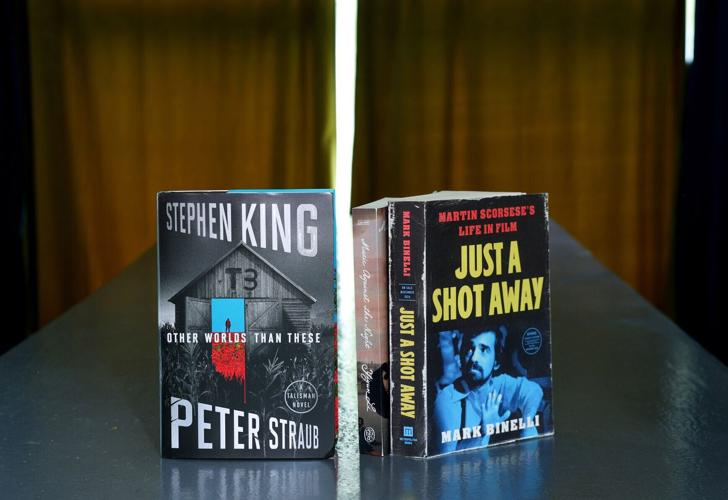
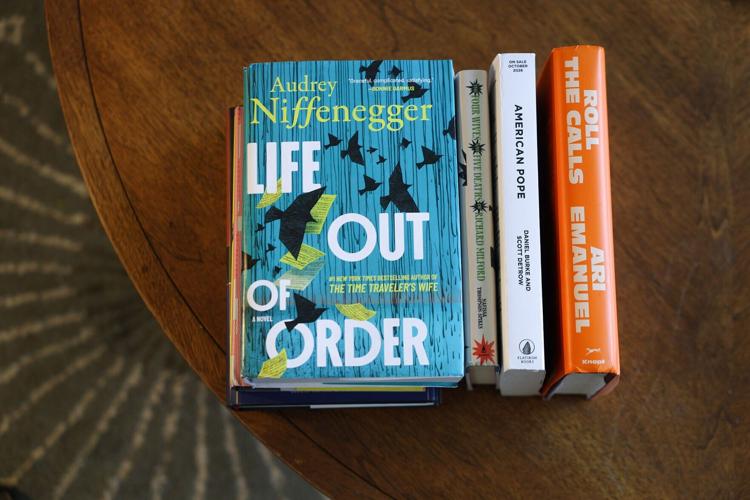
What a nice surprise. After 23 years, Chicago author Audrey Niffenegger wrote a sequel to her once-ubiquitous “The Time Traveler’s Wife,” and it’s far from more of the same:“Life Out of Order” (Oct. 6) is swing-for-the-fence ambitious, a poignant epic following the daughter of the original traveler, now reaching far beyond contemporary Chicago. Speaking of poignant epics: Stephen King — working from an idea by late co-author Peter Straub — delivers a sorta-posthumous conclusion to their “Talisman” trilogy,“Other Worlds Than These” (Oct. 6), partly inspired by the rampage of Midwest serial killer Charles Starkweather.“The Spirits” (Oct. 13) by Bonnie Jo Campbell relocates “A Christmas Carol” to a Western Michigan farmhouse and leans into the gothic-holiday darkness, while Sarah J. Maas’“A Court of Splintered Harmony” (Oct. 27), certain to be a blockbuster, is the sixth installment of the “A Court of Thorns and Roses” series, the humming engine of the uber-popular romantasy genre.
People are also reading…
Bad Influences
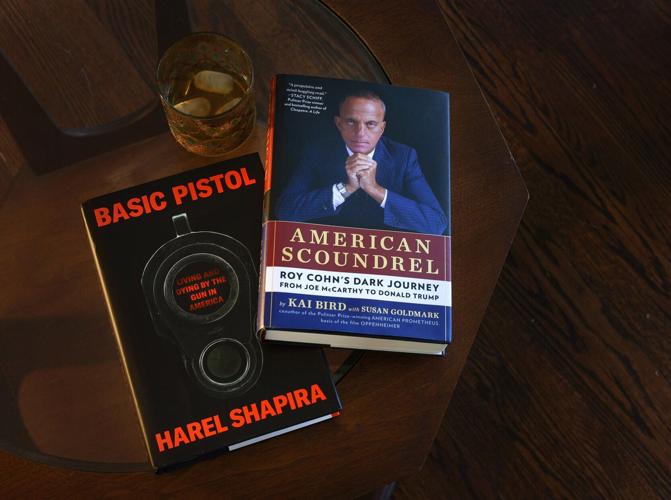
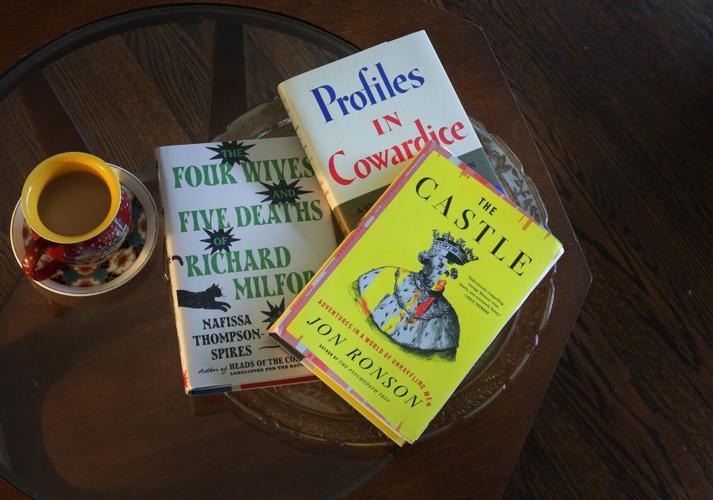
Jon “So You’ve Been Publicly Shamed” Ronson — our most entertaining writer on extremism — returns with“The Castle: Adventures in a World of Unraveling Men,” a hop around the anxious Manosphere, via his son’s adoration of Chris Mark, the castle-owning scion of Marktown, a planned community in Northwest Indiana. A similar paranoia fills“Basic Pistol: Living and Dying by the Gun in America,” a profile of the culture (and the teachers) at firearms schools, by former Chicagoan Harel Shapira. Kai Bird, whose “America Prometheus” was the blueprint for “Oppenheimer,” returns with a more expansive epic of unease:“American Scoundrel: Roy Cohn’s Dark Journey From Joe McCarthy to Donald Trump,” a chilling, head-shaking descent into the ugly, amoral architect of the shameless way of modern politics.
Pretty Pretty Readable
“Emperor of Nothing: The Making of Larry David” (Oct. 20), Blake J. Harris’ authorized biography (meaning, David and most of his friends and family sat for interviews and approved) is light on critical insight, and maybe a bit overly reliant on David, but also an indispensable accounting of how an artist accumulates a world view. But even better: The excellent portraits of comics (Richard Lewis, Bob Odenkirk, etc.) and anecdotes that fill“Best Seat in the House,” a handsome mash of photographs by actor Jeff Garlin, the frequent David collaborator (and Chicago native).
Never Let You Down
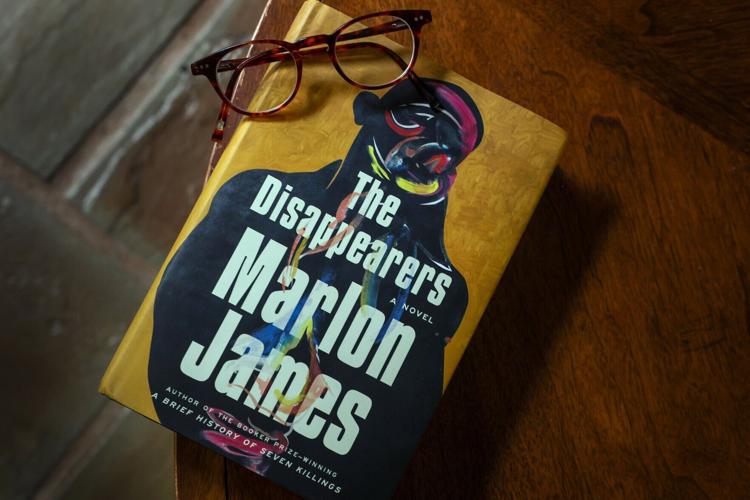
Nafissa Thompson-Spires, formerly of Champaign, now of Brooklyn, whose “Heads of the Colored People” (2018) was one of the best books of the decade, finally returns with“The Four Wives and Five Deaths of Richard Milford” (Oct. 6), about an apparent murder as told by the wives of a philanderer. Part “Rashomon,” part loving satire of Toni Morrison, only funnier. Worth the wait. As is anything from Lydia Millet, whose knack for surprise continues with“Fair Ones” (Oct. 6), which is really two novels: one about friends making sense of a seemingly random killing, one following those same friends attempting to carry on.“The Disappearers” by Booker-winner Marlon James returns to his native Jamaica for another opus (600-plus pages), a portrait of gay life in the country during the AIDS crisis, as told by a huge cast, some of whom have never recovered from a deadly attack by a homophobic mob. It’s as unforgettable as everyone is saying.
Distinctly Autumnal Memories
“Secrets: A Reporter’s Memoir” (Nov. 24) is Bob Woodward’s from-Wheaton-to-Trump personal story, with plenty of tea spilled on decades of unnamed sources. Francis Fukuyama — whose influential “End of History” gave shape to countless think pieces on the decline of liberal democracy — lays out the history of his own ideas with“In the Realm of the Last Man.” One of the year’s best:“Death of an Ordinary Man” (Oct. 6), Sarah Perry’s clear-eyed account of the hours leading to her father-in-law’s (indeed ordinary) passing. Christmas lights outside, a mug of water beside him — every prosaic detail, observed through a simple, deliberate grace.
Hail the Conquering Heroines
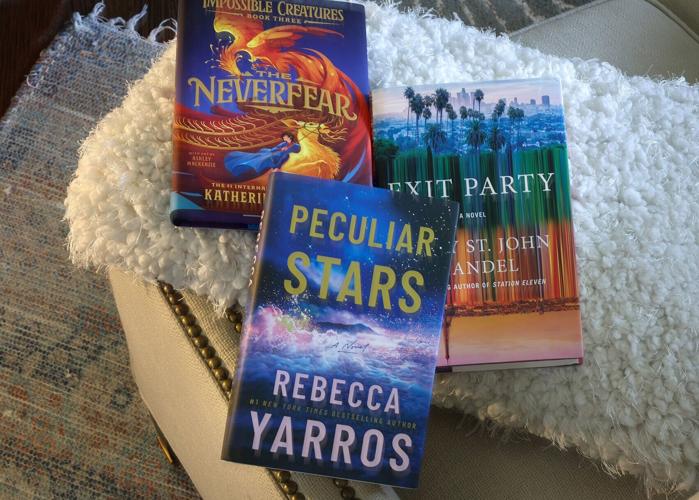
Fall doesn’t have to be so morose. Bonnie Garmus, of “Lessons in Chemistry,” returns with another breezy historical smile,“Peck & Peck,” (Oct. 13) a slightly “Devil Wears Prada”-ish take on brave-young-publishing-hire-finds-a place-among-lunatics, but set at a prestigious poetry journal known for its brutal Darwinian staff. Also young and ambitious: Lily Chen, the freshman at the core of“Taipei Story,” plunges into an intensive Chinese language school to find a connection to her Chinese American roots, words themselves being the frequent heartbeat of R.F. “Babel” Kuang’s regular bestsellers. Not sure if“Peculiar Stars” (Nov. 17), the fun new adventure by romantasy star Rebecca Yarros qualifies as romantasy — a people pleaser discovers her backbone after months on a deserted island — or a self-empowerment romance in which the heroine learns to love herself. But it definitely reads like a tender variation of Sam Raimi and Rachel McAdams’ terrifically twisted “Send Help” from earlier this year.
Mental Breakdown
Gabriel Bump, South Shore native, extremely underrated novelist, is back with“Don’t Stop Snowing” (Nov. 10), which deftly threads the needle between uplift and sentimental. It tells the story of a depressed college graduate in need of a fresh perspective, who then settles on Buffalo, and you know what, it kind of suits him.“Exit Party,” the latest by Emily St. John Mandel, straddles realities: one after the United States dissolves, the other a more authoritarian United States. The result is an unstable hash of surrealist Philip K. Dick detective dystopia and surveillance-state warning. Another post-societal collapse tale: Hernan Diaz’s“Ply” (Sept. 29), the follow-up to his Pulitzer-winning “Trust,” set in the far future, tracks a young thief who pilfers electricity for underground concerts. Toss in a lot of quantum theory, some reality games, and you’ll adore the effort or get a headache. (I felt both.) Emma Cline’s hypnotic“Switzy,” though, is as smartly clear-headed about reality as its protagonist (a rich man facing the decline of his consciousness from Alzheimer’s) is uncertain of his own handwriting.
Culture Clash
Ari Emanuel — possibly the most-feared man from the mean streets of Wilmette — promises the unvarnished truth about life as a Hollywood super agent/firehose of profanity in “Roll the Calls: A Memoir” (Sept. 22), a “master class in how to ignore the haters,” hopefully with dirt on brother Rahm Emanuel. Speaking of self-aggrandizing: Not sure I can get behind this title,“Weird Era: How Pitchfork Changed Music Forever” (Dec. 1), but Pitchfork founder Ryan Schreiber’s memoir of how the Chicago website redefined music journalism is a sober stroll through exhausting hipster Chicago, circa 2005, and “all the hemming and hawing” about taste that went with it. For a different kind of show-biz drama:“Mazywood” (Sept. 22), which chews off a lot, but does it well, relocates Tananarive Due’s family-centered horror novels to segregated 1930s Hollywood and the California mountains, where the grandson of a famous Black actress finds his grandmother’s old retreat for Black stars haunted by something large.
Communication Breakdown
“The Vanishing Family” (Sept. 29) is Robert Kolker’s disturbing and empathetic return to families crushed by a genetic dice roll; not unlike his bestselling “Hidden Valley Road” (about schizophrenia), here is a portrait of a family steadily losing the qualities robbed by frontotemporal dementia, like warmth and caring. A different kind of disconnect:“The Telephone: A New History” (Nov. 10), by the great technology journalist James Gleick, goes far beyond innovations themselves, delving instead into how the phone remade (and continues to remake) how relationships work.
Tell Somes
Many years ago I shook Tony Curtis’ hand at the Book Stall in Winnetka, and ever since I have been a sucker for a good (and many a bad) celebrity gush fest. Last year was Cher’s year. This year it’s men of a certain age:“The Steps” (Sept. 29) takes a hint from Al Pacino’s (terrific) tell-all and finds Sly Stallone selectively remembering only the years leading up to the making of “Rocky.” By its author’s own admission,“One Helluva Ride” (Oct. 6) promises to describe a little too clearly why Michael Douglas is so good at playing jerks. At 320 pages,“Look at Me” (Nov. 10) sounds too brief to capture the life and times of Dustin Hoffman (who turns 90 next year), but the ghostwriter (The New Yorker’s Ariel Levy) is never a bore. Neither is“Devil on My Shoulder” (Oct. 6), former Chicago resident Alice Cooper’s Halloween-friendly history of every creatively disgusting impulse he’s had since the late 1960s. As for the discerning celeb-memoir reader:“Fictional Selves” (Sept. 29), Kyle MacLachlan’s account of imposter syndrome, working with David Lynch and making, yes, “Showgirls.”
Paisans
Mark Binelli, The New York Times Magazine writer whose “Detroit City is the Place to Be” may be the best book ever written about that city, now has the best movie book of the year,“Just a Shot Away: Martin Scorsese’s Life in Film” (Nov. 3), billed as the first “major biography of the director,” and though it stops around 1990, this is a firing-in-all-directions cultural grab bag, scooping up Italian American immigration, mob life — its solid 100 or so pages on coke addiction mirrors all too well those final frazzled scenes in “Goodfellas.” Look forward to this one. Same with“Frank Capra” (Oct. 27) by Sam Wasson, one of the liveliest film historians these days, who not only traces Capra’s work but shows just how Hollywood “became the central fixture in the American imagination.”
Pre-Midterm Reading, Part 1
Not loving the Supreme Court lately?“Supremacy: How Rule by the Court Replaced Government by the People,” from Nikolas Bowie and Daphna Renan (both Harvard Law professors), is a tour of 200 years of overreach, and a compelling case for how Congress could realign that seemingly impenetrable branch. As hysterical as the title sounds,“End Times Fascism and the Fight for the Living World,” by Naomi Klein and Astra Taylor, is actually a patient (if not quite air-tight) argument of how three coalitions (tech oligarchs, religious fundamentalists, hate groups) push apocalyptic ideas to their own benefits.“Live Laugh Love: The Secret History of White Christian Women and the World They Made,” by Kristin Kobes Du Mez, a history professor at Calvin University (the private Christian school in Grand Rapids, Michigan), picks through the origins of the new Insta-friendly domesticity. (If you read the summer smash “Yesteryear,” here are the roots of those tradwife influencers.)
Literary Gold
Is Pulitzer-winning playwright Ayad Akhtar becoming the new Jonathan Franzen?“The Radiance” (Sept. 29), set at a college after a hit-and-run, considers the temperature of academic life in a Trumpian America, just as his acclaimed “Homeland Elegies” took the temperature of immigration in a post-9/11 America. No, wait, maybe it’s Barbara Kingsolver who is best attuned to class and art:“Partita” (Oct. 6), the follow-up to her Pulitzer-winning “Demon Copperhead,” takes a cue from its title (a musical composition made up of disparate parts) and assembles the story of a once-genius concert pianist imagining the life she might have led with an old lover. The pursuit of greatness is also the theme of“Music Against the Night” (Oct. 13), by Yiyun Li, who continues her hot streak with this austere (very autumn) novel about appreciation and caste and a pair of young pianists, oceans apart, who are slowly moving closer.
A Great Escape
If you find Katherine Rundell irresistible, what luck: The British children’s author (and sometime writer for adults) has a pair of books this fall,“The Neverfear,” the third trip to her “Impossible Creatures” series (for my money, less busy than Harry Potter, and conceived with more zing); and a book so tiny (70 pages), it’s really more of a pamphlet — or rather, a breezy manifesto on open-mindedness:“Why You Should Read Children’s Books, Even Though You are So Old and Wise.”
Halloween Prep, Part 1
There’s no hotter genre than horror, and one of the new reliables is Keith Rosson (“Fever House”), whose latest,“Crone” (Sept. 22), about a drug gang, a detective and a witch, reminds you once again how close horror writing is to great crime writing. Or great literary puzzles:“Solace House” (Oct. 13), one of the buzziest new horror books, is author Will Maclean’s inspired homage to Shirley Jackson, by way of “The Shining,” a classic haunted house tale with a touch of campus novel. Told through journal entries and online forums,“The Ship of Death” (Sept. 29) by Kyle Winkler is an even more unsettling take on influence: the story of a couple obsessed with a role-playing board game that seems suspiciously like an occult religion.
Song Sung
The best hip hop history will always be Jeff Chang’s “Can’t Stop, Won’t Stop,” but“Birth of a Culture” (Sept. 22), by legend Grandmaster Flash, is the sort of invaluable artifact that American music could use more of, an early-days account by someone present. (The term “hip hop” itself, Flash testifies, began in 1976 when someone in the New York scene teased a military friend training in Indiana — “your left, your left, hip-hop-hip-hop…”) Even better: Lauren Elkin’s powerful and rangy“Vocal Break” (Nov. 11), a history of female voices, from the mythological sirens to Beyoncé.
The Trouble With Being Creative
Well, first of all, and this is if you’re lucky, great ideas are replaced too quickly by better ideas. Ask David Byrne, who has somehow found time to write“Sleeping Beauties: Why Good Ideas Go Dormant and How They Wake Up” (Oct. 6), an easygoing history (with only a modicum of self-help) about why some innovations (black-hole theory, concrete) and artists (Melville, Bach) go dormant or forgotten for years. (It’s not merely being ahead of their time, he writes, but that some creators see “their times more clearly” than others.) For the more dyspeptic:“The Creativity Con: How Innovation Became America’s Biggest Racket” (Oct. 20) is former Hyde Parker Thomas Frank’s latest takedown of conventional wisdom, a fiery and convincing argument for how progress and innovation often tend to perpetuate social inequality, “a form of radicalism that somehow does not upset the status quo.”
Pre-Midterm Reading, Part 2
I was a fan of Nancy Isenberg’s popular “White Trash: The 400-Year Untold History of Class in America,” and her new cultural survey,“Aristocracy, American Style” (Nov. 10), is a bit of a sequel, an accessible history of how wealthy nepo babies, golden boys, brahmins — anyone to the manor born — push the fantasy of self-made success in this country.“Blockers: Rebels in the Deep State” (Oct. 6), Michael Lewis’ latest dissection of bureaucratic failure, tells the stories of six civil servants — from a security guard to a keeper of tax data — fired by the Department of Government Efficiency, and explains exactly what is lost. A natural next read:“Profiles in Cowardice: A Study of Collaboration in the Trump Era,” Chicago native Jacob Weisberg — moving here almost in real time — rousingly lays out the moral gymnastics behind complicity, through portraits of eight people who know better (Jeff Bezos, Mitch McConnell, etc.) and why the powerful decide you have a short memory.
Cloak, Dagger, Repeat
If publishing were fair, Charles Finch’s London sleuth Charles Lenox would be a household name; the former Chicagoan’s latest,“Midnight in the House of Commons” (Nov. 3), concerns a murder in 19th-century Parliament, and as typical, the prose moves with deceptively effortless grace. Same for Kate Atkinson’s“Our Noble Selves,” her own latest historical mystery, set in post-World War II London, but really about the nation itself. Chicago’s stalwart detective novelist Sara Paretsky also returns with“Bad Company” (Nov. 10), a non-V.I. Warshawski thriller that finds a retired 70-ish CIA operative (Paretsky herself is 79 now) cleaning up a post-Cold War coup. For the real thing:“Redwood: The Untold Story of the Cold War’s Most Extraordinary Spy,” yet another real-world espionage history by Ben Macintyre, this one about a Russian double agent, nuclear politics in the 1980s and Iran’s Ayatollah.
Brief Thoughts
Fall is the right time for essays, and“Sez I to Myself: The Collected Essays of Frank & Malachy McCourt” is a comfy set of daily musings (mostly for neighborhood newspapers) on drinking, teaching, praying, reading, about half from the late author of “Angela’s Ashes.” Honing in:“Back: Essays on the Soul and Spine of America” (Oct. 13), by Chicagoan and Northwestern University’s Lauren Michele Jackson — always ready with a surprise — writes about the back itself, only to digress into Balanchine, bodybuilding, the art of turning away. Not a dull page. Similarly, Laura Fernandez’s excellent“There’s a Monster in the Lake” (Oct. 6) begins as a study of the Loch Ness Monster, only to lean into faith and imagination. And simply a great idea:“Thinking from Black: A Lexicon,” a series of short pieces by a consortium of Black intellectuals and artists who call themselves the Practicing Refusal Collective, gathers a number of poetic (often abstract) thoughts about words — “risk,” “rage,” “care,” etc.
Beyond the Headline
The details are a faint memory: In 2023, on a New York subway car, an ex-Marine choked to death a homeless man (and former Michael Jackson impersonator); one was troubled and erratic, the other (now working in venture capital) feared the city.“Man in the Mirror: Hope, Struggle and Belonging in an American City” (Sept. 29), by journalist Anand Giridharadas, starts with the tragedy itself, then spirals outward, to the breakdown of support nets, the maddening trial, the state of the nation itself. Destined to become one of the decade’s defining works of narrative reporting.“Dog’s Day” (Sept. 29), by Milwaukee librarian Matthew Prigge, is another absorbing breakdown of a New York tragedy, but one that is more famous: The absurd bank robbery, and cast of surprising figures, that became the basis for “Dog Day Afternoon.”
Halloween Prep, Part 2
“Off the Reservation” (Oct. 13) returns the excellent Stephen Graham Jones to the haunted Blackfeet reservation of his breakout novel, “The Only Good Indians.” He can also be found in“All Hallows Eve,” a fun anthology of Halloween-set chillers from many of the smartest contemporary horror writers, including Alma Katsu and John Langan. For an even fresher voice: Jane Schoenbrun — best known as the director of that great 2024 horror movie “I Saw the TV Glow” — shows they may also be a major writer with their debut novel,“Public Access Afterworld” (Oct. 27), which is far too surreal to neatly summarize. Let’s just say, lethal pirate TV station. As for reality-ish: Unofficial witch historian (and British professor) Malcolm Gaskill’s“Worlds of Fear and Wonder: Living with the Supernatural, Past and Present” (Oct. 27) is pure October, a casual history of belief in vampires, witches, angels, flying nuns…
True Commitments
If you only read one book this fall — well, you’ll likely only make it through one of these eagerly awaited doorstops: T. Geronimo Johnson’s“The Occidental Book of the Dead” (Oct. 6, 664 pages), among the year’s wildest, spirals out an unnerving (and unsettlingly funny) police story of race in Atlanta, splitting its narrative into branching books, all about a seemingly clear shooting. Chad Harbach’s cozier“The Brightness” (Oct. 27, 657 pages) — arriving 15 years after his breakthrough baseball book, “The Art of Fielding” — returns us to that novel’s small Wisconsin college, only this time about female friendship and the politics of 2016. Then there’s“The Rouse” (1,244 pages), China Miéville’s first solo novel in decades, a “Lonesome Dove”-size epic of two men, the 20th century, with some lyrical horror for measure.
As usual, there’s no shortage of excellent biographies this autumn — Tracy Daugherty’s indispensable“Cormac McCarthy: A Legacy Revisited” (Oct. 6); Anthony Tommasini’s insightful“Voice of a Century: The Life and Artistry of Marian Anderson”; Eve Sneider’s“The Absent Woman: The Genius of Janet Malcolm” (Nov. 10) is the first major biography of a New Yorker great who challenged the idea of biography itself — but in Chicago at least, there’s one definite must-read:“American Pope: Leo XIV’s Road from the South Side of Chicago to Vatican City,” (Oct. 6), the first exhaustingly thorough biography, by NPR’s Scott Detrow and Daniel Burke. They circle Chicago, Peru, the Vatican; they pick through Archdiocese of Chicago papers. (They’re particularly tuned to the machinations of the church.) But where “American Pope” feels new is in its everyday history of the man. This is a biography of a pope, they explain, but “really a book about Robert Francis Prevost.”


