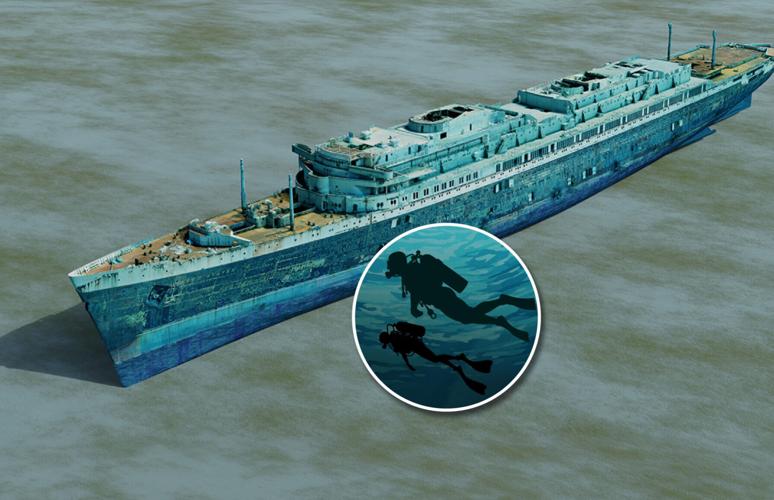
The famed ocean liner SS United States, which took presidents and celebrities across the Atlantic in high-class style, will find new popularity after it was sunk in the Gulf of Mexico to become the world's largest artificial reef — and a Mount Everest-type destination for scuba divers to explore.
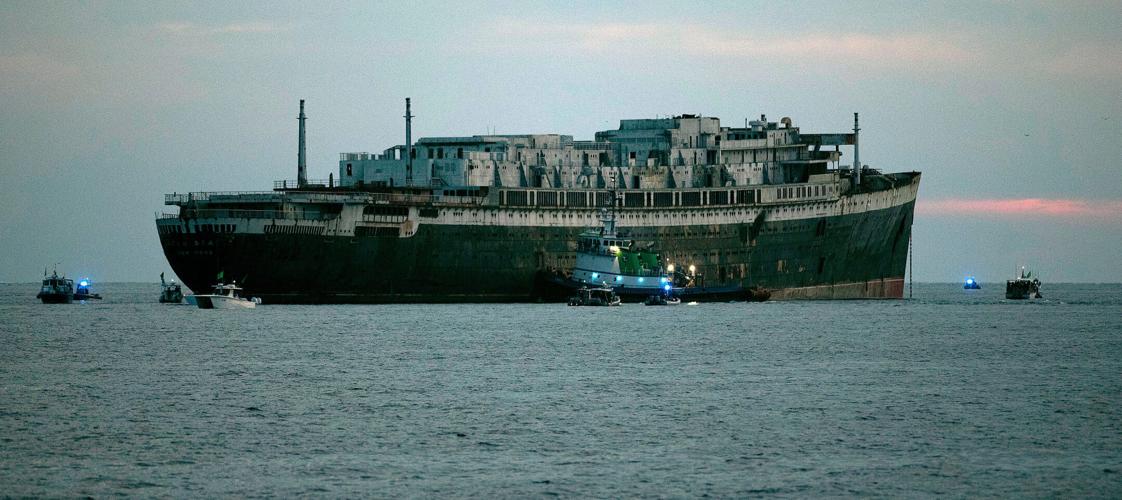
The sinking marked a dramatic end for the famed liner, which arrived in Philadelphia in 1996 and sat along the Delaware River for almost 30 years as plans to transform it into a hotel, casino and other attractions failed to materialize.
Federal environmental and explosives regulations prevented crews from using explosives, so workers instead prepared the liner to take on seawater, including cutting openings into the vessel and removing more than 400 portholes.
The operation sent the 990-foot-long ship almost 200 feet down to its final resting place at 9:59 p.m. Eastern time Wednesday — 7 hours and 19 minutes after crews began flooding it.
People are also reading…
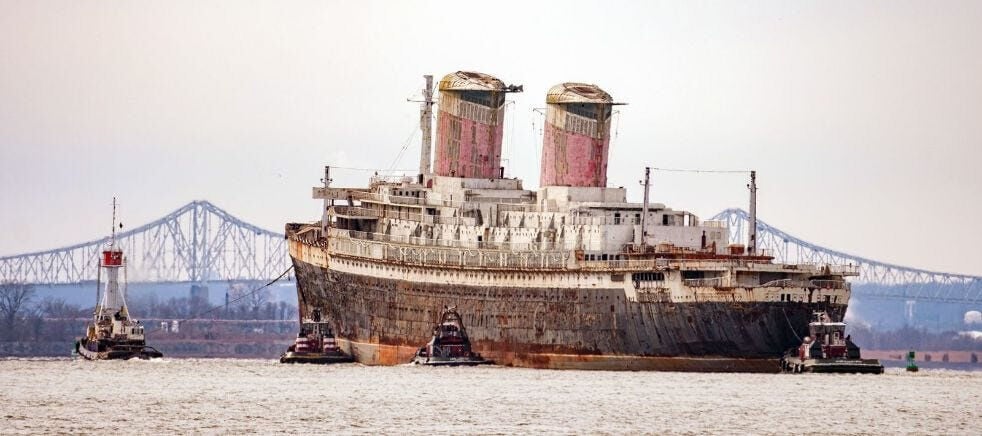
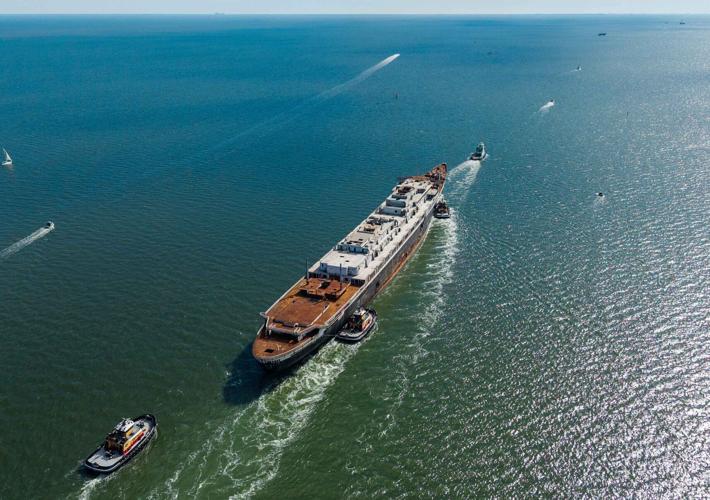
The SS United States was towed in February 2025 from Philadelphia to Mobile, Ala.
Soon, scuba divers will start to descend in droves to visit the ship, sitting upright on the Gulf floor.
"We anticipate the SS United States is going to be super popular," said Savanna Christy, owner and instructor at ScubaTech, a dive center in Destin, Fla.

Images by
What's the attraction in scuba diving?
"What draws me to scuba diving is being able to be underwater and experience marine life," said Christy, who's been a diver for 22 years.
"It's the sense of peace and tranquilness that comes with that weightless feeling," she said. "For some, it's the adventure, the thrill, but I would say experiencing the underwater world is not something you get every day."
There were about 2.5 million active scuba divers in the U.S. in 2024, according to DEMA, a dive marketing organization. Active divers are those who went diving at least once in the past 12 months.

Okaloosa County officials on Monday began towing the SS United States from Mobile, Ala., to where it was sunk Wednesday in the Gulf of Mexico.
What draws divers to sites like the SS United States?
Divers are keen to see the ocean liner itself, of course, a fabled part of classic maritime lore — its elegance, speed, celebrities and parties long gone — reduced to a ghost of its past beneath the Gulf.
"Those who are eager to dive immediately are there for the historical factor," Christy said. "There's something really cool about a wreck when it's first gone down, before it attracts any marine growth."
"It's adventure," said Jennifer Adams, director of tourism for Okaloosa County. "Our waters are so clear and you can see not only that you're around the reefs, but the wildlife that is around the reefs as well."
That's not all.
"Here in this north part of the Florida Gulf, we have a shipwreck trail," Christy said. There are nine ships within the Florida Keys National Marine Sanctuary. "People come, they get a passport that they can stamp off when they dive certain wrecks. This is going to be part of that."
"We've been growing our artificial reef program for the past five years," Adams said. "Everybody comes here for the beaches, but we're now seeing that people want to be in the water."
The new reef "will give multi-experienced divers some diversity," she said. "Not everybody's going to go 180 feet down, we know that. Our dive operators are also focusing on that 40- to 50-feet-deep threshold and getting new people comfortable."

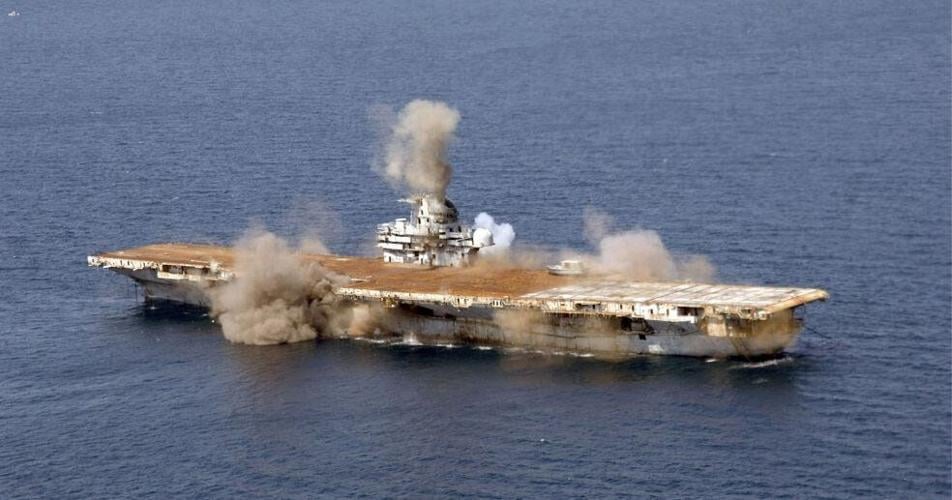
The USS Oriskany, a decommissioned aircraft carrier, was sunk May 17, 2006, in the Gulf of Mexico to form an artificial reef 24 miles off the coast of Pensacola, Fla. The 888-foot ship took about 37 minutes to sink below the surface.
What else will divers see?
The SS United States will be the largest artificial reef in the world. The second-largest, the USS Oriskany, won't be far away.
"We're going to be working with Pensacola in Escambia County, because we'll have the two largest artificial reefs in the world," Adams said. The ships will be about 13 nautical miles apart. "You could conceivably dive both of them on a daylong trip, unless you're going to be doing the deep dive, which is going to take a lot longer."
In addition to the submerged ship, divers will see a variety of aquatic life.
"Marine life will quickly start to gravitate to the wreck and start living there," Christy said. "We'll have fish that are important to our commercial fisheries — snappers, groupers, Amberjack, things like that. You'll see sharks and turtles and small reef fish.
"You'll get crustaceans, crabs and shrimp," Christy said. "You'll see different things that will live and grow on the marine life that adheres to the wreck surface. It's going to be an entire ecosystem."

Crews prepare to sink the SS United States on Wednesday in the Gulf of Mexico.
Will divers need special training?
The SS United States will sit in water 180 to 200 feet deep. With its funnels, radar mast and other deck structures removed, "the top of it will be in 55 to 60 feet of water," said Alex Fogg, Okaloosa County's chief of natural resources.
"A lot of those top decks are going to be easily accessible to the beginner diver and novice diver," he said. "Technical divers who want to go down and see what the bottom looks like can go down there."
"There's probably going to be plenty of cave divers and other penetration divers who are going to be exploring the inside of the ship, going down to the engine room, going to the pool, and other places like that," Fogg said. "But that's not something a recreational novice diver is going to be able to tackle."
That means divers should have — at minimum — something called Open Water Diver certification to see the top portion of the ship.
Training for more advanced certifications is available and will allow divers to go deeper and see more of the ship, even the interior, with supervision. For safety, divers usually go in pairs or in a group with an instructor or dive guide.
The SS United States sank shortly after 10 p.m. Wednesday, Nov. 11, 2026, off the Florida Panhandle coast. Video is increased at 950% of normal speed
Don't even think about taking dive souvenirs
The code of conduct for diving on ships can be summed up as: "Take only photos, leave only bubbles."
That's "pretty standard across the board," Christy said. "No matter where we're diving, it's our code as stewards of the ocean."
Florida law states that those who remove or attempt to remove an object can be charged with a first-degree misdemeanor, with a penalty of up to one year in jail and a $1,000 fine. Those who dig up or extract items face a third-degree felony, punishable by five years in prison and a $5,000 fine.
The rules stand even though there won't be anything on the SS United States that can be removed.
"This is a project that's undergone a lot of preparation," Christy said. "There's nothing left behind that divers could pick up and put in their pockets, so to speak."