
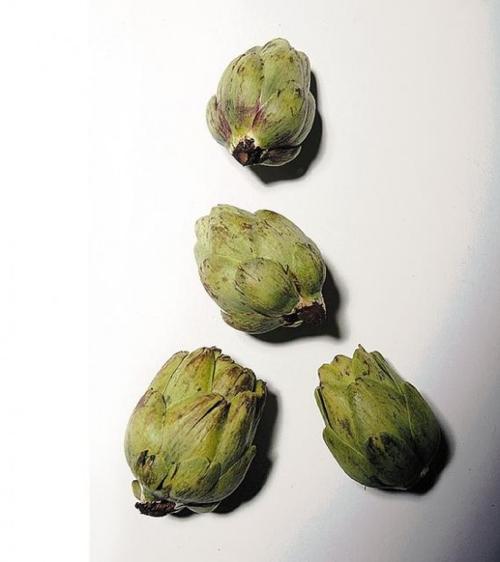
Baby artichokes aren't immature globe artichokes; they're just smaller artichokes that grow closer to the ground instead of at the very top of the plant.
They range from walnut- to egg-size and lack the thistlelike "choke" nestled in the tender heart near the base. Otherwise, they are just the same as larger artichokes.
What to look for: They are available year-round but are at their peak in March, April and May, according to information from Baroda Farms, an artichoke grower in California's Lompoc Valley. All artichokes may be "frost-kissed," or slightly bronzed, but the brown patches on the leaves disappear in cooking and are actually said to contribute flavor to the vegetable, according to another artichoke grower, Ocean Mist of Castroville, Calif. To tell if an artichoke is fresh or tired and old, rub the leaves together. If they squeak, the artichoke is fresh.
People are also reading…
At home: Artichokes will keep for a week if kept cool and moist (not wet). Sprinkle them with water and put into a plastic bag.
Baby artichokes are wholly edible and don't need as much trimming as their larger counterparts. Simply cut off their stems. Some people like to cut medium and large baby artichokes into halves or quarters. Leave the little walnut-size ones whole.
Artichokes have an affinity for seafood: oysters, crab, mussels. They're good with chicken, too. Use baby artichokes in recipes calling for large artichokes or artichoke hearts. Boil, steam, microwave, grill, roast or deep-fry them; some people like them steamed, then marinated in garlicky olive oil.