

I'm not sure how I discovered the Southern Arizona Veterans Memorial Cemetery in Sierra Vista, but by great good fortune, I did.
United States military veterans who have received an honorable discharge from any branch of the service are eligible to be buried there or have their ashes placed in its columbarium.
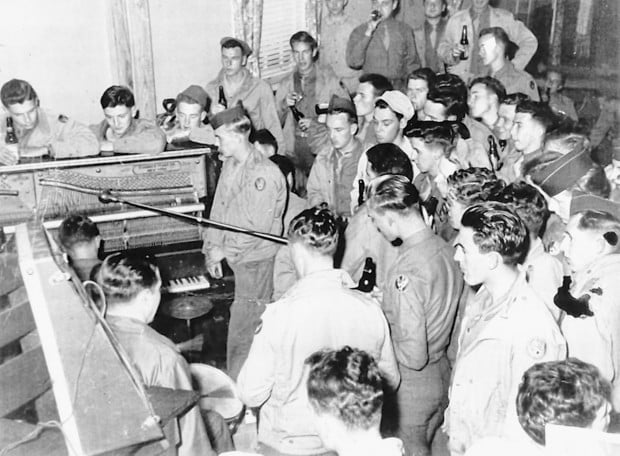
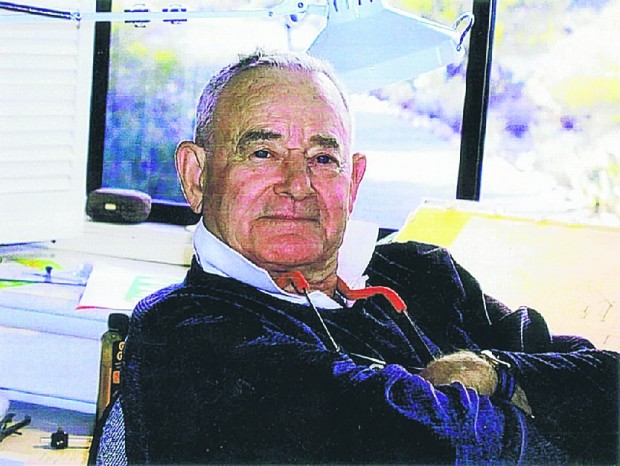
We are not a military family. Although I have a father-in-law who fought in the Spanish- American War, my father missed World War I, my son the Vietnam War. But his stepfather, my husband, Keith Martin, not yet 18, enlisted in the U.S. Army Air Forces, which he always referred to by its old name: the Army Air Corps. He served from July 17, 1943 to Nov. 1, 1945.
As the years went by, he thought more about his military service. It had given him a chance to grow up on his own terms. One example he always joked about was how he started out a very "picky eater," who drove his mother crazy. He learned to eat anything put before him. He learned to plan ahead. It paid for his Williams College education. In retrospect, his service became one of the most important events of his long, productive life that ended in 2008.
People are also reading…
We agreed, my son, my daughter-in-law and I, that being a part of the Southern Arizona Veterans Memorial Cemetery is something Keith would have liked.
And so it was that promptly at 11 a.m. on a warm sunny morning last month,that my family and I and three friends found ourselves standing on the walk outside what the cemetery's literature calls the "committal shelter." Its name may sound ominous, but, actually, it is a small, graceful, partially open-air building constructed, like most of the cemetery's structures, of concrete, river stones and metal. It provides shelter and seating for the brief services allowed. ("This is not the place for a full funeral service," a protocol sheet says sternly.)
We were awaiting our turn. We had come to place Keith's ashes in the cemetery columbarium. For this day, he would be identified as Corporal Martin. one of the fast diminishing members of the "Greatest Generation," who served in what the late Studs Terkel called, "The Good War."
Several hundred yards away, the cemetery's flag flew at half staff. This was to honor each of the veterans for whom services would be held this day: three.
We had been told to be prompt. We had 20 minutes.
Our attending military escort, provided by Fort Huachuca, was made up of Sgt. Fay, Spc. Edwards and Sgt. Baguley, the bugler. (How nice to find an organization on a last-name basis only. No phony first-name friendliness: "Hi, there June. Got your husband's ashes? No problem.")
Sgt. Fay, the noncommissioned officer in charge, offered me his arm and our little group moved forward into the shelter with its rows of wooden seats. Each seat is decorated with a large brass plaque studded with a field of stars.
Sgt. Fay asked if any of us wanted to say anything about Corporal Martin. Several of us did. For our service, we had decided to skip the gun salute. (After all, this was the Army Air Forces - we would have loved an old bomber circling overhead!)
It was then that Sgt. Baguley lifted his bugle and from it came the lovely, melancholy strains of taps. I think we all teared up. Along with my mother, Keith was one of the least-sentimental persons I have ever known. But at the end, when he suspected the malignant tumor in his brain was going to win, his eyes occasionally would fill with tears as he thought of leaving a life he had enjoyed.
He had his discontents, but he was a person of substance who had made contributions to his community: Concrete Designs Inc., a manufacturing business he had co-founded in Tucson. And before, as a geologist, he had discovered one of the largest deposits of low-grade copper ore in the United States.
After taps came the folding of a large flag which, following instructions, I had picked up at the post office (of all places).
This was accomplished by Sgt. Fay and his assistant, Spc. Edwards. The opening of the flag before taps and its precise refolding afterward is a series of maneuvers dictated by custom - each fold representing life, eternity, patriotism - it finally becomes a triangle, resembling, we were told, the tricorn hat worn by soldiers in the American Revolution .
Sgt. Fay brought the folded flag over to me, bowed and said, "On behalf of the president of the United States and the people of a grateful nation, I present this flag as a token of appreciation for the honorable and faithful service Corporal Martin rendered this nation."
I think, for the moment, my heart stopped.
Keith was proud of his military service; here now it had all come together in this simple, elegant moment of mutual appreciation.
So, the flag will return to the top of the pole, the ashes will go into the niche along with Corporal Martin's photo and his biography (any archaeologist sifting through these ruins is not going to have to guess).
And on the granite plaque affixed to the outside of the niche there will be Keith's name, his dates, his rank and service. To this we were allowed to add three lines of tribute, 12 characters to a line. We took a phrase from his honorable discharge, adding "... who gave honest & faithful service ..."
Which he did, to his family, his country, his world.