

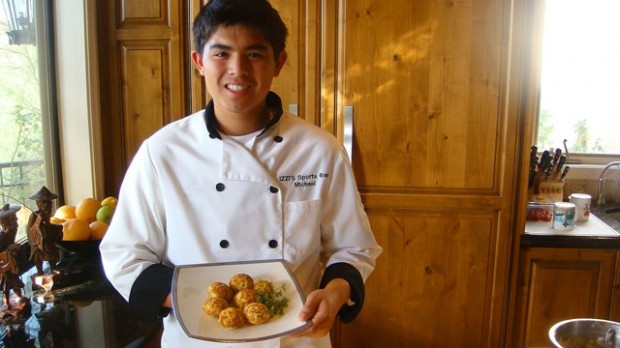
Editor's note: Michael Izzard has a great weakness: Food. The 16-year-old junior at Ironwood Ridge High School loves to cook it and to eat it.
Sure, he likes sports, traveling, music, geography and history, too, but food is his big weakness - everything from "Flapjacks to Foie Gras," which is what he is calling his occasional series for the Star, which starts today.
He says he was 5 when he flipped his first pancake and 8 when he started watching the Food Network.
He's traveled around the world with his family, and he never misses a chance to eat the local foods, take cooking classes and learn more about international cuisines.
In "Flapjacks to Foie Gras," Izzard shares his favorite cuisines, including a little history behind them. Today: Portugal.
Portuguese cuisine is hearty, full-flavored and sumptuously seasoned with a wide variety of spices.
People are also reading…
The staple of the Portuguese diet is fish, readily available from the country's extensive fishing fleet. It is fried or deep fried, grilled, boiled (including poached and simmered), stewed (often in clay pots) or even roasted.
The most commonly consumed fish in Portugal is bacalhau (cod). Old-timers claim that there are more than 365 ways to cook cod, one for every day of the year.
I think that you'll really enjoy bacalhau fritters - they're delicious. But also the process of preparing, cooking and savoring this unusual dish can transport you to a seaside cafe in a scenic Portuguese village on a warm, lazy afternoon. Feel that gentle breeze? Smell the sumptuous food? Isn't it nice? What a delightful, vicarious experience.
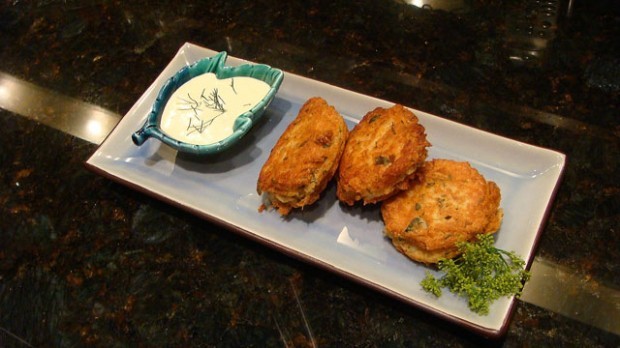
Cod Fritters (Pasteis de Bacalhau) with Dill Cream Sauce
Before refrigeration, fish were preserved through drying and salting. Fish - often cod - was often the only protein available; therefore, many dishes and recipes were developed around it.
Dill Cream Sauce
• 1 egg yolk
• 1 tablespoon olive oil
• 5 tablespoon sour cream
• 1 tablespoon lemon juice
• 1/2 teaspoon salt
• 1/4 teaspoon pepper
• 1 tablespoon dill
Before cooking fritters, prepare the dill cream sauce. Whisk together until well blended: egg yolk, olive oil, sour cream, lemon juice, salt, and pepper. Add the dill after the sauce is fully beaten. Keep in fridge until read to add to cooked cod.
Cod Fritters
Makes 20 fritters
• 1 pound dried salted cod (preferably deboned)
• 1 1/4 pound freshly peeled potatoes, cut into small pieces.
• 3 eggs, separated
• 1 tablespoon each chopped parsley, dill, sage, chives.
• 1/4 teaspoon nutmeg
• Pepper to taste
• Olive oil for frying
Desalt cod by soaking in water for 24 hours - any longer will result in the cod's being less flavorful. Change water once after 12 hours.
Cook desalted cod and potatoes in boiling water, uncovered, for 20 minutes.
Remove cod but continue cooking potatoes until completely done - when pierced easily by a fork. Periodically skim foam from water's surface.
Meanwhile, remove skin from cod (and bones if not already deboned).
Flake the cod and place into food processor with the cooked potato pieces. With the chopping blade, work mixture into a mash. Be careful not to overbeat. Mash will resemble a thick, sticky dough.
Add the egg yolks, parsley, dill, sage, chives, pepper and nutmeg. Blend until well incorporated.
With an electric mixer, beat egg whites until stiff and gently fold into the mash. Be careful not to overwork the whites.
Form the mash into fritters. Two tablespoons of the mash makes one fritter - make as round as possible.
Over medium heat, fry the fritters in 1/4 inch of olive oil for about 2 minutes on each side, or until golden brown. Don't overcook, as the fritter will lose moisture and begin to fall apart.
Drain on paper towels, serve hot with the dill cream sauce.
Note: All ingredients are readily available, except salted dried cod (bacalhau). It may be obtained at specialty stores such as 17th Street Market, 840 E 17th St. or sometimes at Lee Lee Oriental Supermart, 1990 W. Orange Grove Road.
Influences on Portugal's cuisine
• Location: Portugal, on the Iberian Peninsula, shares a border with Spain on the north and east, the Atlantic Ocean to the west. Portugal's coastline runs for nearly 600 miles along the Atlantic with a majority of the population clustered in the coastal area.
• Other cultures: Over the centuries, Portugal was overrun by other Europeans, Northern Africans and Arabs from the Middle East.
• Seasonings: Africa, South America and India, where Portugal once had colonies, are the sources for a majority of spices used in Portugal today. Saffron, cinnamon, vanilla, black pepper and piri piri (small, hot chiles) are among the more widely used seasonings. Olive oil is a cooking and flavoring staple. Herbs, such as parsley and coriander, plus lots of garlic, are frequently found in a variety of Portuguese dishes.