


Family members of the Jan. 8, 2011, Tucson shooting victims responded to the tragedy in different ways, including gun control activism and an effort to create a permanent memorial.
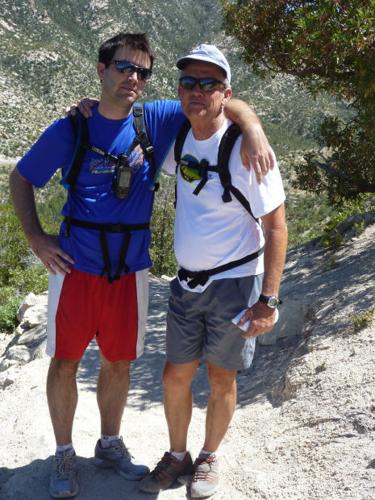
Ross Zimmerman, who lost his 30-year-old son Gabe Zimmerman that day, reacted by promoting health.
Along with his family, Zimmerman founded the annual Beyond Tucson event, which is a one-day series of activities aimed at getting local residents outside, moving and feeling good about their city and themselves.
Diet and overall health are passions for Zimmerman, a 62-year-old IT specialist at Pima Community College, co-administrator of the Tucson Trail Runners group, and a biologist by education.
He recently created his own website, nutritionequation.org, which is devoted to his research into nutrition and obesity. He invites members of the public to evaluate the evidence and make their own decisions, as not everyone agrees the low-carb diet he follows is the best choice for optimal health.
People are also reading…
In 2012, Zimmerman read the Gary Taubes book “Why We Get Fat” and since then has been both questioning the standard American diet and revising his own.
“When we started feeding people more and more sugar and easily digestible carbohydrates, that is when chronic diseases started,” Zimmerman said, noting that carbohydrates digest to sugars.
This Saturday at 11 a.m. Zimmerman will host a public showing of the 97-minute film “Fed Up” at The Core, which is Tucson Medical Center’s wellness center located at the La Encantada shopping center.
After the film he’ll be talking and doing a Q&A along with local vascular surgeon and ultramarathon runner Dr. Luis Leon. The event is part of an effort to make Beyond Tucson larger than a one-day event.
The Star spoke with Zimmerman last week. The following are excerpts of the interview. He stressed that his nutrition research and opinions should not be considered medical advice:
Q. Have you always been into a good diet and exercise?
A. No. I used to think if I exercised a lot, that was enough to burn calories and keep my weight under control. I ran my first marathon in 1978 when I was in graduate school. Like most marathoners of that day, I did a high-carbohydrate diet.
As I approached 60, my weight was going up, my tummy was sticking out more. About that time I came across Gary Taubes’ work and since then I’ve been studying nutrition.
Q. You are married to a physician. Does she share your views?
A. We’ve talked about it. She’s helped me kind of calibrate the medical accuracy of things. She says the biology makes sense.
There is a difference between medicine and science. My background is science.
Q. What is your diet like?
A. Since I switched to a low-carb ketogenic diet, my mood is more stable. It’s very noticeable. I really wouldn’t want to go back.
(Low-carb ketogenic means restricting carbohydrates to a level that causes ketosis, causing metabolism to shift from using glucose for normal metabolic processes to using ketone bodies derived from fats. There is a typical 10-to-14-day transition period, Zimmerman says.
Not everyone agrees that low-carb ketogenic is the optimal diet, but almost any diet that helps shed excess weight can reduce or even reverse risk factors for cardiovascular disease and diabetes, health experts say.)
Q.What kinds of food do you eat?
A. This morning I had a piece of sausage, a hunk of cheese and strawberries. For lunch it will probably be two large pieces of Canadian bacon pizza, and I scrape off the topping and throw away the bread. Tonight, probably sardines, olive oil, a hard-boiled egg, maybe a piece of low-carb bread with a huge amount of butter. Probably an alcoholic beverage — a mixed drink. I’ve started using Stevia lately. Most of the artificial sweeteners have unintended consequences that could elevate insulin.
Q. What do you like about the film ‘Fed Up’?
A. It really encapsulates many of the ideas Gary (Taubes) has, but is also clearly heavily influenced by Dr. Robert Lustig, a pediatric endocrinologist who is famous for his lecture that went viral on the Internet, “Sugar: The Bitter Truth.”
A key focus of the movie is kids. They follow several children with serious obesity and tie it into a bigger picture — where obesity comes from.
The movie explains the concept of sugar toxicity and where it comes from.
What’s happened in the last 30 to 40 years is that it’s an unintended consequence of a low-fat diet. You take the fat out of food and it gets nasty. You add sugar and with a bit of government public policy, we have the unintended consequence of lots of sugar being added to everyone’s food.
All you have to do to see the results is look around you.
