A Romanian woman with diagnosed bipolar disorder is on life support at a Mesa hospital after an apparent suicide attempt at an Arizona ICE detention facility last week, her family said, citing what officials told doctors.
But the family is demanding a full investigation into what happened to Andreea Marin at ICE's Eloy Detention Center.
Marin, 38, was teaching English in France, with a master's degree in education and child development studies, before bipolar disorder "took over" her life in her mid-20s, her brother told the Arizona Daily Star.
"She loved working with children," her brother said Monday night. He asked the Star not to publish his full name, as he's still coming to terms with what's happening to his sister and his grief. "She was very academically driven. Unfortunately this condition, bipolar, took over almost everything."
People are also reading…
Marin, who is originally from Romania, may not have been receiving her medication at Eloy, said her brother, a naturalized U.S. citizen.

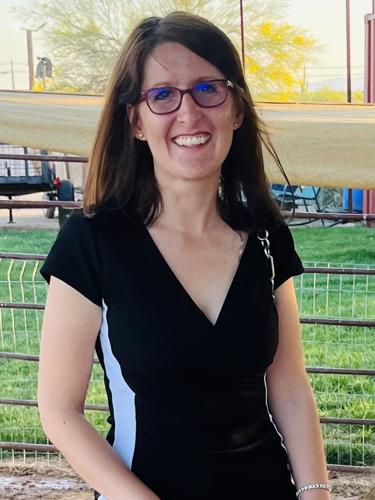
Andreea Marin, 38, was hospitalized Oct. 23 after what her family was told was an apparent suicide attempt at Eloy Detention Center, about 50 miles northwest of Tucson. Her family is demanding a full investigation. Marin is pictured here in 2023, attending her parents' birthday party in Morristown, Arizona, her brother said. "I think she was more excited to be at the petting zoo than both of my kids combined," her brother said.
"We've been pushing (ICE officials) to get her medication," he said. "They told us, 'Don’t worry, the medical staff here will take care of her and give her any medication she needs.' Like, 'Hey, just trust me.' And here we are. A broken trust."
Marin was airlifted from Eloy to Banner Desert Medical Center on Friday, Oct. 23. Doctors said the personnel who transported Marin told doctors she'd tried to hang herself in her cell, her brother said.
"At this point, it's just hearsay. That's why we're needing answers for what the hell happened in that facility," her brother said. "We want a full investigation. We’re demanding answers."
They also want to know why a vulnerable woman like Marin had to be detained in civil ICE detention in the first place, especially since she'd been diagnosed with a serious mental illness.
Marin was in the process of getting a green card and citizenship through her mother, also a naturalized U.S. citizen, her brother said.
It was only thanks to the medical staff at Banner Desert that the family was notified Sunday about Marin's hospitalization two days earlier, her brother said.
"Bless those people," he said of hospital staff. "They found us. It wasn't ICE. It wasn't Eloy."
His mother cried out and fainted after seeing Marin unconscious and "handcuffed" to the hospital bed by the wrists and ankles, her brother said.
"She was devastated," he said, his voice breaking. "I'm telling you, I don't even know the words to describe the wailing, the sound that a mother makes. … I'll never take that out of my memory.
"And I've never seen my dad cry. My dad is weeping, not crying," he said.
Missed court hearing
Marin had been detained at Eloy for less than two weeks, her brother said. In mid-October she was briefly arrested, then detained by ICE upon her release, after missing an Oct. 1 Maricopa County Superior Court hearing. She did not receive the letter notifying her about the hearing, he said.
The letter had been returned as undeliverable, her brother said he learned after calling the court.
In her 20s, Marin had a fiancé and a teaching career in France. She'd travel and visit her family in the U.S. on a 10-year tourist visa. But later she began to struggle with bipolar disorder.
"She was a very good person. She would light up the room," her brother said. "She loved her nephews, she loved her family. She loved her cat Thomas. She traveled throughout Europe and the States with Tom. She was a beautiful person."
By around 2017, she had returned to the U.S. — legally on a visa, her brother said — to be closer to family. She began the process of getting a green card and citizenship through her mother, a naturalized U.S. citizen, her brother said.

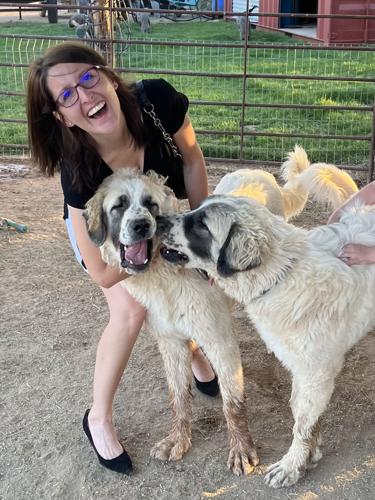
Andreea Marin, 38, adored animals and spent years traveling through Europe with her cat Thomas, her brother said. Marin, pictured here in 2023, struggled with bipolar disorder. Her Arizona-based family, originally from Romania, said they felt she wasn't getting proper care for her mental illness at ICE's Eloy Detention Center.
But she continued to struggle with her mental health at times. During a manic episode in October 2025 — which Marin didn't remember later, according to her brother — she was arrested. During booking, she allegedly assaulted a corrections employee.
She was charged with aggravated assault due to the incident, which happened while her parents were already in the process of getting Marin help at a Glendale treatment facility, her brother said.
At the treatment center, Marin got stabilized and returned to her job in Tempe after her release, her brother said.
But this month, Marin missed the Oct. 1 court hearing related to the 2025 felony charge of aggravated assault on a corrections employee.
Her brother said the court issued a warrant, despite Marin not having received notice of the hearing. A couple of weeks later, Marin was pulled over by police for running a stop sign. She was arrested when the police saw the warrant on her record, he said.
That same night, a judge ordered Marin released and rescheduled her missed court hearing for Oct. 27, citing the "miscommunication," her brother said.
But immigration agents detained Marin after she left the police station late that night, he said.
"They didn't give her any due process" before locking her up in ICE custody, he said. "She’s not a convicted felon. She only had a charge, and failure to appear in court, because of a clerical error with the court system itself. ... She should have never been arrested."
Her brother said he didn't see marks on Marin's neck at the hospital. As he took pictures, an immigration officer standing guard tried to make him leave the room and delete the photos. Hospital staff defended his right to stay in the hospital room, he said.
"Everybody was arguing. Everybody's policy is different," he said.
ICE, CoreCivic response
On Sunday, the Star reached out to both CoreCivic, the for-profit prison company that operates Eloy, and U.S. Immigration and Customs Enforcement, after hearing from several Eloy detainees about a possible suicide attempt Friday.
ICE initially refused to comment unless the Star identified the detainee. But a CoreCivic spokesperson confirmed in a Monday email that an Eloy detainee had been hospitalized Friday, after they were found unconscious in their cell around 12 p.m. that day.
On Oct. 23, "a staff member at the Eloy Detention Center called a medical emergency after finding an unresponsive individual in their living area," CoreCivic's statement Monday said. "Responding medical staff arrived quickly, began lifesaving measures, and called for emergency medical services. EMS arrived and continued those efforts, and the individual was transported to a nearby hospital, where they continue to receive care."
ICE handles medical care at Eloy through its healthcare arm, ICE Health Services Corp.
CoreCivic said officials advised ICE about the Oct. 23 incident "immediately." Yet ICE spokeswoman Yasmeen Pitts O'Keefe responded with sarcasm on Oct. 25, after the Star inquired about the suicide attempt described by the Eloy detainees.
"Go back to your 'sources' to provide us names with A#s (alien identification number) or DoBs (date of birth) so we can properly research," Pitts O'Keefe wrote Sunday.
At the time, the Star had not yet identified Marin or reached her family.
ICE did not immediately respond to the Star's Tuesday request for comment on the family's account.

Immigration and Customs Enforcement correctional center in Eloy.
Marin's family contacted the office of U.S. Sen. Mark Kelly, D-Arizona, as they struggled to communicate with ICE about whether Marin was getting proper care for her mental health condition. They later learned she'd been hospitalized in critical condition.
Kelly's office is seeking information from ICE to help the family get answers, the office said in a statement Tuesday.
"This is horrific and unacceptable," Kelly said in the statement. "ICE has a responsibility to keep people in its custody safe and provide them with the medical care they need. Their failure to do so here may cost a woman her life and raises the question of how many others may be at risk. The family deserves answers about what happened and there must be accountability to keep it from happening again."
U.S. Rep. Adelita Grijalva, D-Arizona, also called for a full investigation.
"Instead of exercising discretion, ICE is indiscriminately detaining vulnerable people — including pregnant women and individuals with serious mental health conditions — to fuel Trump’s mass deportation agenda," she said in a statement Tuesday. "ICE’s failure to notify Andreea’s family, and keeping her handcuffed at the hospital, show a stunning level of callousness and a basic lack of human decency. I’m calling for a full and independent investigation into Andreea’s treatment in ICE custody. Her family deserves answers, and ICE must be held accountable."
Immigrant deaths rising
As the number of detained immigrants has risen dramatically, advocates have warned of alleged negligent medical care and inhumane conditions in ICE detention facilities.
At least 60 people have died in ICE custody since President Donald Trump took office in January 2025.
For-profit prison companies, like CoreCivic and Geo Group, have seen rising revenue under the second Trump administration, which has focused on maximizing the number of people held in detention, regardless of whether they pose a public threat.
ICE detention is civil detention, not criminal, meaning no one in immigration detention is serving a sentence for a crime, regardless of whether they have a prior criminal record. About 70% of current ICE detainees have no criminal conviction on their record, and many with convictions have only traffic violations, according to Transactional Records Access Clearinghouse.
Among the dead is Haitian national Emmanuel Damas, a 56-year-old father who died at a Scottsdale hospital in March after collapsing at CoreCivic's Florence Correctional Center, where he was being held in ICE detention.
Doctors told Damas' family he died from septic shock, stemming from an untreated tooth infection. CoreCivic provides medical care at Florence.
The Star reported in May on the suicide attempt of Eloy detainee Alexander Hernandez, of Cuba. He told the Star he tried to hang himself after being denied medical care for excruciating back pain, an account his family confirmed. The incident happened two days after Hernandez said he'd been placed in solitary confinement as "punishment" for demanding medical care.
Hernandez survived and is still detained at Eloy.
A Star investigation into Eloy's use of solitary confinement found detainees say they risk being put into solitary confinement if they're honest about feelings of depression or thoughts of suicide, or complain about poor detention conditions.
Poor health care alleged
Detainees and immigrant-rights advocates have reported poor medical care in ICE facilities. Several detainees with diabetes have died in ICE detention.
NBC News reported last month that coroners have determined diabetes was "a contributing factor" in at least six ICE detainee deaths during Trump's second term.
In May, the Star reported on a Cuban asylum seeker who is suffering from lasting vision problems after his diabetes went untreated for eight days while detained at the Florence Staging Facility, a short-term processing facility run by ICE.
By the time Deris Perez Martinez was transferred to Florence Correctional Center, he was nearly in a diabetic coma, he told the Star. Perez Martinez shared his medical records with the Star, showing his blood sugar had soared to 499 mg/dL, almost five times the normal range.
Another Eloy detainee, Maria Valero Brinez, said Friday she's five months pregnant with a high-risk pregnancy and fears losing her baby at Eloy, the Star reported. Valero Brinez said she's been bleeding off and on and has been denied routine medical care, despite losing a previous pregnancy due to the same complication she's experiencing now.
"I fear for my life and my baby's," Valero Brinez told the Star Friday. "I have already suffered the loss of a child, and it is the worst thing a human being can experience. I don't have the medical care I need."
ICE has not responded to the Star's Oct. 22 request for comment on Valero Brinez.
CoreCivic maintains that its staff prioritizes the well-being of detainees.
"We have trained emergency response teams who work to ensure that any individual in distress receives needed medical care," CoreCivic's statement Monday said. "The safety, health, and well-being of the people in our facilities is our top priority, and we take seriously our responsibility to adhere to all applicable standards and policies our government partners expect of us."
No one with ICE has contacted Marin's family, her brother said.
"We don't have answers from the Eloy facility or ICE on what happened," he said. "They still have not reached out to the family to even give some explanation or express condolences."
Contact reporter Emily Bregel at ebregel@tucson.com. On X, formerly Twitter: @EmilyBregel

Emily Bregel
Border reporter