


FIFA World Cup fever has heated up interest in 3D television among soccer fans searching for the ultimate broadcast experience.
While general interest has been steady and sales have been made, the flood of three-dimensional content starting this month is expected to bring more attention to the new technology.
ESPN launched its 3D channel Friday with the first of several on-air matches in the international soccer tournament.
"When they start having more content like ESPN and the World Cup, there will be a lot bigger drive for it," predicts Paul McKee, manager at Wilson Home Audio & Video.
Some consumers have expressed health concerns over wearing the required glasses and questioned whether the technology has staying power.
But the wow factor is a big selling point.
People are also reading…
"Everybody who sees it is amazed," says Bill Roh Jr., owner of Roh's Inc. "A good percentage of us are going to like it."
There's a bit more to 3D than plugging in a television and turning it. Here's a primer.
HOW IT WORKS
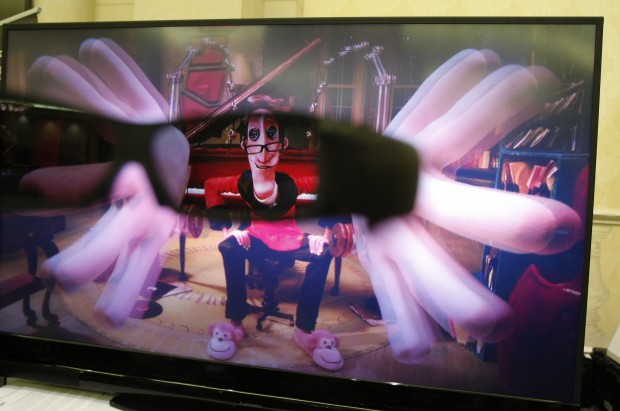
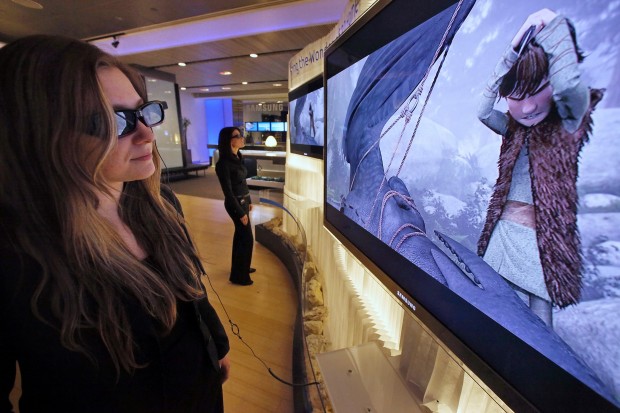
In the newest technology, 3D televisions transmit signals to special glasses. These signals rapidly shutter one or the other lens. That tricks the brain into perceiving depth of field.
Messages on the television warn viewers about health effects ranging from eye fatigue to motion sickness.
Viewing "takes some getting used to," says Seth Allen, a Magnolia Home Theater professional at Best Buy. He advises customers not to watch too many hours at first.
EQUIPMENT
Only the new 3D-specific sets are capable of playing 3D programming, but all 3D-ready sets switch between 2D and 3D for appropriate viewing.
Television sets. Panasonic and Samsung offer 3D-ready plasma, LCD and LED sets. Mitsubishi sells a rear-projection television. LG is releasing 3D sets, while Sony and Sharp plan releases this year.
Prices range from $2,000 to $7,000 for flat screens that range from 46 to 60 inches, says Aaron Artz, a home electronics specialist at Ultimate Electronics who recently transferred to the Albuquerque store.
The differences in price reflect screen sizes and housing finishes for the most part, Artz says. Higher-end sets have better contrast ratios that enhance the 3D effect.
Glasses. Viewers must use special glasses; otherwise, they will see a ghost image on the screen. Glasses are sold separately from the televisions, although some brands may include one pair.
Neither the paper blue- and-red-lens glasses nor the nerdy polarized ones works with this new technology because they can't receive the signal from the TV or Blu-ray player. The right glasses are large enough to fit over prescription glasses and feel almost as light. They come in various styles and color, depending on the brand.
Components. Blu-ray players must be 3D compatible. Players that run only 2D media cannot run 3D, but 3D players can show 2D movies. They need a 1.4 HDMI cable to hook up to the TV.
Cable and satellite services may require additional equipment to transmit 3D programming. Cox and Comcast say they don't need additional equipment if you already have the HD box, but if you don't have the box, you'll need to get one. The same is true for DIRECTV and DISH Network. Gaming consoles for 3D televisions have not yet hit the market.
Setup. 3D televisions and components can be set up anywhere a regular television is installed in the house. There are no special lighting or position requirements.
Viewers cannot lie down to watch because in certain positions the polarized glasses black out the screen.
CONTENT
Programming in 3D is quickly rolling out this month following April's airing of professional golf's Masters Tournament and the release of "Monsters vs. Aliens."
Broadcast. Cable and satellite customers who subscribe to high-definition service will have access to 3D programming this summer.
Comcast carries ESPN 3D, which will follow the World Cup with the X Games and college basketball and football games. Cox "will be offering more 3D content as the year progresses," says company spokesman Michael Dunne.
Besides ESPN 3D, Directv will add three dedicated 3D channels to its line-up this month. Dish Network spokeswoman Allyson Mylrea says, "We will be offering 3D in the near future."
DVDs. "Monsters vs. Aliens" currently comes in a starter kit with the purchase of a Samsung television and Blu-ray player. DVD offerings remain sparse, but more will appear in time for the winter holiday season, including "Avatar," "Toy Story 3" and "A Christmas Carol."
Buying DVDs can get confusing because titles in older 3D technology are available. Allen at Best Buy suggests looking for terms similar to "active shutter technology" for the right version.
Grab your wallet for front row seat with 3D
Sample costs
• Samsung C7000 55-inch LED TV: $2,970 (Best Buy, Ultimate)
• Samsung C9000 55-inch LED TV: $6,300 (Best Buy)
• Panasonic 50-inch plasma TV: $2,500 (Best Buy) $2,600 (Ultimate)
• Panasonic 54-inch plasma TV: $3,000 (Best Buy)
• Blu-ray player: $300-$360 (Ultimate), starting at $330 (Best Buy)
• Glasses: $150-$250 (Ultimate), $150 for Panasonic (Best Buy)
• HDMI cable: $100-$200 (Ultimate), $80 (Best Buy)
Resources
• Best Buy, four locations, including 575 E. Wetmore Road, 696-3442, www.bestbuy.com
• Roh's Inc., 3525 N. Campbell Ave., 795-8573, rohs.com
• Ultimate Electronics, 4380 N. Oracle Road, 292-3420, www.ultimateelectronics.com
• Wilson Home Audio & Video, 5740 E. Broadway, 745-0441, www.wilsonhomeaudio.com
Contact local freelance writer Elena Acoba at acoba@dakotacom.net