

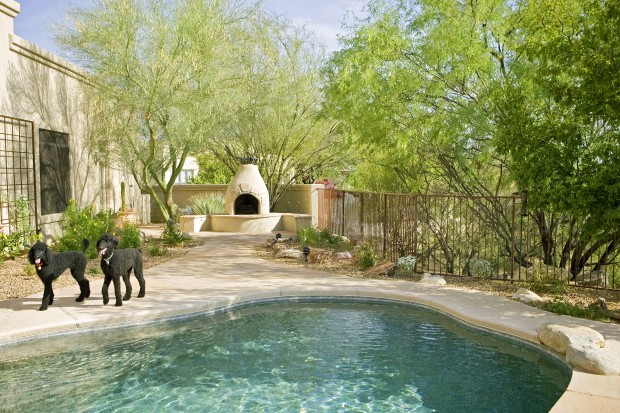
Rick and Carol Driver kept up a patch of grass in their Oro Valley backyard for one family member to enjoy.
"The only reason we had the grass was because our old, little poodle loved it," says Rick Driver.
When that dog died, the couple got two sister pups who had other plans for the grass.
"We got two standard poodles and then three rounds of sod," says Carol Driver. "They just played in it so much it just turned into dirt."
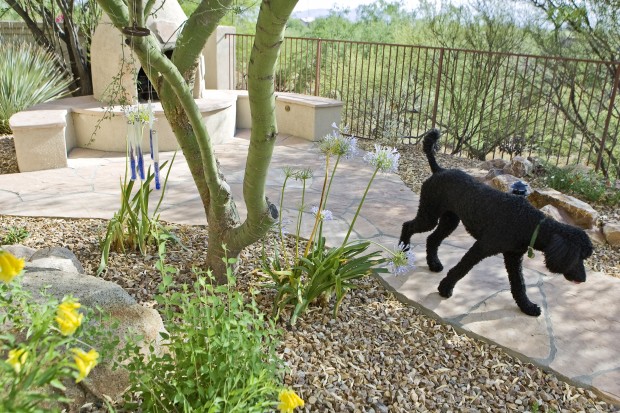
The couple got rid of the grass to save themselves the effort on maintenance, but the rest of the backyard has been landscaped with the pooches in mind.
Armed with a list of plants that are toxic to dogs, they asked landscape architect Rachel Gioannini to create a design without those plants.
They also insisted on avoiding cacti with spines. "We don't want them putting their eye out on a cactus," says Rick.
People are also reading…
Gioannini, owner of Casa Serena Landscape Designs LLC, says the Drivers are right on track for creating a pet-friendly backyard.
Oleanders, euphorbia and anything in the onion family will irritate or sicken pets who chew on them, she says.
Dogs could accidentally rub against spiky succulents with parts sticking out, such as cholla and agave. Plants should be tight or massive so that a dog can learn to avoid them.
Gioannini actually likes to make grass available to pooches, but accommodated the Drivers' wishes by instead creating a gravel area with big boulders where the dogs play and "do their business," says Carol.
The couple also installed mesh around the lower part of their open-metal fence to keep snakes and Colorado River toads from getting into the yard and harming the dogs.
When it comes to backyard pools, the Human Society of Southern Arizona suggests pets be trained to locate stairs to get out if they fall in. Otherwise, treat them like children and supervise them around pools or keep the pool gated so they can't get near it.
Generally, homeowners need to consider their dogs' habits when deciding what to put in the backyard, says Gioannini.
"If you have an exuberant, big dog, I wouldn't put a lot of delicate small plants around them," she says. "Put them in a pot or put them under a shrub that has a low profile."
Continued on next page
Continued from previous page
Resource
Casa Serena Landscape Designs, 955-1861, www.casaserenadesigns.com
Different pets, different landscapes
Landscape architect Rachel Gioannini has designed backyard landscapes with different types of pets in mind.
• Cats. Felines use soft soil as a litter box. Cover a newly planted garden with chicken wire and nets until the plants fill out the space and make the soil less accessible.
• Turtles and tortoises. Install plants that the reptiles like to eat, such as prickly pear fruit, hibiscus and roses. They will dig their own dens. They will explore the perimeter of their enclosure, including digging through gaps in fences and gates. Solid fences and gates that go to the ground will keep them in the space. Boulders should be kept low so that climbing tortoises and turtles don't fall off and become upended.
• Chickens. The fowl tend to "tear up your garden in a matter of minutes" looking for bugs, she says, so an enclosure to protect portions of the landscape is in order.
Contact local freelance writer Elena Acoba at acoba@dakotacom.net