
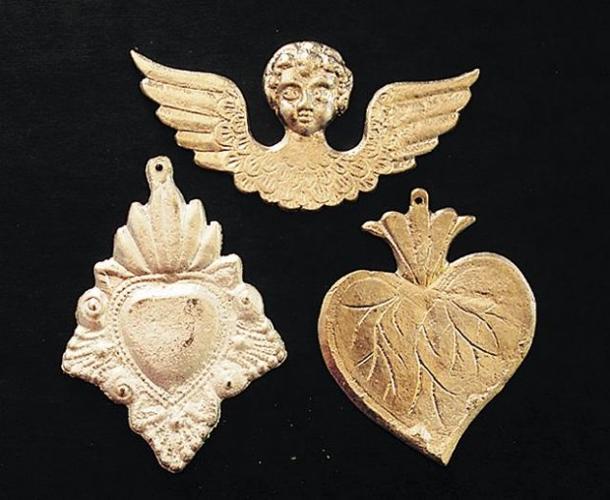
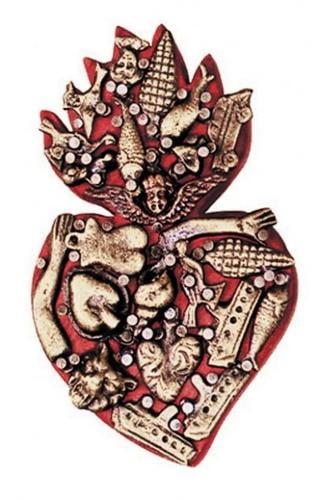
The "White Dove of the Desert" as it is often called, San Xavier del Bac rises gracefully from the desert floor, a brilliant white with rounded parapets and lofty spires. The present church was built between 1783 and 1797, and some claim it is the finest example of mission architecture in the United States. Following a restoration effort of more than six years, this local treasure has regained much of its original glory. But San Xavier is special in another way, too. It is one of the only places in the United States (the Santuario de Chimayo in northern New Mexico is another) where you will find the small devotional charms known as milagros in traditional use.
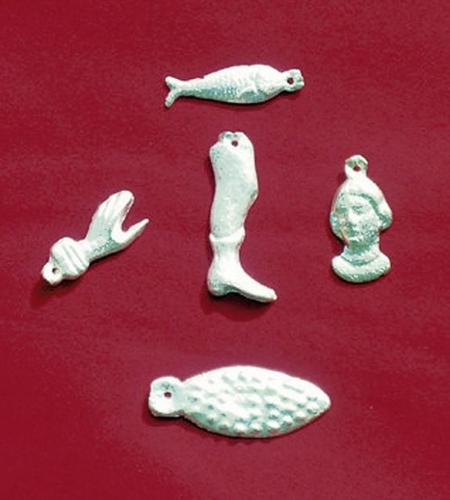
In Spanish, milagro means "miracle" or "surprise." However, milagro also refers to a metal pendant that symbolizes a request, prayer or wish. The shape of the milagro is based on the concern or problem it is intended to solve. It might be an animal, a person or a part of the body. Some milagros take the form of vegetables or pieces of fruit. Traditionally, the milagro charms are offered to a favorite saint to ask that a need or request be granted, or in thanksgiving for an answered prayer. For example, if someone has a broken arm, a small metal arm is hung on or near a favorite saint. An ear of corn can be used to request a good harvest.
People are also reading…
Milagros may be made of brass, silver, gold, tin or mixed metals. Most are cast in molds by the artisans; however, some are individually handcrafted by silversmiths as specific and individual works for a particular occasion or request. Milagros can be flat or three-dimensional; they may be tiny or large. In Mexico, ready-made milagros in a wide variety of shapes and forms can be purchased from vendors outside the church.
The use of milagros is an ancient tradition, dating back to the Iberians who lived along the costal regions of Spain between the fifth and first centuries B.C. Spain's archaeological museums display tiny bronze milagros that are nearly identical to contemporary ones. Milagros came to the New World with the Spanish, and their use spread throughout Latin America. The Spanish custom of offering milagros to the saints in Catholicism fit in well with the Indians' existing practices of offering gifts to the gods and was readily accepted. Ancient milagros were sometimes made of materials such as iron, stone, clay, wax and wood. Although they may be called by different names, milagros are found in many other countries around the world as well, including Greece, India, Tibet, Morocco and Iran.
Today, milagros are particularly popular in Mexico, where entire altars are often covered with them. The use of milagros in Arizona and New Mexico is a fairly recent tradition, believed to have been brought north by Mexican immigrants. Milagro folk art has become popular; wooden crosses, hearts and other shapes encrusted with milagros are common. The unique metal charms are also being incorporated into pieces of jewelry. But the original use of milagros has not been lost or forgotten. Many continue the tradition of using a milagro when asking a patron saint for intercession on their behalf.
At San Xavier, that saint is Saint Francis. San Xavier is considered a Kino mission, one of many established by the tireless and revered Jesuit missionary Father Eusebio Francisco Kino. Kino first visited the area in 1692 and laid the foundations of the first church eight years later in 1700 at a site two miles north of the present church. He named it San Xavier in honor of his chosen patron, St. Francis Xavier. Nearly a century later, after a tumultuous history, the Franciscans built the current church and the name was retained.
Pilgrims, both locals and tourists, visit San Xavier every day. They come to Saint Francis with needs, requests and thanksgiving for answered prayers. Many times, they bring a milagro with them and pin it to the blanket that covers the saint. When they do, they are following an ancient custom, one that has brought hope to the faithful for centuries.
Roads Scholar
Educational adventures in our own backyard
"Answered Prayers: Miracles and Milagros Along the Border" by Eileen Oktavec (University of Arizona Press, $17.95)
"Milagros: A Book of Miracles" by Helen Thompson (HarperSanFrancisco, $16.95)
"Milagros: Votive Offerings From the Americas" by Martha Egan (Museum of New Mexico Press, $19.95)
"Woman Hollering Creek and Other Stories" by Sandra Cisneros (Vintage, $11.95)