WASHINGTON — U.S. Secretary of State Antony Blinken will travel to China this weekend as part of the Biden administration’s push to repair deteriorating ties between Washington and Beijing and keep lines of communication open, the State Department said Wednesday.
Blinken will be the most senior U.S. official to visit China since President Joe Biden took office. His visit was initially planned for early this year but was postponed indefinitely after the discovery and shootdown of what the U.S. said was a Chinese spy balloon over the United States.
Since then, however, there have been lower-level engagements between the U.S. and China despite ongoing hostility and recriminations over both sides’ actions in the Taiwan Strait, the South China Sea, China’s refusal to condemn Russia for its war against Ukraine, and Washington’s allegations that Beijing is trying to boost its worldwide surveillance capabilities, including in Cuba.
People are also reading…

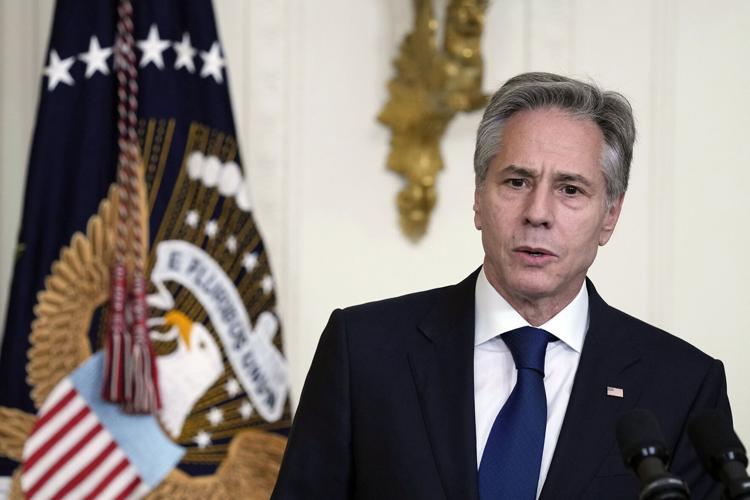
U.S. Secretary of State Antony Blinken speaks Tuesday at a reception in the East Room of the White House in Washington.
The State Department said Blinken spoke to his Chinese counterpart, Foreign Minister Qin Gang, Tuesday night to confirm his trip, which will begin on Sunday. Blinken will leave Washington late Friday.
“While in Beijing, Secretary Blinken will meet with senior PRC officials where he will discuss the importance of maintaining open lines of communication to responsibly manage the U.S.-PRC relationship,” the department said, using the acronym for the People’s Republic of China. “He will also raise bilateral issues of concern, global and regional matters, and potential cooperation on shared transnational challenges.”
Two senior U.S. officials downplayed the prospects for a significant breakthrough on the wide array of problems between the countries during Blinken’s visit. Instead, they said it is aimed at restoring a sense of calm and normalcy to high-level contacts.
“This is a really critical series of engagements that we’ll have in Beijing at a crucial time in the relationship that we again hope will, at a minimum, reduce the risk of miscalculation so that we do not veer into potential conflict,” said Daniel Kritenbrink, the top U.S. diplomat for East Asia and the Pacific.
“We’re not going to Beijing with the intent of having some sort of breakthrough or transformation in the way that we deal with one another,” he said. “We’re coming to Beijing with a realistic, confident approach and a sincere desire to manage our competition in the most responsible way possible.”

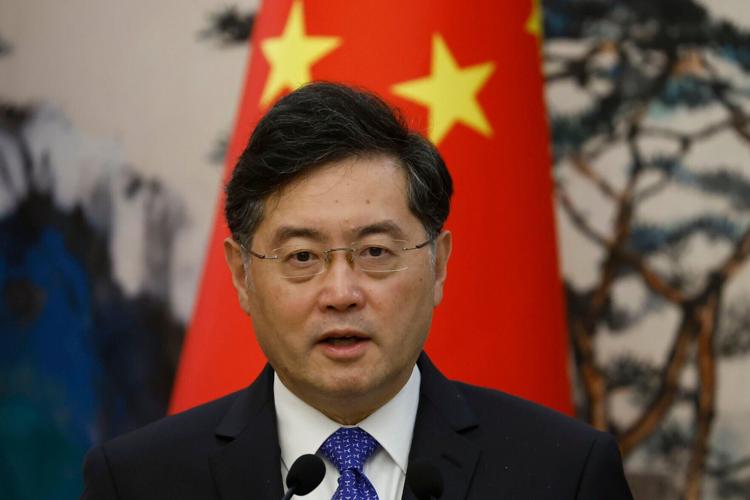
Chinese Foreign Minister Qin Gang attends a joint news conference May 23 with his Dutch counterpart Wopke Hoekstra, not pictured, in Beijing.
“We’re clear-eyed about the PRC,” said Kurt Campbell, the top Asia expert at the National Security Council. “We know efforts to shape or reform China over several decades have failed and we expect China to be around and to be a major player on the world stage for the rest of our lifetimes.
“As the competition continues, the PRC will take provocative steps — from the Taiwan Strait to Cuba — and we will push back,” Campbell said. “But intense competition requires intense diplomacy if we’re going to manage tensions. That is the only way to clear up misperceptions, to signal, to communicate, and to work together where and when our interests align.”
In its readout of the Blinken-Qin phone call, China’s foreign ministry said Qin urged the United States to respect “China’s core concerns” such as the issue of Taiwan’s self-rule, “stop interfering in China’s internal affairs, and stop harming China’s sovereignty, security and development interests in the name of competition.”
Blinken, who will be the first secretary of state to visit China since 2018, expects to meet with Qin on Sunday, as well as China’s top diplomat, Wang Yi, and possibly Chinese President Xi Jinping on Monday, according to U.S. officials.

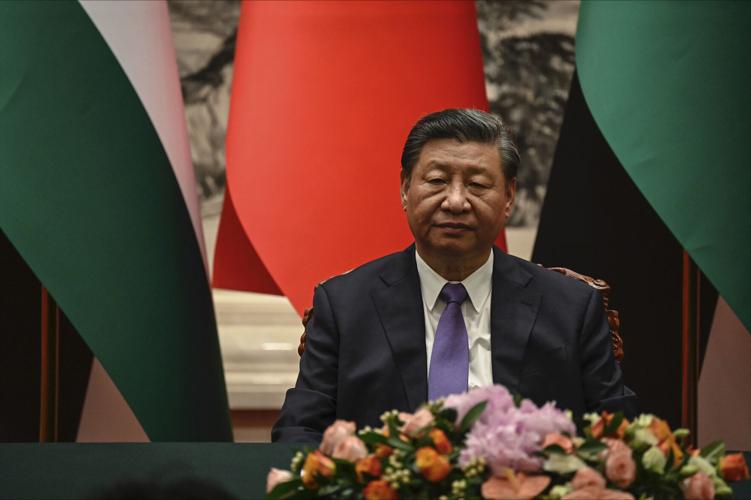
China’s President Xi Jinping attends a signing ceremony Wednesday with Palestinian President Mahmud Abbas at the Great Hall of the People in Beijing.
The trip will take place amid myriad complications in U.S.-China relations, which steadily declined dating back to the Trump administration, starting with trade and industrial espionage.
Those concerns grew rapidly to include human rights concerns over the treatment of Uyghur Muslims and other minorities in China’s western region of Xinjang, Hong Kong, Tibet, and increasing Chinese aggressiveness toward Taiwan, and then escalated over questions about the origin of the COVID-19 virus.
Blinken’s visit came out of a meeting in Bali last year between Xi and Biden, who agreed that the world’s two largest economies must remain in contact and take precautions to ensure there are no miscalculations in their global rivalry that could lead to conflict.
The trip came within a day of happening in February but was delayed after the spy balloon incident. Beijing insists the craft was a weather balloon that strayed off course.
Contacts after that took place, but they have been rare as tensions have risen over China’s conduct in the South China Sea, aggressive actions toward Taiwan and support for Russia’s war against Ukraine.

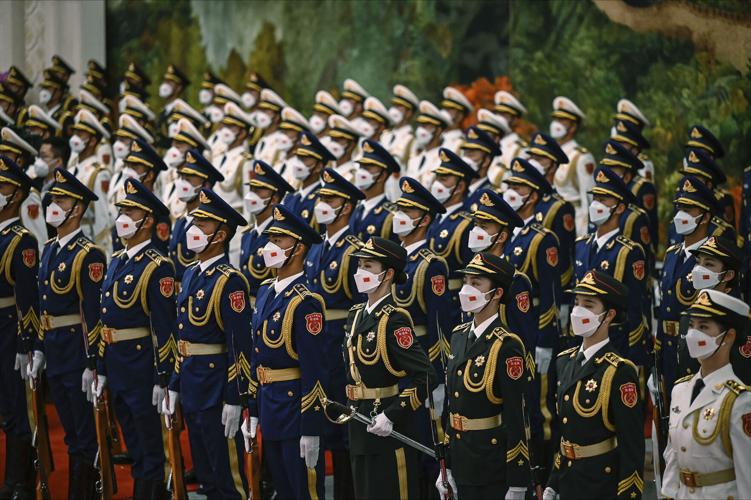
Chinese honor guards prepare for the arrival of Palestinian President Mahmoud Abbas and China’s President Xi Jinping on Wednesday at the Great Hall of the People in Beijing.
This month, China’s defense minister rebuffed a request from U.S. Defense Secretary Lloyd Austin for a meeting on the sidelines of a security symposium in Singapore.
However, shortly after postponing his trip to Beijing, Blinken met briefly with Wang at the Munich Security Conference in Germany. CIA chief William Burns traveled to China in May, while China’s commerce minister traveled to the U.S. Biden’s national security adviser Jake Sullivan met with Wang in Vienna in early May.
More recently, the top U.S. diplomat for the Asia-Pacific region, Daniel Kritenbrink, traveled to China last week along with a senior National Security Council official to finalize details of Blinken’s trip.
Photos: US rebuilding military presence in Philippines
Philippines US Military

People pass by the cannon of Japanese cargo ship Oryoku Maru in honor of U.S. soldiers who died during its sinking, at the American Legion Post 4 just outside what used to be America's largest overseas naval base at Olongapo city, Zambales province, northwest of Manila, Philippines on Monday Feb. 6, 2023. The U.S. has been rebuilding its military might in the Philippines after more than 30 years and reinforcing an arc of military alliances in Asia in a starkly different post-Cold War era when the perceived new regional threat is an increasingly belligerent China. (AP Photo/Aaron Favila)
Philippines US Military

A woman waits inside the American Legion Post 4 just outside what used to be America's largest overseas naval base at Olongapo city, Zambales province, northwest of Manila, Philippines on Monday Feb. 6, 2023. The U.S. has been rebuilding its military might in the Philippines after more than 30 years and reinforcing an arc of military alliances in Asia in a starkly different post-Cold War era when the perceived new regional threat is an increasingly belligerent China. (AP Photo/Aaron Favila)
Philippines US Military

U.S. veteran Ray Slayton, post commander of the American Legion Post 4 gestures as he speaks to the Associated Press just outside what used to be America's largest overseas naval base at Olongapo city, Zambales province, northwest of Manila, Philippines on Monday Feb. 6, 2023. The U.S. has been rebuilding its military might in the Philippines after more than 30 years and reinforcing an arc of military alliances in Asia in a starkly different post-Cold War era when the perceived new regional threat is an increasingly belligerent China. (AP Photo/Aaron Favila)
Philippines US Military

A staff member arranges banners beside the Philippine and U.S. flag at the American Legion Post 4 just outside what used to be America's largest overseas naval base at Olongapo city, Zambales province, northwest of Manila, Philippines on Monday Feb. 6, 2023. The U.S. has been rebuilding its military might in the Philippines after more than 30 years and reinforcing an arc of military alliances in Asia in a starkly different post-Cold War era when the perceived new regional threat is an increasingly belligerent China. (AP Photo/Aaron Favila)
Philippines US Military

An old barber's chair sits inside the American Legion Post 4 near what used to be America's largest overseas naval base at Olongapo city, Zambales province, northwest of Manila, Philippines on Monday Feb. 6, 2023. The U.S. has been rebuilding its military might in the Philippines after more than 30 years and reinforcing an arc of military alliances in Asia in a starkly different post-Cold War era when the perceived new regional threat is an increasingly belligerent China. (AP Photo/Aaron Favila)
Philippines US Military

People walk under street decorations inside what used to be America's largest overseas naval base at the Subic Bay Freeport Zone, Zambales province, northwest of Manila, Philippines on Monday Feb. 6, 2023. The U.S. has been rebuilding its military might in the Philippines after more than 30 years and reinforcing an arc of military alliances in Asia in a starkly different post-Cold War era when the perceived new regional threat is an increasingly belligerent China. (AP Photo/Aaron Favila)
Philippines US Military

People enjoy the sunset inside what used to be America's largest overseas naval base at the Subic Bay Freeport Zone, Zambales province, northwest of Manila, Philippines on Monday Feb. 6, 2023. The U.S. has been rebuilding its military might in the Philippines after more than 30 years and reinforcing an arc of military alliances in Asia in a starkly different post-Cold War era when the perceived new regional threat is an increasingly belligerent China. (AP Photo/Aaron Favila)
Philippines US Military

Trees and wild vines grow beside abandoned concrete structures called "Quonset huts" formerly used as barracks for U.S. Marines in what used to be America's largest overseas naval base at the Subic Bay Freeport Zone, Zambales province, northwest of Manila, Philippines on Monday Feb. 6, 2023. The U.S. has been rebuilding its military might in the Philippines after more than 30 years and reinforcing an arc of military alliances in Asia in a starkly different post-Cold War era when the perceived new regional threat is an increasingly belligerent China. (AP Photo/Aaron Favila)
Philippines US Military

Trees and wild vines grow beside an abandoned concrete structure called "Quonset huts" formerly used as barracks for U.S. Marines in what used to be America's largest overseas naval base at the Subic Bay Freeport Zone, Zambales province, northwest of Manila, Philippines on Monday Feb. 6, 2023. The U.S. has been rebuilding its military might in the Philippines after more than 30 years and reinforcing an arc of military alliances in Asia in a starkly different post-Cold War era when the perceived new regional threat is an increasingly belligerent China. (AP Photo/Aaron Favila)
Philippines US Military Return

This photo shows abandoned concrete structures called "Quonset huts" formerly used as barracks for U.S. Marines in what used to be America's largest overseas naval base at the Subic Bay Freeport Zone, Zambales province, northwest of Manila, Philippines on Monday Feb. 6, 2023. The U.S. has been rebuilding its military might in the Philippines after more than 30 years and reinforcing an arc of military alliances in Asia in a starkly different post-Cold War era when the perceived new regional threat is an increasingly belligerent China. (AP Photo/Aaron Favila)
Philippines US Military

Trees and weed grow outside an abandoned weapons storage structure in what used to be America's largest overseas naval base at the Subic Bay Freeport Zone, Zambales province, northwest of Manila, Philippines on Monday Feb. 6, 2023. The U.S. has been rebuilding its military might in the Philippines after more than 30 years and reinforcing an arc of military alliances in Asia in a starkly different post-Cold War era when the perceived new regional threat is an increasingly belligerent China. (AP Photo/Aaron Favila)
Philippines US Military

Plants grow outside the metal door of an abandoned weapons storage structure in what used to be America's largest overseas naval base at the Subic Bay Freeport Zone, Zambales province, northwest of Manila, Philippines on Monday Feb. 6, 2023. The U.S. has been rebuilding its military might in the Philippines after more than 30 years and reinforcing an arc of military alliances in Asia in a starkly different post-Cold War era when the perceived new regional threat is an increasingly belligerent China. (AP Photo/Aaron Favila)
Philippines US Military

A man on a jetski passes by the USNS Big Horn American supply ship docked near a shipyard in what used to be America's largest overseas naval base at the Subic Bay Freeport Zone, Zambales province, northwest of Manila, Philippines on Monday Feb. 6, 2023. The U.S. has been rebuilding its military might in the Philippines after more than 30 years and reinforcing an arc of military alliances in Asia in a starkly different post-Cold War era when the perceived new regional threat is an increasingly belligerent China. (AP Photo/Aaron Favila)
Philippines US Military

The USNS John Ericsson American supply ship is docked in what used to be America's largest overseas naval base at the Subic Bay Freeport Zone, Zambales province, northwest of Manila, Philippines on Monday Feb. 6, 2023. The U.S. has been rebuilding its military might in the Philippines after more than 30 years and reinforcing an arc of military alliances in Asia in a starkly different post-Cold War era when the perceived new regional threat is an increasingly belligerent China. (AP Photo/Aaron Favila)
Philippines US Military

A vintage passenger jeepney passes by a road just outside what used to be America's largest overseas naval base at Olongapo city, Zambales province, northwest of Manila, Philippines on Monday Feb. 6, 2023. The U.S. has been rebuilding its military might in the Philippines after more than 30 years and reinforcing an arc of military alliances in Asia in a starkly different post-Cold War era when the perceived new regional threat is an increasingly belligerent China. (AP Photo/Aaron Favila)
Philippines US Military

A man on skateboard passes by a road just outside what used to be America's largest overseas naval base at Olongapo city, Zambales province, northwest of Manila, Philippines on Monday Feb. 6, 2023. The U.S. has been rebuilding its military might in the Philippines after more than 30 years and reinforcing an arc of military alliances in Asia in a starkly different post-Cold War era when the perceived new regional threat is an increasingly belligerent China. (AP Photo/Aaron Favila)
Philippines US Military

Vehicles pass by one of the gates in what used to be America's largest overseas naval base at the Subic Bay Freeport Zone, Zambales province, northwest of Manila, Philippines on Monday Feb. 6, 2023. The U.S. has been rebuilding its military might in the Philippines after more than 30 years and reinforcing an arc of military alliances in Asia in a starkly different post-Cold War era when the perceived new regional threat is an increasingly belligerent China. (AP Photo/Aaron Favila)
Philippines US Military

A sign stands on a quiet day in what used to be AmericaÅfs largest overseas naval base at the Subic Bay Freeport Zone, Zambales province, northwest of Manila, Philippines on Monday Feb. 6, 2023. The U.S. has been rebuilding its military might in the Philippines after more than 30 years and reinforcing an arc of military alliances in Asia in a starkly different post-Cold War era when the perceived new regional threat is an increasingly belligerent China. (AP Photo/Aaron Favila)
Philippines US Military

Subic Bay Metropolitan Authority Chairman and Administrator Rolen C. Paulino gestures beside a Philippine and U.S. flag inside his office in what used to be America's largest overseas naval base at Olongapo city, Zambales province, northwest of Manila, Philippines on Monday Feb. 6, 2023. The U.S. has been rebuilding its military might in the Philippines after more than 30 years and reinforcing an arc of military alliances in Asia in a starkly different post-Cold War era when the perceived new regional threat is an increasingly belligerent China. (AP Photo/Aaron Favila)
Philippines US Military

A man counts money at a currency exchange center just outside what used to be America's largest overseas naval base at Olongapo city, Zambales province, northwest of Manila, Philippines on Monday Feb. 6, 2023. The U.S. has been rebuilding its military might in the Philippines after more than 30 years and reinforcing an arc of military alliances in Asia in a starkly different post-Cold War era when the perceived new regional threat is an increasingly belligerent China. (AP Photo/Aaron Favila)
Philippines US Military

Subic Bay Metropolitan Authority Chairman and Administrator Rolen C. Paulino gestures beside a U.S. flag inside his office in what used to be America's largest overseas naval base at Olongapo city, Zambales province, northwest of Manila, Philippines on Monday Feb. 6, 2023. The U.S. has been rebuilding its military might in the Philippines after more than 30 years and reinforcing an arc of military alliances in Asia in a starkly different post-Cold War era when the perceived new regional threat is an increasingly belligerent China. (AP Photo/Aaron Favila)
Philippines US Military

Filipino businessman AJ Saliba gestures during an interview with the Associated Press just outside what used to be AmericaÅfs largest overseas naval base at Olongapo city, Zambales province, northwest of Manila, Philippines on Monday Feb. 6, 2023. The U.S. has been rebuilding its military might in the Philippines after more than 30 years and reinforcing an arc of military alliances in Asia in a starkly different post-Cold War era when the perceived new regional threat is an increasingly belligerent China. (AP Photo/Aaron Favila)
Philippines US Military

FILE -Demonstrators shout slogans as they protest against the visit of U.S. Defense Secretary Lloyd Austin III who is in the country for talks about deploying U.S. forces and weapons in more Philippine military camps during a rally outside Camp Aguinaldo military headquarters in metro Manila, Philippines on Feb. 2, 2023. The U.S. has been rebuilding its military might in the Philippines after more than 30 years and reinforcing an arc of military alliances in Asia in a starkly different post-Cold War era when the perceived new regional threat is an increasingly belligerent China. (AP Photo/Aaron Favila, File)
Philippines US Military

Trees and wild vines almost cover an abandoned concrete structure called "Quonset huts" formerly used as barracks for U.S. Marines in what used to be America's largest overseas naval base at the Subic Bay Freeport Zone, Zambales province, northwest of Manila, Philippines on Monday Feb. 6, 2023. The U.S. has been rebuilding its military might in the Philippines after more than 30 years and reinforcing an arc of military alliances in Asia in a starkly different post-Cold War era when the perceived new regional threat is an increasingly belligerent China. (AP Photo/Aaron Favila)



 Historic bank vault now new Tucson speakeasy