

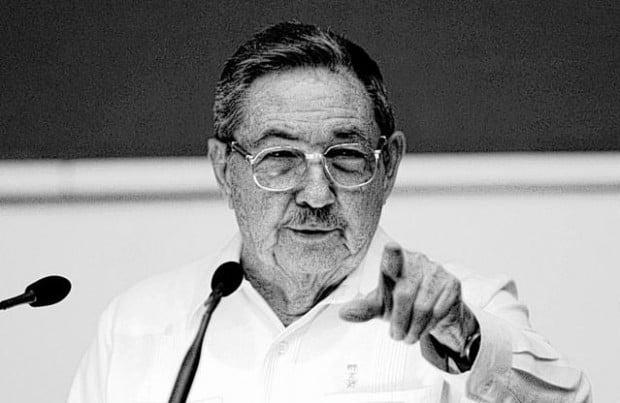
HAVANA — Communist officials decreed Friday that private farmers and cooperatives can use up to 100 acres of idle government land, as President Raul Castro works to revive Cuba's floundering agricultural sector.
The law published in the Communist Party newspaper Granma did not say how much state land will be turned over to private hands and gave no indication of how many Cubans might apply.
But it described the measure as a way to help Cuba solve the problem of underused land while cutting food imports that are expected to cost the government $2 billion this year.
Landless Cubans can be given a bit more than 33 acres, while those who already have fully producing plots can add enough state lands to bring their total holdings to 100 acres.
Existing state farms, cooperatives and state factories also can apply for underused land.
People are also reading…
Ownership will stay with the state. Private farmers can get concessions of up to 10 years, renewable for another 10. Cooperatives and companies can have renewable 25-year terms. And all will have to pay unspecified taxes for the land.
Though the individual parcels are small, the widespread transfer of farmland from public to private hands could change the face of farming in a country where the government controls well over 90 percent of the economy.
The decree noted that Cuba now suffers from "a considerable percentage of idle state lands," making it necessary to grant concessions "with the objective of elevating food production and reducing importation."
Government statistics released last month show that the percentage of fallow or underused Cuban farmland increased to 55 percent in 2007, up from 46 percent in 2002. Just 29 percent of land on state farms is actively used.
After Raul Castro's brother Fidel took power in 1959, the government expropriated many large farms and agricultural holdings, while allowing thousands of farmers on small farms to keep their plots and sell their produce to the state.
The new measure doesn't say where farmers will sell their output, but nearly all private farmers now are required to sell most of their produce — beyond what they eat themselves — to the state.
Friday's decree spells out details of a plan announced in March, when officials told state television that they had begun lending more small plots to private producers of tobacco, coffee and other key cash crops.
The government earlier gave more autonomy to regional farm authorities.
State-owned farms now hold just over one-third of Cuba's agricultural land — down from about 70 percent two decades ago. The rest is worked by small-acreage farmers and by cooperatives, many of them state-organized.



 Jim Click’s Tucson dealerships sell for $93 million


