

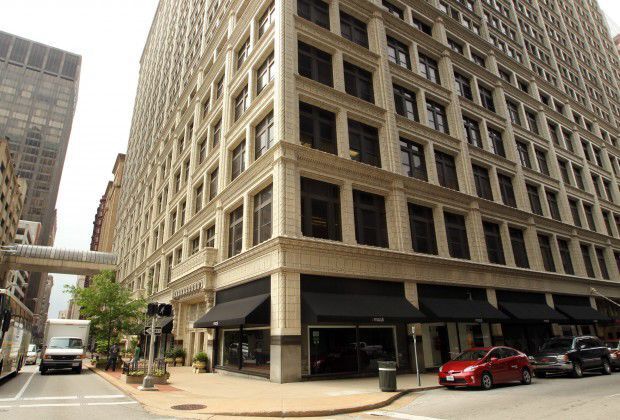
The closing of the downtown Macy’s store may come as a blow, but it certainly doesn’t come as a surprise.
Shopping there was a lonely experience on most days, and the store hadn’t felt busy for years, or maybe decades. The recent effort to save a big store by making it smaller was doomed from the start.
It’s no coincidence that Macy’s is also closing downtown stores in Honolulu, Houston and St. Paul, Minn. The downtown department store isn’t a dodo bird just yet, but the roster of places where it’s viable — mostly in dense cities like New York, Chicago or Boston — is much smaller than the list of places where it’s extinct.
People are also reading…
The question is, where does downtown St. Louis go from here? Does it need shopping to survive and, if so, what kind of retailer might work there?
St. Louis doesn’t have a great track record in redefining downtown retailing. In the 1980s we built a suburban-style indoor mall, St. Louis Centre, and a festival marketplace at Union Station. Both flopped. More recently, the focus has been on attracting small clothing and home-decorating stores, but the failure rate has been high.
It’s not as if downtown is a ghost town, though. It has more than 80,000 daytime workers and about 14,000 residents, according to the Downtown St. Louis Partnership. The number of residents has doubled since 2000.
We should start by looking for stores that will meet those residents’ and workers’ needs. “Food and pharmacy are great places to start,” says Howard Davidowitz, chairman of retail consulting and investment-banking firm Davidowitz & Associates in New York.
Downtown stopped being a food desert when Schnuck Markets Inc. opened its Culinaria store in 2009, but it hasn’t had a full-sized drugstore since 2006. It’s puzzling that even as Walgreens and CVS expand aggressively in the metro area, no one has found a space for either of them downtown.
Davidowitz says that landing a big drugstore, or a second grocery chain like Trader Joe’s, would send a strong message to other retailers that downtown has potential. Build a little momentum, he says, and St. Louis might even attract a City Target, the urban concept that is about two-thirds the size of a big-box Target.
“The hottest area of retailing right now is downtown, urban rather than suburban,” Davidowitz said. “I see tremendous potential for downtown development; it’s going on all across America, and St. Louis ought to be viable enough and rich enough to take part.”
Bob Lewis, president of consulting firm Development Strategies, says successful downtowns have usually followed a niche-market strategy. They start with restaurants, bars and entertainment venues, then fill in with stores that capitalize on the foot traffic.
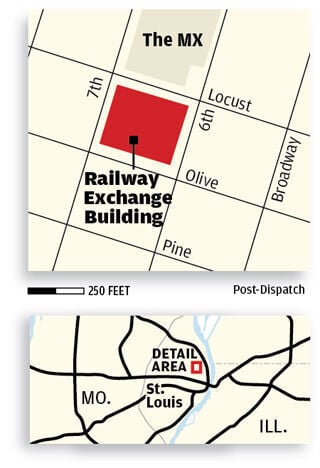
“Washington Avenue is a good example, and the MX (in the old St. Louis Centre building) is a good example,” Lewis said. “It caters to an event/shopping/dining experience as opposed to a serious shopping experience.”
The problem for retailers, Lewis says, is that downtown isn’t a single market. It’s office workers during lunch hour, residents and tourists in the evening and young people from the suburbs later on. Finding a store that works in such an environment “isn’t an easy task, and it requires catering to a wide range of market types,” Lewis said.
One thing’s for sure: Macy’s was no longer up to the task. The store was a link to downtown’s glorious past, but we can’t waste any time mourning its loss. The future is too important.
David Nicklaus is business columnist at the St. Louis Post-Dispatch. Subscribe to his Facebook page or follow him on Twitter @dnickbiz.


