

After being idled for five months over the Coronavirus outbreak, non-Indian gambling operations in New York State reopened Wednesday.
But the casinos, just like many other hospitality businesses that rely on customers to feel safe, face an uphill battle.
With labor-intensive cleaning and safety protocols in place, and state requirements limiting attendance to 25% of their usual occupancy, the coronavirus is eating away at both revenue and expenses. It's the same story playing out at restaurants and retailers across Western New York: Higher costs and lower patronage are squeezing potential profits.
And, since a portion of gambling revenues go toward several government budgets, including New York State and local communities that host casinos, it could put the squeeze on municipal budgets at a time when they're already seeing revenues drop.
People are also reading…
Still, Delaware North is feeling confident it can run a successful operation at Hamburg Gaming under the conditions.
"We’ve tailored the operation to make this work and think we’ll welcome enough of our loyal patrons back so that the business can be successful in the short term," said Glen White, a spokesperson for Delaware North.
Operating at 25% capacity doesn't mean it has to operate at 25% of its usual revenues, said Rob Puhalski, the casino's general manager. Judging by what he has seen at Delaware North's other gaming properties in other states, he expects Hamburg to break past 50% of what it made last year.
"We didn't want to be closed as long as we were but we did have an advantage in opening up last," Puhalski said. "We were able to build on any hurdles or concerns they had and it helped improve us that much better."
Delaware North initially reopened its Arkansas casino at one-third capacity and its two West Virginia casinos at half capacity. It took notes on how to make the most of the games it had available, worked with each state to maximize each casino's space and reached out to its base of customers to invite them back in.
A report published by casino game maker Syngergy Blue found that younger gamblers are more willing to return to the slots, with 62% of those ages 29 and younger saying that were ready to hit the casinos as soon as they reopened. Just 40% of gamblers ages 60 and older, who are also more vulnerable to Covid-19, said they were ready to return.
"We saw that this held true with the first wave of reopening in Las Vegas," said Georg Washington, the company's CEO.
With a maximum occupancy of 2,400 at Hamburg Gaming, the casino can let in 600 people under the new state Covid-19 rules. But with its restaurants, bars and table games still closed, it has chosen to voluntarily reduce the number of people it lets in the doors. Puhalski expects to have patrons lined up outside all day long for the first couple of weeks until the pent up demand subsides.
That pent-up demand will hopefully make additional promotions unnecessary, Puhalski said.
"I think the normal marketing offers will probably be put on hold and we’ll evolve as we open the doors and see what response we get," he said. "Our marketing team is very busy making calls getting the feel for guests' concerns and their needs and their availability."
As amenities continue to reopen, the casino will allow closer to its current 600-person capacity, and revenues will likely increase, he said.
But to keep bettors coming, it's "very important" they feel safe, White said.
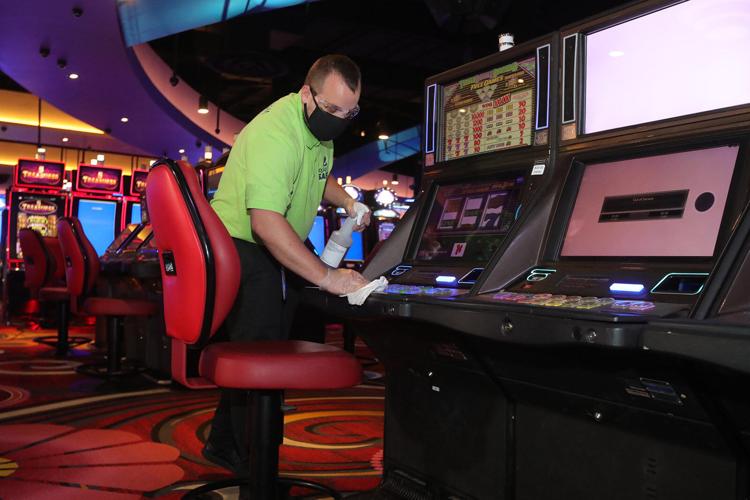
"We’ve heard from patrons that seeing our 'clean team' on the gaming floor, and patrons and employees wearing masks makes them feel comfortable being there," he said.
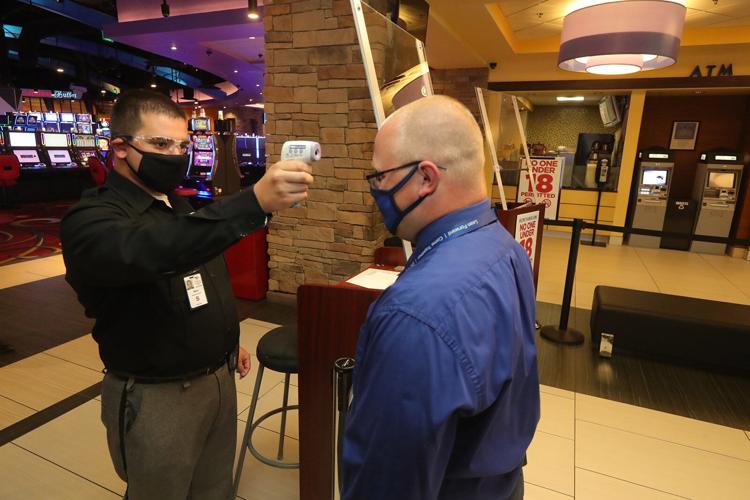
That's why the company has launched a "Play it Safe" campaign, with increased cleaning, overnight sanitization, temperature checks, contact tracing procedures and other safety steps. It has also instituted a zero-tolerance mask policy.
It's the law, but it's also an important part of keeping other bettors feeling safe.
"We've reached out to our database to gauge their needs and wants about returning and I think what we've provided will give everyone a real sense that this is a place where they'll be comfortable," Puhalski said. "I think we're in good shape to get our loyal customers back."
The Blue Synergy report echoed those findings.
"We found that gamblers are very focused on the health and safety conditions when they visit casinos," Washington said. "The majority, 56% of gamblers, believe the measures need to be permanent."
Batavia Downs will also step up its cleaning and sanitation protocols, take temperatures at the door, and enforce social distancing and mask wearing. It has added 120 hand sanitizer stations throughout the facility, including inside its restaurants and bars, some of which will be open. It will also ask bettors to clean their eyeglasses and cellphones regularly.
From April through March, Batavia Downs Gaming's "net machine income" - the money it brought in after paying out prizes – totaled $60.09 million, according to New York State Gaming Commission records. That was up from $58.60 million the previous year. Hamburg Gaming's net machine income was $62.27 million during the same period, up from $59.5 million the previous year.
If those casino revenues drop to around 50% as Delaware North expects, it will affect local and county budgets.
Part of the proceeds from state gaming facilities are earmarked for municipalities to reduce real property taxes and defray the costs associated with hosting a video lottery gaming facility. For the fiscal year spanning 2019 to 2020, Batavia Downs Gaming's scheduled annual aid payments totaled $440,789 to the City of Batavia, $160,388 to the Town of Batavia and $200,392 to Genesee County. Hamburg Gaming's scheduled contributions totaled $865,679 to the Town of Hamburg and $288,560 to Erie County over the same period.
Separately, casinos across New York contribute significant tax revenues to the state. The four commercial casinos in Nichols, Waterloo, Schenectady and Monticello provided the state with just under $150 million in tax revenues in the 12 months prior to the Covid-19 shutdown, according to state records. Racetrack-based video lottery terminal casinos in the state contributed more than $900 million during the same period.
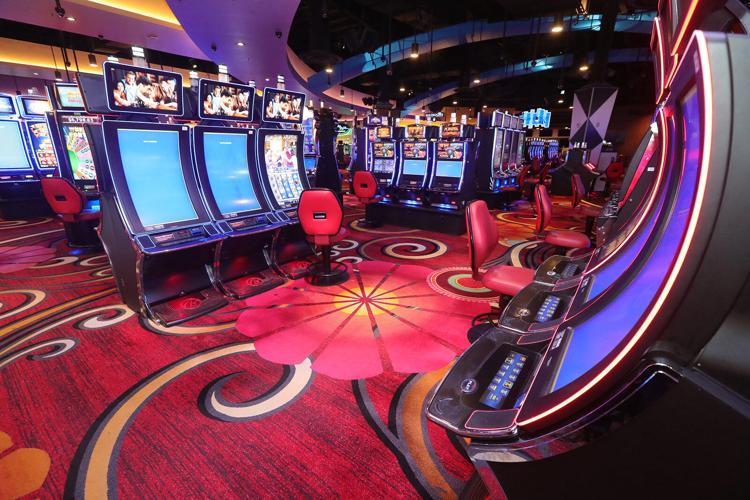
Table games haven't reopened yet, but casinos can apply for permission once they've put special protections into place. No bar service is allowed on gaming floors. In-operation slot machines must be separated by 6 feet of space or physical barriers. Casinos must also have special filtration systems in place, patrons must continue to wear masks while seated and additional state regulators will be on hand to monitor compliance with the reopening rules.
"Our staff is champing at the bit to get back to work. We brought in our critical associates to come in and prepare everything," Puhalski said. "We didn't have a lot of time but we're just happy the governor gave us the go ahead."


