


The Mount Lemmon Fire District is struggling to pay down a deficit that is nearly one-third its total budget, even though the district's tax base has almost doubled since the 2003 Aspen Fire destroyed 322 homes and cabins on the mountain.
Anticipating faster reconstruction than actually occurred, Fire District Chief Dean Barnella expanded the department's operations, hiring more firefighters and adding 24-hour paramedic service.
At the same time, revenue from fighting fires on public lands decreased, and an agreement with Pima County that paid firefighters to remove dead trees expired.
Now the fire district is selling salsa and surplus equipment in an attempt to make up lost revenue and avoid layoffs.
Pima County Treasurer Beth Ford has given the district until the end of the fiscal year — that's next June — to pay the $197,882 deficit. The treasurer will cover warrants, essentially checks written on the district's account, up to the total amount of the district's tax levy.
People are also reading…
Barnella said he still believes expanding services was the right thing to do, and he is confident the district will regain its financial footing, even if it takes a couple of years.
"If you come up here, you want the extra service. I couldn't sleep at night and not expand," he said. "I took a gamble. The fire board thought it was appropriate. We're going to get in the black, but it's not going to be one fiscal year."
When Barnella took over as chief in 2001, the Mount Lemmon Fire District had just four full-time employees and only one firefighter working each shift. If anything happened, firefighters had to be called in and paid overtime.
Until the Aspen Fire, the fire district ended every year with money in the bank. After the fire, the district mostly was taxing vacant land, which is worth much less.
In 2004, the year after the fire, the fire district collected just $186,197 in property taxes, 18 percent less than the year before. The loss came at a particularly bad time, just as the district started to make payments on a new truck that was ordered before the fire to replace a 40-year-old vehicle.
Reserve firefighters were laid off, but events like "Pay Off the Truck Day" and support from the Glassman Foundation saved the district. District firefighters also brought in revenue from the state and federal governments for fighting fires on public land.
And Pima County contracted with the district to remove dead trees from county right of way. The county paid the district $173,357 over three years.
Though the Mount Lemmon community was much smaller than it had been, Barnella said the pattern of rebuilding convinced him he needed to expand further still.
Small cabins of 900 square feet were replaced by 4,000-square-foot homes. Barnella said the larger homes represented a greater fire threat. The lumber they were built from and the furniture that filled them represented more fuel for any future fire.
The fire district now had three firefighters on duty for each shift, 11 full-time employees, including himself and his deputy, and 24-hour paramedic service.
Barnella said he felt confident the district could support the extra cost because Pima County seemed committed to stream-lining the permit process.
He said he didn't anticipate that homeowners would have a hard time collecting settlements from their insurance companies or get stranded by unscrupulous builders.
Even so, with the much larger, more expensive homes appearing on the mountain, the district collected $416,788 in taxes in 2007, 83 percent more than it did in 2003.
The district's total budget that year was $628,836, and with no reserve, the district tapped into a $100,000 line of credit from Bank of America.
Barnella said he expected revenue to be more than it was. And while county permit records show 145 homes have been built since the fire, just 62 have shown up on the tax rolls, Barnella said.
Barnella said the situation is made worse by the large number of calls for service that come from visitors, who don't pay taxes. The district bills insurance companies and individuals for the paramedic service it provides to non-residents, but its collection rate is just 25 percent.
And the district has been called out on fewer wildlands fires, meaning less money from other jurisdictions.
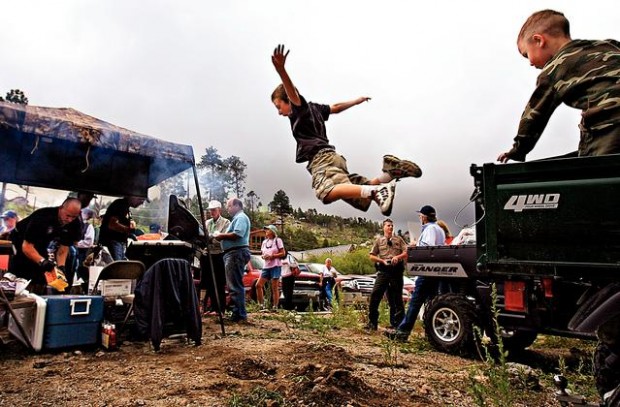
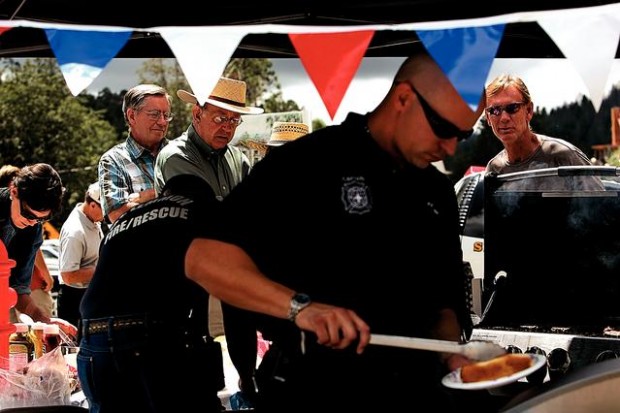
The district has sponsored a variety of fundraisers, from selling salsa made by one of its firefighters to launching an "adopt-a-hydrant" program to concerts and craft fairs. The district also is selling surplus equipment, which Barnella hopes will lower its insurance rates, saving even more money.
Those efforts have raised $45,000 so far.
Barnella said he has been very impressed with the way firefighters have chipped in on their own time, as well as the community response.
"We're a very tightknit community, and I'm sure we'll get through this," said Jenni Avram, who grew up on Mount Lemmon and works in the realty office there.
"You still need a fire department to protect what's left," said Phil Mack, owner of the Mount Lemmon General Store and a 10-year resident of Summerhaven.
Mack said he wasn't surprised to hear the fire district was having financial problems, given the slow pace of recovery. He agreed the expanded services offered by the department were necessary, even though they are a financial drain.
"For the residents, we don't need a paramedic 24/7, but we do for the visitors," he said.
And while many Mount Lemmon homeowners are new since the fire, Mack said they seem very committed to the community.
Barnella said he is prepared to return a raise he received last year and may offer work furloughs to employees.
"And there always is the option of layoffs, which is a very bad word for me," he said. "That would be the last option."
The Mount Lemmon Fire Board meets today to discuss the district's financial problems.
"We're a very tightknit community, and I'm sure we'll get through this."
Jenni Avram, lifelong Mount Lemmon resident



 Historic bank vault now new Tucson speakeasy


